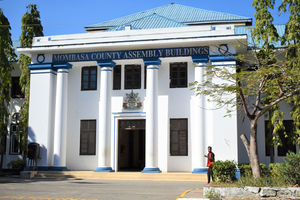
An inspection carried out by the Mombasa County Government has revealed that senior national and county government officials were involved in diverting water supply meant for the public to their personal premises.
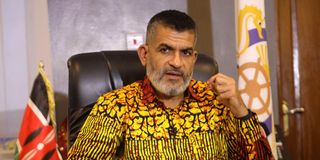
The revelation made by Mombasa Governor Abdulswamad Nassir on Tuesday has confirmed long held concerns by residents that influential people are behind the water crisis that has existed in the port city for decades. This comes as many parts of the county have had dry taps for over three weeks now.
According to Mr Nassir, officials from the county and the Mombasa Water Supply and Sanitation Company (Mowassco) impounded 21 illegal connections. Speaking at the Mombasa Water offices in Nyali, the governor said two county officials and an unspecified number of senior national government officers were among those found diverting water meant for the public.
“They will be charged in a court of law regardless of who they are. It is sad that those entrusted with office are the very people oppressing the public,” he said, without naming the individuals.
The governor accused the officials of siphoning off water and reselling it to desperate residents at exorbitant prices, leaving whole neighbourhoods without supply.
“You sit at barazas listening to people criticise the county for not solving the shortage, you clap in agreement, yet you know you are stealing the same water. That is not right,” he said.
According to him, the majority of the illegal connections were uncovered in Mvita, Changamwe and Kisauni Sub-counties, areas that have borne the brunt of chronic water shortages.
Mombasa requires at least 200,000 cubic metres of water daily but currently receives just 40,000 cubic metres from Baricho, Mwache Dam and Tiwi in the neighbouring counties. Leakages and theft reduce this to about 20,000 cubic metres, leaving tens of thousands of households dry.
Illegally diverting water
“Every drop of water is money. Every drop we lose is money to cartels. We must protect our people. I know I will be condemned, but I do not care. We are going to be ruthless because those stealing have shown no mercy to the people they are denying water,” the governor declared.
The crackdown is part of the county’s 100-day exercise to combat Non-Revenue Water (NRW), which currently stands at 60 per cent, the highest in the country. The administration is targeting to reduce this to 30 per cent within two years.
As part of the reforms, the county said it will also repair leaking pipes at its own cost rather than wait for Mowassco.
“If we leave the burden to Mowassco, our people will continue suffering. We pledged in our manifesto to ensure every household has water, and we will act on that,” Mr Nassir said.
In addition, a hotline will also be launched to allow residents to anonymously report water theft. The governor said the county had already cleared pending bills owed to the water company to avoid supply disruptions.
About 1,000 smart meters have also been procured to help track consumption, though the governor expressed concern over the slow rollout.
“Smart meters must be able to read accurately. We have written to the Ministry because we cannot allow just anyone to be picked off the street for such a sensitive job,” he said.
On long-term measures, Mr Nassir disclosed that discussions were ongoing with the Ministry of Water to undertake hydrogeological surveys for the construction of deep water wells in Mombasa. If viable, he said, the county would reduce its reliance on supplies piped from other regions.
Mr Nassir urged residents to report those hoarding or illegally diverting water, insisting that protecting the right to water was a constitutional duty.