As Kenya's education system transitions from the 8-4-4 system to the senior school phase of the competency-based education (CBE) in January 2026, stakeholders are navigating a landscape defined by promise, complexity, and hard questions regarding costs and equity.
More than 1.1 million learners will join Grade 10 under a new senior school model designed to nurture specialised career pathways.
While the State assures a 100 per cent transition rate with a declared capacity of 1.5 million spaces easily accommodating the learners, the financial and structural elements of the shift are causing significant anxiety.
The most contentious element of the transition is the revised fee structure for boarding schools that the government has denied but failed to recall the document that announced it.
As placement for senior school is going on, parents are still in the dark over the amount of school fees they will be required to pay on January 12 2026 when their children report to school.
In November, the Ministry of Education released guidelines for senior school that appeared to introduce a standardised annual fee of Sh53,554 for all public senior boarding schools.
This flat rate is cited in the guidelines, as per Gazette Notice No. 1555 of 10th March 2015. However, the implementation poses a major financial shock to many families.
Under 8-4-4, boarding fees vary depending on whether a school is categorised as national, extra-county, county or day school.
Mr Abdinoor Haji, the national secretary of the Kenya Secondary Schools Heads Association (Kessha), confirmed the expected strain.
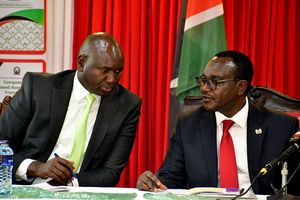
Education Cabinet Secretary Julius Migos (right) with Principal Secretary Julius Bitok during the release of the 2025 Kenya Junior School Education Assessment results in Nairobi on December 11, 2025.
Photo credit: Francis Nderitu | Nation Media Group
"We have boarding schools which previously used to charge less like the extra-county and county. So the new fees for senior school will be a bit high for parents. But those with children in the national schools were already paying that amount," said Mr Haji.
He noted that parents from previously lower-fee institutions, particularly in pastoral areas like the North Eastern region where boarding is often the only viable option for education, will "feel the pinch."
"Some parents who cannot make their daily bread prefer boarding schools so that they can eat and learn. But in pastoral areas, where people move with animals from place to place, the option for education is boarding school. That is why we have boarding primary schools in most arid and semi-arid lands (ASALs) areas," he added.
Mr Haji said if the guidelines are implemented, the consequences will be dire.
"Most parents will opt to take their children to day schools rather than boarding. You know most day schools are not well-endowed with good infrastructure and learning materials. That means it might compromise the education sector," he said.
However, he said if the State retains funding at Sh22, 244 per learner annually, it will alleviate the pinch.
"The government ought to subsidise the fee and pay the capitation as it is. But schools do not get the capitation as set by the State," he said.
However, Education Cabinet Secretary Julius Ogamba maintained that the State has not raised fees, remaining committed to free and compulsory basic education under Article 53 of the Constitution.
“The approved capitation rates remain Sh1,420 per learner in primary schools, Sh15,042 in junior school, and Sh22,244 in senior school,” said Mr Ogamba, dismissing claims of any increment.
Despite the CS's insistence, the consequence of applying the Sh53,554 rate across all boarding categories is clear: it raises the financial bar for county and sub-county boarding schools, potentially turning what was once a pathway for working-class children into a privilege.
In sharp contrast to the boarding fees, parents with children in day schools will continue paying Sh9,374 a year.
The government will continue providing equal capitation grants of Sh12,870 per learner in both boarding and day schools, a model that some experts argue deepens inequality by not adequately accounting for the higher needs of remote boarding institutions.
The most structural shift is the cluster model, a systemic reclassification of senior schools that replaces traditional labels such as national or county schools with Cluster 1 through Cluster 4 groupings.
Around 9,600 public secondary schools have been clustered into four categories.
Cluster 1 (C1): The former national schools, expected to offer all three pathways due to superior infrastructure and capacity.
Threats to new curriculum
Clusters 2, 3, and 4 (C2, C3, C4): These schools will offer at least two pathways, with STEM being mandatory. However, their full capacity is determined by their resources.
This model is intended to ensure that specialised learning happens where the necessary resources like technical workshops and specialised teachers exist.
Another challenge is laboratory and specialised teacher shortages. Data reveals a severe mismatch between student choice and teacher availability that threatens the success of the new curriculum.
A critical shortage of specialised teachers, especially in the high-demand Science, Technology, Engineering, and Mathematics (STEM) pathway.
Data from the Teachers Service Commission (TSC) shows that the entire senior school transition for the 1.1 million learners will require an estimated 58,590 additional teachers across all pathways.
The immense demand for teachers is clearly disproportionate to the pathways, reflecting the high number of specialized subjects required for the STEM track.
The STEM pathway needs 35,111 teachers across 15,046 classes. Social Sciences requires 14,630 while Arts and Sports require 8,778 teachers.
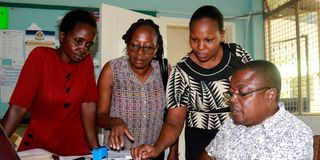
Teachers and parents of Hekima School, Kisumu, celebrate their top performers following the release of the Kenya Junior School Education Assessment results on December 12, 2025.
Photo credit: Alex Odhiambo | Nation Media Group
Statistics from the Ministry of Education show that more than half of the transitioning 1.1 million learners who recently sat the Kenya Junior Secondary Education Assessment (KJSEA) have chosen the STEM pathway. Some 437,000 chose Social Sciences, while 124,000 opted for Arts and Sports.
The breakdown of student interest versus the resulting demand for teachers highlights the crisis. Schools offering specialised tracks will need laboratories, studios, and sports facilities, which could raise operational expenses significantly.
However, the Ministry of Education (MoE) says it has come up with a solution by increasing the capacity of secondary schools already offering technical subjects to bridge the gap.
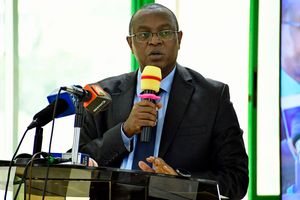
Dr William Sugut, Head of the Directorate of Secondary Education, explained the online transition plan.
“We are aware that there are new subjects in terms of STEM... We have ensured that schools that were offering metal work, increase the capacity in terms of the number of students because they have the equipment and teachers. Senior schools will declare capacity and in terms what it is that they are able to do. We ask them to increase capacity in areas that other schools are not offering so that they admit more students in that particular subject,” said Dr Sugut.
Key national schools have been identified for this capacity boost. For instance, Mang’u High School (C1) is expected to significantly increase its intake for aviation while Njoro Boys will admit more students for metal work and wood work.
The public learning institutions also need 1,650 laboratories. Dr Sugut said the facilities will be ready by January.
The Kenya Junior School Teachers Association (Kejusta) chairperson, James Odhiambo, said the learners were not exposed so much to their career pathways due to systematic challenges.
“Lack of laboratories was a major challenge. A learner who is going to transit to the STEM pathway but has never stepped into any laboratory or done practicals will face challenges. A lot needs to be done, mostly on capacity building and resources. They need to transit with competency,” said Mr Odhiambo.
He urged the State to invest in infrastructure in junior school to ensure the learners are ready to fit into the practical world.
Mr Odhiambo, a teacher in Kwale said at the end of three years in junior school, a learner should be ready to select their careers.
“We are creating a problem, where we shall get a chunk of learned fools with no tangible skills. The government should invest in infrastructure, mass recruitment of teachers in the three pathways,” said Mr Odhiambo.
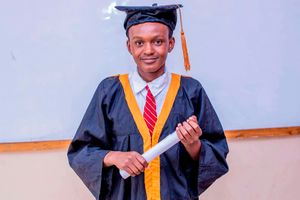
Bravin Kololi (70), Jeremy Njagi (69), Anita Wairimu (70) and Rosemary Wakanyi (68) of Roots Academy in Nakuru celebrate with teachers at the institution on December 11, 2025 after the release of the Kenya Junior School Education Assessment results.
Photo credit: Boniface Mwangi | Nation Media Group
Despite the confusion over fees, lack of specialised teachers and the challenges of infrastructure, the National Parents Association chairperson, Mr Silas Obuhatsa, offered strong support for the reform.
“The State is giving parents hope for future... We thank all the stakeholders for making this is a success,” said Mr Obuhatsa, noting that CBE implementation is beyond 80 per cent.
He urged the government to mobilise chiefs to get the estimated 150,000 learners who did not sit for KJSEA back to school, stressing that they are minors whose education must be secured.
As the countdown to January 2026 continues, families across Kenya are balancing hope with hard realities navigating costs, choosing pathways, and situating aspirations within the cluster system that promises to redefine the nation’s senior education landscape.
At the heart of the reform lies a broader question of readiness both institutional and financial. Many schools are still racing to align their facilities, recruit trained teachers, and develop curriculum materials for the pathways.
Education officials maintain that the roll-out will proceed as planned, but analysts warn that without proper funding and coordination, disparities between well-equipped and under-resourced schools could widen, undermining the goal of inclusive, competency-based education.