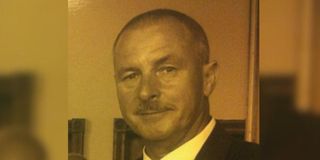
After eleven years of legal battles, the inquest into the mysterious death of British tycoon Harry Roy Veevers has ended with more questions than answers.
The inquest has ended in uncertainty, with no clear explanation as to who is responsible for his sudden death on Valentine’s Day in 2014 in Mombasa.
The badly decomposed state of Roy’s body, coupled with conflicting findings from pathologists, the government chemist and other specialists, left the cause of death unresolved.
As Mombasa Senior Resident Magistrate David Odhiambo brought this inquest to a close on Tuesday, the mystery proved insurmountable, and no one will be called to answer for his death.
“Due to the level of decomposition and the conflicting reports by the pathologists, government chemist, and other experts, the deceased’s cause of death remains unknown, and as such, nobody can be called to answer to any charge,” said Odhiambo in a 95-page judgment dated August 12.
He declared that the investigation into his death is considered closed unless new evidence comes to light.
“In the absence of any lawful court order barring its release, Roy’s remains, which have been at the Coast General Teaching and Referral Hospital mortuary for the last eleven years and six months, shall be released to the family for reburial at a place of their choice after paying all the necessary mortuary charges,” said Odhiambo.
On the question of who or what caused the deceased’s death, the magistrate noted that the evidence did not implicate the widow, Parvin, as someone who took the life of the deceased. The court found that nothing done or not done by Ms Parvin could be considered careless or reckless enough to have caused his death.
By the time of his death, the widow had lived with him for 36 years. She knew or considered him a Muslim and opted to organise his funeral without conducting a post-mortem.
“She did this not knowing that she would carry the burden of being a murder suspect. No evidence has been adduced to confirm her as one,” the magistrate said.
As to what led to his death, the court said the experts who testified in the inquest could not provide a conclusive answer.
Following the exhumation of the body, samples were taken for post-mortem examination, as well as DNA and toxicology testing. Each side of the family was represented during the process.
Dr Moses Njue told the court that the samples he took to the United Kingdom for analysis tested positive for cyhalothrin, a highly toxic substance. However, his report was questioned because the samples reached the United Kingdom four months after the exhumation and were not in the containers in which they had originally been packed.
Dr Richard Sykes testified that he did not find traces of cyhalothrin in the three samples sent to him. Dr Johansen Oduor also testified that there was no trace of cyhalothrin. These differing opinions further complicated the case, as the experts could not reach a common and definite finding on what caused Roy’s death.
“In this case, the experts showed us that there could be different interpretations about a subject, leaving the lay person wondering what to believe. The undisputed conclusion was therefore that the cause of death of the deceased was unknown,” the magistrate said.
With this decision, the magistrate closed the inquest file, which was opened in 2015, expressing hope that it would mark the beginning of closure.
However, attempts by his sons, Philip David Veevers and Richard John Veevers, to have the body specifically released to them were rejected. Through their counsel, Kinyua Kamundi, the sons applied to have the magistrate specify to whom the body should be released, noting that this had been a long-standing point of contention.
Richard John Veevers (right) and his brother Philip Veevers (left) listen attentively during the inquest into the death of their father Harry Roy Veevers at the Mombasa Law Courts on May 4, 2017.
The application was opposed by their half-sisters, Alexandra and Hellen Veevers, and their mother, Azra Parvin Din, through their advocate William Mogaka.
Ms Alexandra Veevers gives her testimony at Mombasa Law Courts on May 3, 2017 during an inquest into the death of her father Harry Roy Veevers.
Photo credit: File | Nation Media Group
Ms Helen Veevers, the daughter to the late British tycoon Harry Veevers in court during an inquest into her father's death on September 20, 2017. Two doctors are set to testify in the inquest. PHOTO | LABAN WALLOGA | NATION MEDIA GROUP
The magistrate said he could not issue any orders beyond the determination he had already delivered and advised the parties to address that matter in a different forum, not before him.
The court noted that determining Roy’s final resting place was nerve-racking due to the absence of formal legislative provisions in Kenya to guide burial disputes. He observed that the formal legal system is largely dependent on statutes and precedents, and the lack of specific laws makes such matters more complicated.
The court further noted the difficulty in this case because the victim was a Briton who did not subscribe to or bind himself to any known custom. Also, there was no concrete evidence presented to exclude any close family member from the deceased’s legal proximity.
The magistrate observed that there was no Will to show that Roy had expressed any specific wishes about how or where he should be buried, nor was there evidence of a sour relationship with any of his close family members that would justify excluding them from claiming his body.
“May Roy find rest in eternal peace,” the magistrate concluded.