In many societies, death is not merely the end of life, but a solemn transition that calls for honour, rituals and familial consensus.
However, this is not always the case. The manner in which the dead are laid to rest often carries as much significance as how they lived, their faith or culture.
When religion pulls in opposing directions, grief can morph into protracted legal battles, denying the departed a peaceful rest.
Such is the bitter reality facing a family in Kilifi County where the burial of a young man has ignited a storm of religious tension and cultural outrage, drawing in lawyers and even piquing the curiosity of local politicians.
The dispute centres on the death and burial of Samuel Charo Kirao, 27, whose remains were secretly removed from the mortuary and buried under Islamic rites against his family’s wishes.
The father, Stephen Kazungu, wants his son’s body exhumed and reburied the Christian way.
The young man died a tragic death after suffering mob justice in Takaungu. Now, the tragedy has spiralled into a complex legal battle. The court is being asked to decide what truly defines a person’s faith at the moment of death.
The High Court in Malindi has since ordered the exhumation of Kirao’s body from the Takaungu Muslim Cemetery where it was buried in April this year to allow both parties to present evidence and arguments regarding the deceased’s religious identity.
Last Friday, the court directed that the body be returned to the Kilifi County Referral Hospital mortuary for preservation as the matter proceeds in court.
It further ruled that the parties laying claim to the body must file a case in the appropriate court, declaring that the Kadhi’s Court, which had issued the burial orders, lacked the jurisdiction to preside over the matter.
For now, Kirao’s body lies in cold storage with his final rest stalled by a religious dispute that must first determine his true spiritual identity before he can be laid to rest, once and for all.
In court documents, Mr Kazungu accuses one Bakari Juma Ratili of coordinating a secret night-time burial without the family’s knowledge or consent.
Richard John Veevers, the eldest son of the late Briton Harry Roy Veevers who died mysteriously at his residence in Mombasa in 2013 testifies at the Mombasa Law Court during an inquest into his fathers death on November 28, 2016.
Photo credit: File | Nation Media Group
He alleges that on April 25, on the eve of the family’s planned Christian burial, he was served with a court order from the Kadhi’s Court barring him from burying his son.
The order, he said, came without supporting documents or details of a hearing.
“We only later learnt via an announcement in the mosque that a hearing was scheduled for April 28,” Mr Kazungu told the court through his advocate, Mr William Kenga.
When he appeared in court on that date, he was shocked to discover that the matter had already been heard on April 25, the same day he was served, without his knowledge, participation or legal representation despite being named as a party to the case.
Mr Kazungu claimed the Kadhi’s Court issued orders in favour of Mr Ratili, permitting his son’s burial under Islamic law.
Mr Kazungu’s legal team led by Mr Kenga later filed an urgent application to stay or review the decision before the ruling was delivered, but he alleged the Kadhi refused to hear them.
“The Kadhi declined to entertain our application. Instead, he issued final burial orders without giving our client an opportunity to be heard. That in itself was a grave injustice,” said Mr Kenga.
Later that night at around 10pm, Mr Kazungu alleged that Mr Ratili collected the body from the mortuary and buried it by 11pm at the Takaungu Muslim Cemetery despite Islamic customs generally discouraging night burials. This is also despite the court order requiring that family members be allowed to attend.
“This was a secretive and illegal burial done with malicious intent. We were excluded yet the court had directed that the family be involved,” said Mr Kazungu.
In his affidavit, Mr Kazungu said his son was never a Muslim and that the burial under Islamic rites was unauthorised and deeply offensive to the family’s beliefs.
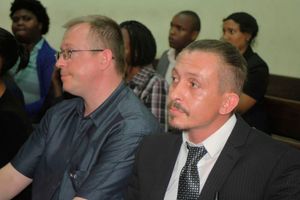
Brothers Richard (left) and Philip Veevers follow proceedings during the inquest of their father in a Mombasa court on September 19, 2017. Harry Veevers died mysteriously in 2013.
Photo credit: File | Nation Media Group
He argued that his son Kirao should be buried at the family home in a grave that had already been prepared.
Mr Kazungu has also lamented that burying a loved one away from the family compound, especially when preparations have already been made, is taboo in many African cultures. It is believed to attract misfortune.
“It attracts curses. Such an act leads to more deaths in the family and we are in serious fear that we may lose more loved ones unless this is rectified,” he said.
Mr Kazungu further argued that even if, hypothetically, his son had been a Muslim, it would have been proper and respectful to consult him and consider allowing burial at the family home.
“The conduct of the Kadhi’s Court and the respondent amounts to a gross violation of my rights as a father. My son’s body was taken from me, buried in secrecy and without due process. This cannot stand,” he said.
In another case, although the main reason for exhuming the body of British tycoon Harry Roy Veevers was to determine the cause of death, the legal battle has also taken on a religious dimension.
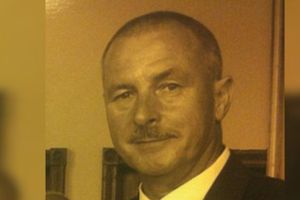
Harry Veevers from Rochdale, UK, died at his home in Kenya in 2013.
Photo credit: File | Nation Media Group
His two sons, Mr Richard John and Mr Philip David Veevers expressed concern over their father’s burial as a Muslim in spite of him being a Christian.
The sons said their father’s identity was altered, and he was buried under the Muslim name Akbar Harry Roy Veevers.
They argued in court that the change of name and burial as a Muslim were deliberate steps to conceal and eliminate evidence pointing to the possible commission of a crime — a move they believe was aimed at protecting individuals they suspect were involved in his untimely death.
Mr John, the firstborn son, told the court that he is the rightful person to take charge of the burial, according to custom.
He also argued that his late father’s widow, Ms Azra Parvin Din, who was his second wife, should not be granted custody of the body. Mr John claimed that she was never legally married to their father and, therefore, not his widow.
They further argued that Ms Din, being a Muslim, could not be involved in burial rites under Islamic custom, and maintained that their father was a Christian.
Mr Veevers died on February 14, 2013, in Mombasa County but his remains were exhumed nine months later.
The sons said that they suspect their half-sisters Alexandra and Hellen Veevers, and their mother, Ms Din, know something about their father’s death, prompting the exhumation and an inquest.
Ms Alexandra Veevers gives her testimony at Mombasa Law Courts on May 3, 2017 during an inquest into the death of her father Harry Roy Veevers.
Photo credit: File | Nation Media Group
Since then, Mr Veevers’ body has remained in the morgue.
The brothers now want their father’s body released to them for repatriation to the United Kingdom for a second forensic examination, followed by a reburial.
“In England, the body of a deceased person who dies overseas must be examined by a coroner before it is interred. I undertake to have the body delivered to the coroner, and possibly an inquest, before the coroner decides who should bury the remains,” said Mr John in an application filed before the High Court earlier this year.
The brothers intend to rebury their father in Rochdale, Greater Manchester.