An unlikely courtroom battle is casting a long shadow over the capital’s development boom as residents of leafy, affluent neighbourhoods sue developers, not over noise or rent, but for the right to daylight.
Homeowners in upscale neighbourhoods, including Parklands and Lavington, have taken developers to the Environment and Land Court, claiming that recent high-rise developments and intrusive extensions have deprived their homes of natural sunlight and proper ventilation.
These disputes—centred on alleged breaches of planning and zoning laws, environmental harm, loss of privacy and erosion of neighbourhood character—expose glaring fault lines between Nairobi’s push for high-rise housing, permissive approvals and outdated zoning rules.
One of the most prominent cases involves a petition by 13 Parklands residents opposing developments along City Park Drive, where new 19-storey apartment blocks with 112 units have allegedly “completely blocked” sunlight to neighbouring homes in an area traditionally dominated by single-dwelling units.
Lavington residents, through Millennium Gardens Management Ltd, moved to court last year to stop Metricon from proceeding with the construction on Mbaazi Avenue.
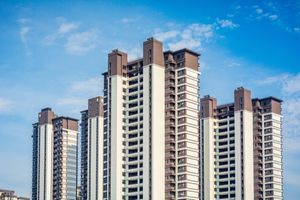
Photo credit: Shutterstock
The homeowners, who bought their properties for between Sh15 million and Sh20 million as retirement homes, say the towering structures now overshadow them after construction began earlier this year.
They argue that the multi-storey buildings have rendered their solar panels useless, blocked ventilation and even obstructed fire escape routes. Bedroom and kitchen windows, once filled with daylight, now face blank walls, forcing residents to rely entirely on artificial lighting.
“The developments have severely degraded the environment,” they said in court filings, claiming the blocked sunlight had made solar panels inoperative, darkened rooms during the day, restricted ventilation and undermined the structural integrity of their homes. The developer maintained that the project met all legal standards and supported the city’s push for urban densification.
The petition sought to have the developments declared illegal, relying mainly on photographs and video evidence. But in March, the court dismissed the case for lack of expert reports from structural engineers, architects or other specialists.
While acknowledging images of darkened rooms, sewer effluent and blocked access routes, the court ruled they did not prove a direct link to the disputed buildings. Similar disputes are playing out across Parklands, where residents’ groups are challenging redevelopment projects they say threaten daylight access for older homes and shared spaces.
The Parklands Residents Association—representing over 1,300 property owners—has asked the court to overturn approvals they argue breached planning rules and undermined the area’s character.
A parallel fight is underway in Lavington, where the Mbaazi Residents Association is contesting Metricon Homes’ plan to build three 16-storey blocks with 512 units on a one-acre plot beside Millennium Gardens. Residents say the project would block sunlight, destroy greenery and permanently alter the neighbourhood without proper oversight.
Court records show residents urging judges to halt construction before it becomes irreversible. The case has now reached the Supreme Court after losses in the lower courts. Petitioners argue the project would impede air flow, increase exhaust fumes, interfere with communication equipment and violate their constitutional right to a clean and healthy environment.
They insist the appellate court failed to consider expert findings showing the development would permanently shade homes, strain the water supply, overwhelm roads and overstretch sewer systems.
These disputes show how residents in traditionally low-rise suburbs are pushing back against dense developments encroaching on their neighbourhoods.
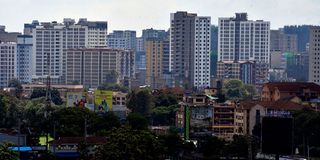
High-rise apartments in Kileleshwa in Nairobi on January 7, 2020. Residential areas such as Kilimani, Lavington and Kileleshwa have seen an increase in the construction of high-rise apartments for either residential or commercial purposes.
Photo credit: File | Nation Media Group
The phenomenon extends beyond Parklands and Lavington, appearing in pockets across Nairobi where zoning maps—once sacrosanct—are buckling under pressure from developers chasing density and profit.
The Nairobi City County government frequently finds itself embroiled in disputes over high-rise developments accused of cutting off sunlight to existing apartments. One 2024 court file contains petitions arguing that planned buildings would “cut off all natural sunlight” to nearby residential blocks, disrupt air circulation and interfere with communication signals.
At stake are fundamental legal and practical questions that place Nairobi at a crossroads: Should zoning enforcement be strengthened, with clearer rules on height, setbacks and rights to light? Or will the city continue to see more estates transformed into battlegrounds where sunlight is fought over in court?
Natural light and ventilation are not mere luxuries—they affect health, energy costs and quality of life. Losing daylight forces households into increased electricity use, reduces rooftop solar efficiency and worsens problems such as dampness and mould. Courts have acknowledged in some rulings that modern high-rise construction “reduces access to direct sunlight”.
In one landmark case, a homeowner successfully sued over lost sunlight, arguing that her neighbour’s construction had been built so close that it plunged her home into darkness during the day. The court issued an injunction and ordered demolition of illegal structures that violated building-code open-space requirements, awarding the homeowner Sh20 million in general damages.
A review of court records shows that petitioners often base their cases on psychological and financial impacts—higher electricity bills, unusable rooms and diminished property values—while lawyers frame the issue in statutory terms: breaches of development-control bylaws, unauthorised changes of land use or non-compliance with Nairobi’s Development Control Policy.
Yet securing legal recognition of a “right to sunlight” remains fraught. Courts typically treat these disputes as matters of land use, nuisance, environmental law or planning regulations, assessing them against the Physical Planning Act, county bylaws, building codes and constitutional guarantees of a clean and healthy environment.
To establish an indefeasible easement to light, claimants must demonstrate prolonged, uninterrupted enjoyment of sunlight or prove clear breaches of statutory rules.
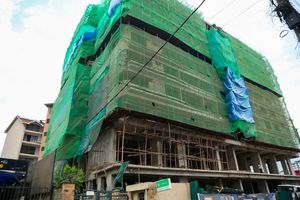
A construction site in Parklands, Nairobi, where a section of it collapsed in February 2025, killing one person.
Photo credit: Lucy Wanjiru | Nation Media Group
Without a definitive legal doctrine—yet to be established—on the “right to sunlight”, complainants struggle to win unless county planning controls or building laws have been blatantly violated. However, some cases suggest that success hinges on specifics: occupation history, duration of sunlight access and adherence to procedural requirements. A recurring theme is zoning—or the inconsistent enforcement of zoning regulations.
The legal battles follow a familiar script. On one side stand residents’ associations, individual homeowners and, in some cases, environmental groups. On the other hand are private developers, architectural firms and county planning departments.
Many petitioners allege that developers secured approvals improperly, disregarded regulations or deviated from approved plans—fuelling claims that high-rise developments are stealing homes’ daylight and, with it, residents’ right to a healthy living environment.
The county government, responsible for issuing permits and compliance certificates, frequently appears in litigation as either a defendant or an interested party.
These cases highlight a broader tension between Nairobi’s vertical housing demands and the expectations of established communities—a conflict that will increasingly test county planning systems and the judiciary’s role in balancing developers’ ambitions with residents’ rights to light, air and liveable environments. As courts hear more claims, their rulings will determine whether Nairobi grows upward under predictable rules—or whether homeowners must continually turn to judges to reclaim their share of sunlight.
Legal observers attribute these disputes to decades of urban migration and rising housing demand, pushing developers to maximise units on shrinking plots. Patchy enforcement compounds the problem, with some projects breaking ground on ambiguous approvals, leaving neighbours to file petitions only after walls have gone up.