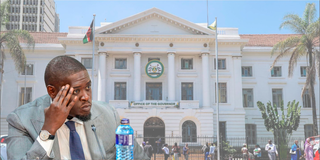
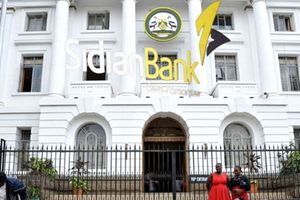
A budget standoff at Nairobi City County has plunged City Hall into a growing operational crisis, with prolonged power disruptions crippling key services, forcing officials to rely on unreliable backup generators and leaving thousands of residents unable to access essential county services.
The disruption, now stretching into its third week, has brought operations at City Hall and City Hall Annex to a near standstill after Kenya Power disconnected electricity over an unpaid bill estimated at Sh3 billion, exposing the county's worsening cash flow problems amid a delayed budget implementation.
Critical county services, including payment of single business permits, payment of suppliers, parking fees, revenue collection and customer service, have been severely affected as electronic systems repeatedly go offline whenever the generators are switched off. A number of staff have also gone without their allowances for weeks.
County employees said the backup generators only operate for a few hours each day because of the high cost of fuel, leaving entire office blocks without electricity for the better part of the working day.
"The most affected is City Hall Annex because the generators are switched on from around 9 am to about 2 pm in some sections, yet we are supposed to work for eight hours and serve Nairobi residents," a county employee said.
Interior view of the newly republished City Hall Annex during its handover and launch of the Nairobi City County Government Customer Service Center on December 14, 2023.
Photo credit: WILFRED NYANGARESI|NATION
Another official said the county had struggled to keep digital systems running because the generators could not support the entire complex.
"The systems go down once the generators are switched off. Revenue collection, business permits and other services are interrupted, leaving residents stranded," the official said.
The outages have also forced the county to limit the use of elevators in some office blocks, with staff and members of the public climbing as many as 10 floors to access county offices.
The latest crisis has disrupted some of the county's busiest departments, including revenue offices and customer service centres, where hundreds of Nairobi residents seek services daily.
At the centre of the dispute is an estimated Sh3 billion electricity bill that Kenya Power says Nairobi County has failed to settle despite a repayment agreement reached in 2024.
"It is true that we disconnected City Hall because the county has not honoured the agreement that was established in 2024. Unlike other counties, we struggle a lot when it comes to power bills. They don't pay anything at all,” a Kenya Power official said.
At Wakulima Market, Nairobi's largest wholesale produce market, traders have operated without electricity for more than a week after the power supply was disconnected as part of the standoff.
The blackout has disrupted overnight deliveries, delayed distribution of produce and heightened insecurity in the market.
"We have been without power for the second week now and it has affected our businesses," said Mbithi Mwangi, the market's treasurer.
Traders buy sukuma wiki at Wakulima Market in Nairobi on April 7, 2026. The matatu strike on Monday and Tuesday left vegetable traders counting losses as supplies dwindled.
Photo credit: Dennis Onsongo | Nation Media Group
"Lorries that bring supplies are supposed to offload from 3 am, but the market is dark at that time. This has caused congestion because supplies to other markets start much later."
Traders have given Governor Johnson Sakaja a three-day ultimatum to restore electricity, threatening to march to City Hall carrying rotten produce if the matter remains unresolved.
"If he does not sort out the matter by Friday, we will march to his office with rotten produce to show him how we are suffering losses," said trader Agnes Wambua.
The operational paralysis at City Hall comes against the backdrop of a month-long budget standoff between Governor Johnson Sakaja's administration and the Nairobi County Assembly that has left the county without an approved budget, violating statutory timelines and crippling the county's ability to finance its operations.
The dispute has delayed the passage of the 2026/27 Budget and the Appropriation Act beyond the June 30 deadline set under the Public Finance Management (PFM) Act, effectively denying the county legal authority to spend on development programmes, settle pending bills and meet other recurrent expenditures.
As Members of the County Assembly resume from a short recess this week, there has been little indication that either the Executive or the Assembly is close to breaking the deadlock, raising fears that the stalemate could further disrupt county operations, delay payments to suppliers and contractors, stall development projects and deepen the service delivery crisis already being witnessed at City Hall.
Controller of Budget Margaret Nyakango at a past event.
Photo credit: Jared Nyataya | Nation Media Group
Controller of Budget Dr Margaret Nyakang'o warned that the failure to approve the budget would have immediate consequences on county operations, saying the county could not legally spend public funds until the budget is enacted.
"They cannot spend anything now. At least not officially, until they have a budget. In terms of absorption, everything is affected as it will be zero. Salaries will be the first casualty," Dr Nyakang'o said, underscoring the growing financial strain facing the county.
She said the delay would significantly undermine budget absorption during the first quarter of the financial year and affect implementation of planned development programmes, warning that prolonged delays would have a ripple effect on service delivery.
Dr Nyakang'o further revealed that while several counties had already submitted their approved budgets for legal review before being uploaded onto the Integrated Financial Management Information System (IFMIS), Nairobi had yet to submit its 2026/27 budget.
"We have received about five counties that are being reviewed for legality before being uploaded on IFMIS. We are more careful now because of the 2027 election year. The fundamentals must be in place. Nairobi County has not submitted their 2026/27 budget as of today," she said.
The standoff has exposed deep divisions between the Executive and the Assembly. MCAs accuse Governor Sakaja of shutting them out, ignoring their calls and failing to direct County Executive Committee Members and chief officers to appear before Assembly committees to defend departmental budget estimates.
Nairobi Governor Johnson Sakaja at his office in Nairobi.
Photo credit: File | Nation Media Group
The governor's allies, however, have accused some MCAs of attempting to arm-twist the Executive before approving the Appropriation Bill, allegations that have further widened the political rift that has now spilt over into service delivery.
The latest dispute revives last year's highly publicised confrontation between Nairobi County and Kenya Power after the utility disconnected electricity over unpaid bills.
In retaliation, the Sakaja administration dumped garbage outside Kenya Power's Stima Plaza headquarters and blocked sewer lines serving the building, prompting public criticism before the National Assembly Energy Committee intervened.