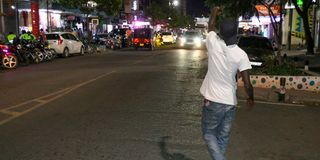
Caption for the landscape image: How Nakuru’s night economy dream was dimmed by darkness and crime Sunday, February 15, 2026 Scroll down to read the article A man directs a motorist along Kenyatta Avenue in Nakuru City on February 12, 2026. Photo credit: Boniface Mwangi | Nation Media Group By Eric Matara & Mercy Koskei Summary Article Related What you need to know: In Nakuru, by 8pm, streets are largely deserted, traders shut their shops and residents make a beeline for safety.Poorly maintained or non-functional lights leave large sections of Nakuru in darkness, creating perfect conditions for crime. When Nakuru attained city status on December 1, 2021, residents and business people were filled with optimism. They envisioned the Rift Valley’s largest commercial hub evolving into a vibrant 24-hour economy akin to Nairobi and other major cities. PREMIUM Membley residents cry out as bars blast music into homes Two popular entertainment joints accused of causing noise pollution. PREMIUM Nairobians walk 7 hours to Gatundu, testing the mind and muscles It was a chance to meet new people, share stories, and embrace a slow, deliberate way of turning weekends into adventures. . Recommended for you PREMIUM Hospital sued after twins born at 27 weeks, one dies, one loses his vision PREMIUM Court strikes out junior school teachers’ bid to break away from Kuppet, Knut PREMIUM Why Uhuru skipped Raila’s anniversary event PREMIUM Fires await Gachagua on return from US trip Login to join the discussion Please enable JavaScript to view the comments powered by Disqus. In the headlines Elections News Counties Business Opinion Sports Life & Style Health Podcasts Photos Newsletters Puzzles PREMIUM Court exposes officials in failed bid to seize Nakuru War Memorial Hospital Officials are accused of acting on instructions from powerful individuals. Ruto on New KCC: Let farmers run it The government has injected Sh8 billion into New KCC over the past three years. PREMIUM Hospital sued after twins born at 27 weeks, one dies, one loses his vision Father sued the hospital alleging that doctors failed to conduct mandatory screenings.
PREMIUM Membley residents cry out as bars blast music into homes Two popular entertainment joints accused of causing noise pollution.
PREMIUM Nairobians walk 7 hours to Gatundu, testing the mind and muscles It was a chance to meet new people, share stories, and embrace a slow, deliberate way of turning weekends into adventures.
PREMIUM Court exposes officials in failed bid to seize Nakuru War Memorial Hospital Officials are accused of acting on instructions from powerful individuals.
Ruto on New KCC: Let farmers run it The government has injected Sh8 billion into New KCC over the past three years.
PREMIUM Hospital sued after twins born at 27 weeks, one dies, one loses his vision Father sued the hospital alleging that doctors failed to conduct mandatory screenings.