For the past one year, Beatrice Wanjiru has been travelling more than 160 kilometres to Nairobi every week to undergo kidney dialysis at the Kenyatta National Hospital Renal Unit.
The 61-year-old peasant farmer’s world turned upside down when Nakuru War Memorial Hospital the facility where she had readily obtained the service for years, was closed in early 2024.
For Ms Wanjiru and thousands like her it now means travelling hours to access healthcare that was once a stone’s throw away. She must incur transport costs to and from Nairobi to receive the treatment that is her lifeline.
“Over the years, we depended on Nakuru War Memorial Hospital for treatment. I was among about 30 kidney dialysis patients the hospital handled. But now I have to travel to Nairobi to access the services. My family preferred Kenyatta National Hospital to Nakuru Level Five Hospital which is usually congested,” Ms Wanjiru explains.
Wanjiru is just one example of thousands of patients forced to seek healthcare services elsewhere following the hospital’s closure.
Records show the hospital handled more than 300 patients daily, all of whom are now compelled to look for services in other facilities.
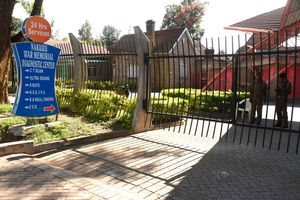
The entrance to the Nakuru War Memorial Hospital in Nakuru City.
Photo credit: File| Nation Media Group
For many years, residents relied on the hospital for surgeries, deliveries and key services such as kidney dialysis. The facility had 10 dialysis machines capable of serving at least 30 patients a day.
Sitting on a 25-acre parcel of land, Nakuru War Memorial Hospital served residents of Nakuru and neighbouring counties as an alternative to Nakuru Level Five Hospital, the South Rift’s largest referral facility.
Accident victims along the busy Nairobi–Nakuru–Eldoret highway were also treated at the facility before being referred to Nakuru Level Five Hospital or specialised institutions such as Kenyatta National Hospital and Moi Teaching and Referral Hospital.
Established in 1921 in honour of those who died during the First World War, the hospital has over the decades served both ordinary wananchi and prominent members of society, becoming a beacon of hope for many patients.
However, its closure due to ownership wrangles between the Nakuru County government and its management has left equipment worth millions of shillings lying idle while residents who once depended on it are forced to seek care elsewhere.
For more than a year, many people in the larger South Rift region have struggled to come to terms with the reality that Nakuru War Memorial Hospital is no longer operational.
The facility has been caught up in a vicious ownership dispute since January 2024, leading to its closure.
The 25-acre parcel on which the hospital stands was reverted to the government following the de-gazettement of the lease title issued in the hospital’s name, prompting a court battle.
Hospital management moved to cour accusing the government of illegally revoking its lease without notice. It maintains that it is the legal owner of the land, even as the county government insists the lease expired in April 2021.
The hospital, however, argues that the Nairobi Lands office renewed the lease for a further 50 years.
In 2024, the Nakuru County government moved to take over the facility.
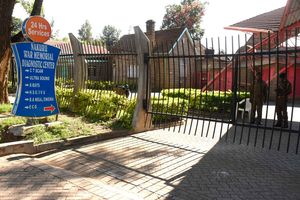
Armed police officers and reinforcement officers from the County Government of Nakuru man the gate to War Memorial Hospital on January 23, 2024.
Photo credit: BONIFACE MWANGI/NMG
Both the county and the hospital directors are claiming ownership of the prime land on which the hospital and the public wing of the Nakuru Level Five Hospital Annex stand.
The alleged 50-year lease extension by directors of the private company is at the centre of the dispute, with the county government dismissing it as a forgery.
At least eight court orders have been issued, yet the hospital has remained closed for more than a year.
Despite the formation of an interim management committee more than six months ago to oversee its reopening, the facility remains shut.
Last year, the Court of Appeal ordered that the hospital be reopened under joint management.
The Nation established on Monday that although the committee comprising Mr Roger Joslyn, one of the hospital’s directors and five others was appointed by the appellate court to oversee the reopening, the facility remains closed.
Court documents show that a standoff between the county government and the hospital’s management has delayed its reopening. The two parties have failed to agree on who will manage the hospital once it reopens.
“The hospital board will have five members: two from the county government, two from the hospital, and one representative from the national government,” ruled Judges Mohamed Warsame, Weldon Korir and Paul Gachoka.
Several months later, the parties are yet to agree on management arrangements.
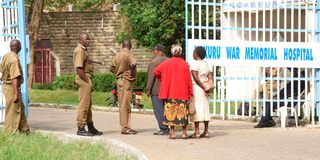
Nakuru County askaris restrict patients from accessing the War Memorial Hospital on January 22, 2024.
Photo credit: BONIFACE MWANGI|NATION
The hospital management opposes the county government running the facility. On the other hand, the county insists on being involved in management, including oversight of the hospital’s accounts, security personnel and access.
“The county government is frustrating the reopening of the facility. Nothing in the hospital belongs to the county government, yet they want to control it,” says Mr Joslyn.
Nakuru County Secretary Samuel Mwaura maintains that the Court of Appeal intended the private hospital to be jointly managed.
The hospital’s closure sparked uproar. In October last year, Nyandarua High Court Judge Joseph Mugo, in a separate ruling, urged Nakuru Governor Susan Kihika and the hospital’s directors to reopen the facility and resume services to residents.
Justice Mugo who was hearing the dispute over ownership of the land underscored the need for diplomacy, noting that the closure was detrimental to healthcare in Nakuru.
“I have not ruled on who owns the land, but I want the hospital to run. I have relatives in Nakuru who need the services. I urge the opposing parties to set aside their egos, sit down and discuss how the hospital can be reopened,” said the judge.
The matter, now before the Nakuru Law Courts, also attracted the attention of Auditor-General Nancy Gathungu. In the 2023/2024 financial year, she warned that the hospital risked losing millions of shillings as installations, equipment and buildings lay idle due to the prolonged closure.
Documents show the hospital has been losing at least Sh36 million per month since services ceased. Since January 2024, the facility is estimated to have lost nearly Sh1 billion, while its equipment and assets risk deterioration.
The losses stem from the cessation of patient services, which halted the hospital’s revenue streams.
The facility is also burdened with Sh2.3 million in unpaid electricity and water bills, further complicating efforts to reopen it. The bills reportedly accumulated from 2023.
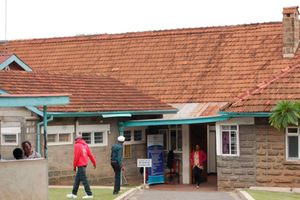
A spot check of the premises revealed a deserted compound. The once-thriving healthcare institution next to Nakuru State House now stands silent amid the bitter ownership dispute.
What was once a beacon of medical excellence serving thousands has become a symbol of legal turmoil — and an eyesore.
Residents say the continued closure has severely affected healthcare access and led to significant job losses for former employees.
“Nakuru War Memorial Hospital was one of the best-equipped hospitals in Nakuru. Other hospitals frequently referred patients there for specialised treatment. Without it, many people are undoubtedly suffering. In 2015, for instance, a baby with complications after birth was transferred there and received the best care despite the parents’ inability to clear the bill,” said John Karanja, a resident.