For the past eight years, several counties have grappled with persistent conflicts between governors and the County Public Service Boards (CPSBs) they inherit.
The disputes are often driven by the governors’ desire to appoint loyalists to key positions or overturn hiring decisions made by previous administrations.
The fallouts have frequently been messy, at times compromising service delivery in devolved units.
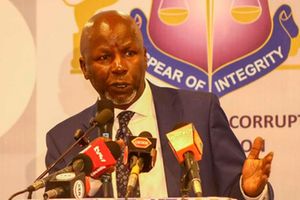
Trans-Nzoia County Governor George Natembeya.
Photo credit: Dennis Onsongo | Nation Media Group
A week ago, for instance, a power struggle plunged Trans Nzoia County into uncertainty after Governor George Natembeya clashed with the County Public Service Board over the recruitment of chief officers.
Governor Natembeya ordered members of the board to proceed on terminal leave and vacate office ahead of what he termed the expiry of their mandate on February 28, 2026.
He accused the board of rogue operations, unprocedural hiring and nepotism, specifically citing the recruitment of eight nurses who were allegedly not included in the shortlist.
The governor went further to close CPSB offices, transfer staff attached to the board to other departments and order investigations into its operations.
CPSB chairperson Peter Maloba Wamoto accused the governor of unlawful interference, describing his actions as an affront to the board’s constitutional independence under Article 235.
The Trans Nzoia standoff is just one example of similar disputes that have rocked counties across the country, often threatening service delivery.
At the heart of many of these conflicts are long-running disagreements over control of county hiring, the recruitment of chief officers and other senior officials.
However, a proposed change to the law seeking to reduce the term of County Public Service Boards from six years to five could help ease the recurring tensions if approved by the Senate.
Garissa Senator Abdulkadir Mohamed Haji.
Photo credit: Dennis Onsongo | Nation Media Group
A Bill sponsored by Garissa Senator Abdulkadir Mohamed Haji seeks to amend the law to align the boards’ tenure with the five-year electoral cycle.
The proposal has already received backing from the Council of Governors (CoG), which argues that synchronising the boards’ tenure with that of governors is long overdue.
“County Public Service Boards sometimes become an impediment to a governor in carrying out his duties. Under the current law, governors are often forced into expensive settlements to push out old board members. It becomes a major financial burden to counties,” said Migori Governor Ochillo Ayacko while presenting the CoG’s position before the Senate Standing Committee on Devolution and Intergovernmental Relations on Monday.
Governors argue that the current six-year, non-renewable term forces them to work with boards appointed by their predecessors — a situation they say undermines implementation of their policy agenda.
The proposed County Governments Laws (Amendment) Bill, 2025, seeks to amend Section 58(4)(a) of the County Governments Act by reducing the non-renewable term of board members from six to five years.
Key features of the proposal include a transition clause allowing board members to serve for up to six months after their term expires during an election period. It also contains a proposal on restrictions limiting recruitment to temporary contracts in the 90 days preceding a gubernatorial election and a provision seeking to cap the number of County Chief Officers at 20.
However, the proposal has also raised concerns.
The State Department of Devolution and the Law Society of Kenya (LSK) have warned that the amendments could tilt excessive power toward governors.
Devolution PS Michael Lenasalon.
Photo credit: Boniface Mwangi | Nation Media Group
Devolution Principal Secretary Michael Lenasalon cautioned that without proper safeguards, the Bill could weaken checks and balances.
“The extension of service of the boards must be strictly regulated. There should be clear and justifiable reasons for a board to continue serving beyond five years,” he said.
The Senate Devolution Committee is expected to compile a report on stakeholder views before tabling it in the House.
Shortly after the 2022 General Election, several newly elected governors initiated moves to remove board members appointed by their predecessors. In many cases, the new county chiefs sought greater control over the boards, leading to deep fallouts.
Some governors accused inherited boards of corruption and bribery in past recruitment processes, allegations critics say were sometimes used to justify removing them from office.
“New governors frequently accuse inherited boards of padding payrolls with ghost workers. But the central battle is usually about who controls the hiring of key county staff such as chief officers and directors,” lawyer Steve Kabita told Daily Nation .
County Public Service Boards are mandated to establish and abolish offices, appoint and confirm personnel, exercise disciplinary control, promote ethical standards and oversee human resource planning within county governments.
They also advise county administrations and report to County Assemblies. As corporate bodies, CPSBs are intended to safeguard accountability, efficiency and adherence to constitutional standards in the management of county public service.
Whether the proposed amendments will reduce friction or concentrate more power in governors’ hands now rests with the Senate.