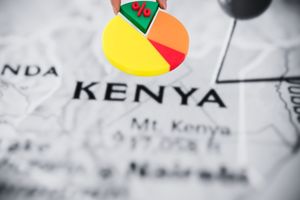
Six counties received more than a quarter of all the Sh3.73 trillion disbursed to the 47 devolved governments since the onset of devolution, underlining the high concentration of resources in a small section of the country.
Remittances to the six counties accounted for 26 per cent of the total exchequer allocations, grants and own revenues between July 2013 and June 2024, reflecting the wide inequalities across the country.
The Parliamentary Budget Office (PBO) County Fact Sheets lists Nairobi, Kiambu, Turkana, Nakuru, Kakamega and Mombasa as the biggest beneficiaries, having cumulatively received Sh973.5 billion in the past decade.
“As of 30th June 2024, counties had cumulatively received Sh3.141 trillion (equitable share) since the commencement of devolution and since 2013/14, counties have been allocated Sh189.4 billion in additional resources from the national government,” the report notes.
The 47 counties generated Sh403.4 billion from their own sources in the period, out of which Sh213.4 billion came from the six, according to reports by the Controller of Budget (COB) and Commission on Revenue Allocation (CRA).
The PBO report presents a comprehensive overview of fiscal and economic developments across the 47 counties since the advent of devolution, comparing how different counties have fared.
Nairobi has received Sh305.7 billion, the highest amount of any county since devolution started, comprising revenue from the exchequer (Sh171.37 billion) and Sh116.7 billion in own collections.
“The county also received additional allocations both from the national government’s share and from development partners amounting to Sh5.2 billion and Sh12.4 billion respectively over the period (2013/14- 2022/23),” the PBO report notes.
Kiambu County received Sh155.38 billion between July 2013 and June 2024, with nearly three-quarters (72.5 percent) coming from the Treasury as an equitable share of revenues from the national government.
Six counties received more than a quarter of all the Sh3.73 trillion disbursed to the 47 devolved governments since onset of devolution.
Photo credit: Nation Media Group
Nakuru County received Sh141.13 billion, Kakamega received Sh126.37 billion, and Mombasa received Sh117.3 billion over the 11 years. Turkana had Sh127.6 billion at its disposal, almost all of it (93 percent) coming from the Treasury as an equitable share.
Since the advent of devolution, counties have relied heavily on national government remittances in the form of equitable share of revenues from the Treasury, revenues generated from their own sources and grants to run their operations.
The equitable share of revenues constituted more than 80 percent (Sh3.14 trillion) of the funding counties received over the decade to June 2024, while own collections followed with Sh403.4 billion (10.8 percent).
The six counties’ high population is the primary reason they benefited most from devolved funds, but critics argue this has extended economic inequalities that the governance system was intended to cure.
Based on Kenya National Bureau of Statistics (KNBS) population projections, the six have 14.62 million people out of a population of 53.33 million Kenyans this year, accounting for 27.4 percent of Kenyans.
“Whereas devolution is working, we need to revisit the formula used for distribution of revenues to counties. We need to put more resources where there is still underdevelopment,” says University of Nairobi Economics professor, Samuel Nyandemo.
Among the areas where different parts of Kenya have felt the impact of devolution has been in the provision of healthcare and the construction of roads in the villages that had previously been neglected by the national government.
Counties have also been instrumental in the development of early childhood education, through equipping schools and rolling out programmes to encourage learners’ attendance.
Prof Nyandemo, who authored the article ‘Devolution in Kenya as a Mechanism of Inclusive Development’, says the intention of devolution in Kenya was to uplift areas of the country that had been left behind, but the idea has been weakened by the concentration of resources in populous areas that are already developed.
“Inequalities can only be dealt with if we stop focusing on population as the main metric in determining the amount of money a county receives. Poverty and development levels of a county should be key,” he says.
Between 2013 and 2020, the revenue sharing formula used to determine the amount a county would receive from the Treasury considered its population (45 percent) as the main factor, followed by cash needed to run county operations (25 percent) and a county’s poverty levels (19 percent).
Pupils of Kapedo Girls Primary School in Turkana County. The county has received Sh127.6 billion, most of it from the national government.
Photo credit: File | Nation Media Group
In July 2020, the government changed the formula, prioritising resources needed to deliver services (basic share) at 20 percent, followed by population (18 percent), and health index (17 percent), to support the delivery of health services across counties.
In the formula used in the current fiscal year, the Commission on Revenue Allocation (CRA) went back to prioritising population as a metric to determine revenues going to counties at 42 percent, with equal share being allocated 22 percent, and a county’s poverty levels 14 percent.
Mr John Mutua, Institute of Economic Affairs (IEA) Programs Coordinator, notes that a county’s population is a big variable in determining the amount it should get, since counties primarily exist to serve people.
“There have been concerns over the equitable revenue sharing formula for focusing heavily on population, but the services by counties are provided to the people,” Mr Mutua says.
The economist argues that while devolution funds should be distributed based on needs, where population plays a key part, the government should tap the Equalisation Fund to address the development needs of marginalised counties.
“Equalisation fund should ideally prop up the counties that are behind economically but it has had challenges with release of the cash. Since 2012, less than 30 percent of the equalisation funds have been released to target counties,” he notes.
To contextualise the Sh3.73 trillion spent by the 47 counties over the 11 years, the amount can fund an equivalent of 80 Talanta Stadiums (costing about Sh45 billion each).
Equally, the amount can cover more than five times the current fiscal year’s development budget of Sh693.2 billion.
While revenues to counties have continued to grow over the years, however, many counties stand accused of wasting billions of shillings, attracting concerns from the Auditor-General.
The Parliamentary Budget Office report is intended to provide budgetary, financial, and economic information that could enable Parliament to formulate policies that support counties and promote accountability in county governance.
“In addition to supporting parliamentary processes, the publication is also intended as a valuable resource for development partners, civil society organisations and the public, enhancing transparency and promoting the responsible management of public resources,” said the PBO Director, Martin Masinde.