In a landmark ruling, the Environment and Land Court in Kitale, Trans Nzoia County, overturned nearly 30 years of contested land deals involving the historic Kitale Hotel. The ruling exposed a trail of fraud, illegal transactions and corporate mismanagement, which has shaken the business community in the agricultural town.
The court ordered that the land, once home to the iconic Kitale Hotel, be returned to its original owner, Trans Nzoia Investment Company Limited.
The land, officially registered as Land Parcel No. Kitale Municipality Block 4/494, measures 0.6256 hectares and sits in the heart of Kitale town.
It was a key landmark and operational base for the late influential politician Masinde Muliro, and has been under ownership of Trans Nzoia Investment Company since 1925, held on a 99-year government lease.
The case was filed as a derivative action by Mr Pascal Wafula, a minority shareholder in the company who alleged that the firm’s directors had secretly and unlawfully transferred the land to third parties without shareholder approval or financial accountability.
In a ruling delivered by Justice Christopher K. Nzili, the court traced a series of transactions that began in 1993 when the original parcel was irregularly subdivided into six smaller plots.
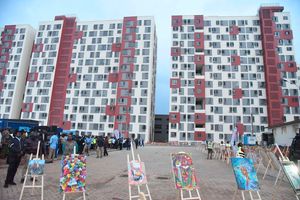
Some of the buildings on the disputed land.
Photo credit: Evans Jaola | Nation
According to evidence presented in court, the subdivision and subsequent dealings occurred without valid board resolutions or shareholder consent, a serious breach of corporate governance laws.
In 1995, the Kitale Hotel was leased to Mr Vipul Ratilal Dodhia for a 16-year term, again without any documented evidence of payment to the company. Matters worsened in 1996 when the property was sold to Mundebe Investment Company Limited for just Sh300,000, a price that the court ruled was “grossly undervalued” and unsupported by any credible payment records.
The land changed hands again in 2002, this time to Cherangani Investments Company Limited, which claimed to have paid Sh19.5 million. However, the court found these payments equally dubious, noting the absence of bank records, receipts, or audited financial statements to support the transaction.
Instead, the court was convinced that the payments were made in cash to individual directors, bypassing company accounts and denying shareholders their rightful proceeds.
Justice Nzili said the case reflected systemic failure by the company’s leadership, who failed to hold annual general meetings, never presented audited accounts, and withheld both rental income and sale proceeds from shareholders.
Equally scrutinised were the purchasing parties. While they claimed to be bona fide purchasers for value without notice, the court rejected this argument, noting that as early as 1995 the buyers had been formally warned of shareholder disputes and ongoing litigation.
Critically, a 1995 court injunction from the High Court in Kakamega had specifically barred any dealings with the property, yet transactions proceeded in violation of that order.
In his ruling, Justice Nzili invoked Article 40(6) of the Kenyan Constitution, which safeguards property rights but excludes titles acquired through fraud or illegality. He therefore declared the transfers to Mundebe Investment and subsequently Cherangani Investments null and void.
Cherangani Investments was found to be holding the land in trust for Trans Nzoia Investment Company and was ordered to facilitate its return.
The court also directed all current occupants to vacate the property and instituted an inquiry into rental income generated from 1995 to date.
In addition, the 1st, 5th, 6th, and 7th defendants were found jointly liable for legal costs and financial restitution based on the outcome of the profit inquiry.
For the over 2,600 shareholders of Trans Nzoia Investment Company, the ruling marks a long-overdue vindication after decades of being sidelined from the land's economic benefits.
However, the judgment has left traders and tenants operating on the land in a state of confusion and fear, unsure of the legality of their tenancy agreements.
“We have been paying rent all these years without knowing the true owner of the land. Now we fear losing everything,” said a trader who requested anonymity due to the sensitivity of the matter.
Traders are now calling for clarity and direction, fearing that they could face eviction or financial loss following the court’s decision.
Peter Puka, one of the Trans Nzoia Investment Company members, speaks to journalists.
Photo credit: Evans Jaola | Nation
A section of the company’s shareholders, led by Mr Robert Makona and Mr Peter Puka, have welcomed the ruling and urged for a swift implementation to allow the rightful owners to benefit from the land's economic value.
“This land has not benefitted the majority of shareholders for decades because of poor governance and secrecy,” Mr Puka said in an interview in Kitale.
They also called for the resumption of regular Annual General Meetings (AGMs) to ensure transparency, accountability, and inclusive decision-making going forward.
Focus now shifts to the execution of the judgment, the recovery of lost rental income, and resettlement of affected tenants. These developments are likely to define the town's legal and economic landscape for years to come.