In the harsh, sun-scorched plains of Turkana North, the dusty settlement of Lokitaung has long carried the weight of history and neglect in equal measure.
Last week, that silence was briefly broken.
For the first time since the advent of devolution, the historic town once a colonial detention camp that held Kenya’s founding President Mzee Jomo Kenyatta and fellow members of the Kapenguria Six, hosted Madaraka Day celebrations, rekindling hopes of development in one of the country’s most isolated frontiers.
For many residents, the event was more than a national commemoration but a rare moment of recognition for a town that has lived for decades in the shadows of Kenya’s independence story.
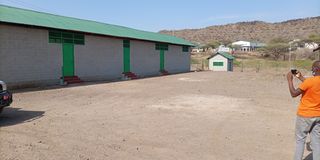
A section of Lokitaung town in Turkana North Sub-County on June 1, 2026. The town came alive when it hosted Madaraka Day celebrations.
Photo credit: Sammy Lutta | Nation Media Group
Thousands of residents, pupils and students drawn from Turkana North’s six wards thronged Lokitaung Baraza Park, transforming the remote outpost into a vibrant sea of colour, patriotic songs and traditional dances, with the choice of venue carrying deep historical resonance.
Lokitaung is etched into Kenya’s liberation memory as the site where Mzee Kenyatta and his fellow Kapenguria Six of Bildad Kaggia, Ramogi Achieng Oneko, Kung’u Karumba, Paul Ngei and Fred Kuba were imprisoned by the colonial administration between 1953 and 1959 following their conviction over the struggle for independence.
Its unforgiving heat and isolation made it one of the most feared detention sites of the colonial era.
Yet despite its symbolic place in the nation’s history, residents say Lokitaung has remained largely forgotten, left behind in terms of roads, healthcare and economic opportunity.
For many, the celebrations reignited long-held calls to transform the former detention site into a preserved historical landmark that could attract tourism, research and investment, while also generating income for local communities.
Evans Lopetet, one of the residents, said the decision to host Madaraka Day in Lokitaung carried meaning far beyond just a ceremony. He said it signalled hope that the area could finally be revived from decades of neglect.
“Lokitaung needs to be revived as a historical town like President Uhuru Kenyatta ensured that we access basic services just like other Kenyans. As youth, we have been forgotten just like key historical sites in the county. We don’t have jobs and key skills to be self-employed. Even if we go to Lodwar, Kitale or Nairobi, many of us end up doing menial jobs. The Post Office building should be renovated and equipped as an ICT centre,” he said.
Around him, residents pointed to abandoned government buildings and crumbling infrastructure as visible reminders of years of underinvestment.
They also raised concerns over the poor state of roads, saying repeated promises to tarmac the Makutano Junction–Kalokol–Lokitaung road stretching about 210 kilometres have yet to be fulfilled, leaving key sections incomplete and the town cut off from economic opportunity.
Turkana Governor Jeremiah Lomorukai said holding Madaraka Day in Lokitaung was a deliberate decision to rotate national celebrations across the county and ensure remote communities benefit from national attention and investment.
“Holding this year’s celebrations in Lokitaung is also deeply symbolic and historically significant. It is here in Lokitaung that Kenya’s founding father Jomo Kenyatta and members of the Kapenguria Six were imprisoned by the colonialists between 1953 and 1959,” he said.
Madaraka Day celebration in Lokitaung unlocks development potential of the historic town.
Photo credit: Sammy Lutta | Nation Media Group
“As we commemorate Madaraka Day in this historic town, we honour the sacrifices, courage and resilience of those patriots whose struggle laid the foundation for the freedom, dignity and self-governance we enjoy today,” he added.
The governor said both county and national governments were committed to accelerating development in Lokitaung and the wider Turkana North region through improved healthcare, infrastructure, tourism development and expanded public services.
During a tour of Lokitaung Sub-County Hospital, he reiterated the importance of strengthening healthcare at the grassroots level.
“By investing in health facilities closer to our people, we are improving access to quality care, reducing referrals and ensuring residents receive timely medical services. I commend the health workers serving in Lokitaung for their dedication,” he said.
He pledged improved drug supply, better referral systems through additional ambulances, and completion of stalled projects including staff houses, a laboratory, mortuary and ablution block.
County Commissioner Julius Kavita said poor infrastructure remained a major barrier to development, but noted that inter-agency efforts were underway to open up the region.
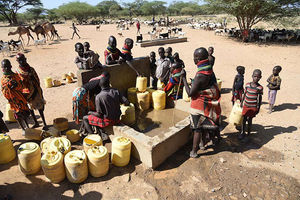
“Poor road networks have been a challenge to service delivery. During drought, some relief food supplies could not reach affected areas. We are engaging relevant roads agencies to open up remote villages, particularly during the rainy season,” he said.
He added that feasibility studies for the Makutano Junction–Lokitaung road by the Kenya National Highways Authority (Kenha) were nearing completion, a step he described as critical toward eventual tarmacking.
He also revealed efforts to revive the stalled Kalokol–Lokitaung road project after a contractor reportedly abandoned works midway.
Beyond infrastructure, security and cross-border trade remain key priorities.
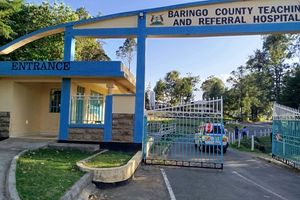
A section of Lokitaung Sub-County Hospital. Turkana Governor Jeremiah Lomorukai announced that the facility is undergoing major upgrade by the county government.
Photo credit: Sammy Lutta | Nation Media Group
Mr Kavita said improved peace with neighbouring Uganda, Ethiopia and South Sudan could unlock trade and attract investment to border communities.
Turkana North Deputy County Commissioner George Orina said security agencies were also working to clear dense vegetation along Lake Turkana, particularly around Todonyang, to improve surveillance and response during cross-border incidents.
Turkana North MP Ekwom Nabuin used the occasion to highlight another long-standing challenge: access to civil registration services.
He said residents in far-flung areas such as Kibish still travel up to 800 kilometres to Lodwar to obtain identity cards and other documents.
“Since independence, locals have been travelling to Lodwar for registration services. Those from Kibish Centre near the Kenya–Ethiopia border must cover about 800 kilometres to and from Lodwar,” he said.
He said an NG-CDF-funded office has already been established in Lokitaung and is awaiting deployment of officers to decentralise services.
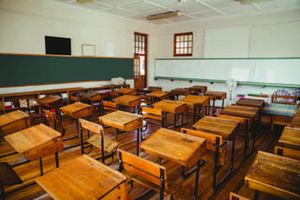
The MP also pointed to ongoing education projects, including classroom renovations and new infrastructure at Lokitaung Boys Secondary School and Lokitaung Mixed Primary and Junior School.
Mr Kavita further disclosed plans to create a third sub-county in Turkana North to improve service delivery in the vast constituency.
“The establishment of a third sub-county is at an advanced stage. This will improve access to services from Kibish to Naduat and eventually strengthen representation and development,” he said.
For Lokitaung, the Madaraka Day celebrations offered a fleeting but powerful reminder that even the most remote corners of Kenya remain tied to the nation’s story—not just as historical footnotes, but as communities still waiting for that promise of independence to fully arrive.