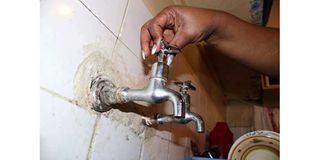
It was a major victory for residents of Eldoret in the bitter battle over water prices after the Eldoret Water and Sanitation Company (Eldowas), was forced cut its proposed tariff increases following sustained public protests, court intervention and pressure from regulators.
The breakthrough came after tense negotiations involving the Uasin Gishu County Government, Eldowas management, consumer groups and other stakeholders over a tariff review that residents had fiercely opposed as punitive and unaffordable amid the rising cost of living.
Under the new deal, households and institutions in the first six consumption bands will now pay Sh84 per cubic metre of water instead of the Sh130 initially proposed by the utility, a major reduction that eases pressure on thousands of consumers in Kenya’s newest city.
The revised tariffs represent a 100 per cent increase, significantly lower than the nearly 300 per cent rise contained in the original proposal by the Eldowas.
The utility had sought to raise more than Sh2.2 billion through higher water charges to finance infrastructure expansion and improve water services in the rapidly growing city.
However, residents argued that the proposed increase would impose an unbearable burden on households already struggling with soaring living costs.
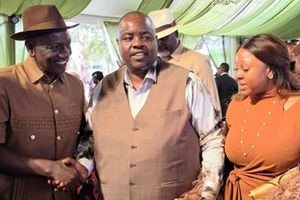
“I have directed Eldowas to lower the first consumption block, which affects the majority of our residents, by Sh46 per cubic metre of water,” said Uasin Gishu Governor Jonathan Bii, who played a central role in brokering the settlement.
Under the revised agreement, consumers in the first six consumption bands, representing the majority of households and institutions, will now pay Sh84 per cubic metre of water. The amount comprises the previous tariff of Sh37.50 and an additional Sh46.50.
Initially, Eldowas had proposed charging the same category of consumers Sh130 per cubic metre, made up of the existing Sh37.50 tariff and an additional Sh93.
The dispute had escalated into a legal and regulatory standoff after residents, represented by Mr Kipkorir Menjo and Mr David Chebet filed a petition in court challenging the proposed tariff increases, ultimately forcing the utility, county government and regulators back to the negotiating table.
The Water Services Regulatory Board (Wasreb) subsequently ordered Eldowas to revert to the old tariffs, while the Environment and Land Court in Eldoret issued conservatory orders barring the company from implementing the proposed charges pending determination of the case.
Following the agreement, stakeholders will jointly submit the revised tariff structure to Wasreb for approval and gazettement.
Operational inefficiencies
In a move aimed at easing the burden on consumers, Governor Bii also issued an executive order waiving water bill arrears accumulated during the period when conflicting court directives and regulatory orders created uncertainty over the applicable tariffs.
The governor challenged the utility to tackle operational inefficiencies instead of relying solely on tariff increases to raise revenue.
“Eldowas needs to intensify efforts towards reducing non-revenue water losses, enhancing operational efficiency, modernising infrastructure and strengthening accountability mechanisms within the water distribution system,” he said.
Eldowas Managing Director Dr Lawrence Sitienei defended the need for additional revenue, saying the utility was struggling to complete critical water projects because of inadequate income and massive water losses.
“Although we generate approximately Sh1.3 billion annually, about Sh300 million is lost through illegal connections and leakages from ageing infrastructure,” he said.
The tariff debate comes amid worsening water challenges in Eldoret, where residents frequently endure rationing, supply interruptions and complaints over discoloured water.
According to company data, Eldowas loses billions of litres of treated water annually through leakages and illegal connections, translating into hundreds of millions of shillings in lost revenue.
The crisis has been compounded by the rapid growth of Eldoret, the industrial hub of the agriculturally rich North Rift region.
With a population exceeding 500,000, Eldoret is among Kenya’s fastest-growing urban centres and requires an estimated 60 million litres of water daily. Current production, however, stands at only 43 million litres per day, leaving a substantial supply deficit.
“There is an urgent need for the water company to replace ageing infrastructure, which is responsible for recurring water shortages and discoloured water, and provide services that match Eldoret’s city status,” said resident David Kosgei.
Even as the tariff dispute eases, Eldowas continues to grapple with significant debt obligations.
The Auditor-General’s report for the 2023/2024 financial year shows the utility has an outstanding loan balance of Sh256.7 million linked to the Chebara Water Treatment Plant project.
The company’s total liabilities in water and sanitation services stand at Sh528.2 million, down from Sh597.4 million in the previous financial year.
Historical records indicate that the former Eldoret Municipal Council borrowed more than Sh1 billion from German development financier KfW to fund the construction of Chebara Dam. Following the establishment of Eldowas, the assets and liabilities were transferred to the company.
After negotiations with the National Treasury, the debt was restructured in 2020, reducing the outstanding amount to Sh312.5 million and establishing a revised repayment schedule.
Current loan obligations include financing for the Chebara Treatment Plant expansion (Sh279.3 million), the Lessos Water Supply Project (Sh188.1 million) and the Ellegirini/Kapsoya Water Supply Project (Sh656.9 million).
Company reports attribute Eldoret’s daily water deficit of about 13,000 cubic metres to rapid population growth, rising demand and inadequate funding for the rehabilitation of ageing infrastructure.
The utility’s non-revenue water currently stands at approximately 38 per cent, one of the key factors undermining service delivery and financial sustainability.