One isolation room, 50 million people: The dangerous gap in Kenya’s Ebola preparedness

Ebola spreads through direct contact with bodily fluids such as blood, saliva and sweat from an infected individual.

What you need to know:
- Health Principal Secretary Mary Muthoni confirmed that Kenya has only one such facility in the entire country: at Kenyatta National Hospital in Nairobi, far from the borders where the risk of importation is highest.
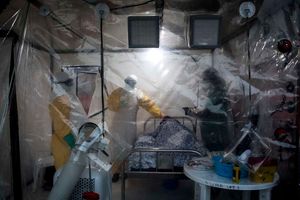
If an Ebola patient walks into a hospital in Kisumu, Eldoret, or Mombasa today, there is no purpose-built viral hemorrhagic fever isolation unit prepared for them. Health Principal Secretary Mary Muthoni confirmed to the Nation that Kenya has only one such facility in the entire country: at Kenyatta National Hospital (KNH) in Nairobi, far from the borders where the risk of importation is highest.
That is Kenya’s first line of defence against a disease that kills roughly 50 per cent of the people it infects, has no approved vaccine, and no approved treatment.
Also read: What you need to know about Ebola
When asked about the country’s preparedness, Muthoni said: “Kenya has only one isolation unit specially designed to manage confirmed viral hemorrhagic fever patients (Ebola) at KNH.”
Although health leaders are aware of these gaps, little action has been taken given the seriousness of the situation. A key concern is what happens to cases that do not arrive in Nairobi first. Can counties manage these cases? What measures are being implemented, especially given the lack of sufficient capacity across the country?
While the deadly outbreak spreads through the Democratic Republic of Congo and Uganda, killing one in every two people it infects, Kenya’s senior health leadership is thousands of kilometres away at the World Health Assembly in Geneva. They include Health CS Aden Duale, Principal Secretaries Muthoni and Dr Ouma Oluga and Director General for Health Patrick Amoth.
President William Ruto, meanwhile, flew to Baku, Azerbaijan on May 17 for the World Urban Forum, where he is showcasing Kenya’s affordable housing agenda.
On May 18, Africa CDC Director General Jean Kaseya declared the Ebola outbreak a Public Health Emergency of Continental Security — the highest alert level the body can issue — and announced he was cancelling his own Geneva engagements to return to Africa and visit affected countries directly.
“I am deeply concerned about the ability to contain the outbreak without vaccines or medication,” he said.
Kenya’s delegation, however, remained in Geneva.
Across the border in Uganda, the government has postponed the annual Uganda Martyrs’ Day celebrations scheduled for June 3 to reduce the risk of crowd transmission. Health authorities have launched webinars to train healthcare workers on distinguishing Ebola symptoms from malaria, which presents similarly in early stages. Handshakes have been temporarily banned. Rapid response teams have been deployed along major transit routes. Border screening is operating around the clock.
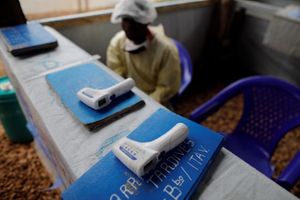
In Busia, Kenya’s busiest land border with Uganda, people are walking across without being screened at all.
The Ebola Bundibugyo strain is not a condition that allows for measured deliberation. As of May 18, Africa CDC had recorded approximately 395 suspected cases and 106 associated deaths across the DRC and Uganda. Uganda has confirmed two laboratory verified cases and one death.
“In the previous outbreak, we had case fatality rates ranging from 30 to 50 per cent. It is a very deadly disease. Ebola Bundibugyo is one of the viruses for which there is no approved vaccine and no approved therapeutics,” said Dr Tonny Musoke Sekikongo, a consultant physician from Mulago Hospital’s Ebola Treatment Unit who chairs case management in Uganda’s national Ebola response.
That last point bears repeating: There is no approved vaccine for the Bundibugyo strain. There is no approved treatment. A patient who contracts it faces odds that no drug or injection can currently improve. The only weapons available are surveillance, rapid containment, and the kind of coordinated border management that cuts transmission before it can establish a foothold.
Before departing for Switzerland, PS Muthoni issued an urgent national advisory directing all 47 county governments to immediately activate emergency preparedness protocols.
The directive covered enhanced screening at all points of entry, activation of County Rapid Response Teams, dissemination of infection prevention guidelines, laboratory preparedness, public awareness campaigns, and refresher training for healthcare workers.
It was the right directive. Its implementation is a different matter. At the border where the most immediate risk exists, the gap between the advisory and the reality is visible to anyone who looks.
Arthur Odera, Busia Health executive, told the Nation that the county has set up a screening unit operating around the clock, checking all arrivals for Ebola symptoms. He said discussions are underway with the Red Cross to set up a separate screening unit for pedestrians on the Ugandan side of the border. Hand washing stations and sanitiser have been installed.
“This is not new to us. We have done this before. What has changed is the alert level, and we must raise our response accordingly. We will not take chances with the lives of Kenyans,” Odera said. He added that an additional surveillance unit would be operational by May 20.
But border officials told a different story. Odera was unable to provide figures for the number of people screened since the alert was raised. And clearing agents working inside the Busia One Stop Border Post say they have received no guidance, no training, and no protective equipment from anyone in authority.
Joseph Ouma, director of Clearing and Forwarding at the post, was direct about what he is seeing.
“We interact with these people daily, which is why we remain deeply concerned. We do not know what measures the government intends to take to prevent Ebola from spreading into Kenya. I personally handle passengers and border crossers, yet right now, only bus travellers are being screened. Those crossing on foot between Uganda and Kenya in either direction are not being screened at all.”
He said clearing agents who constantly handle travellers should be trained and equipped as frontline ambassadors. Instead, they have been given one instruction.
“We have been told to wash our hands. That is all we know.”
Also read: New Ebola cluster in Uganda as cases rise
He described Busia as a porous border and said that porosity, combined with the absence of a clear protocol, significantly increases the risk of importation.
“We need to be screened when we enter the customs yard. We need proper protective equipment. We need a clear protocol. Right now, we do not have the legal framework or the operational tools to deal with this threat,” Ouma said.
In Kajiado County, which manages the Namanga and Oloitoktok border crossings with Tanzania, the Nation was unable to establish what measures are in place. The county Health Executive Alex Kilowua did not answer calls or respond to text messages.
Dr Misaki Wayengera, a Ugandan virologist and infectious disease surveillance specialist, explained that the Bundibugyo strain belongs to the Ebola virus family found in bats and primates, and is zoonotic, meaning it transfers from animals to humans before spreading person to person. Increased human encroachment into wildlife habitats continues to heighten the risk of new spillover events.
First identified in Uganda in 2007, the Bundibugyo strain has remained relatively rare, a characteristic that has made dedicated research and vaccine development difficult to justify commercially. Its rarity is also what makes it dangerous: there is no established medical countermeasure waiting to be deployed.
“Symptoms of the Bundibugyo strain are similar to those of other Ebola variants, but differences often emerge in severity and fatality rates between outbreaks,” Dr Wayengera noted.
That similarity to malaria symptoms in the early stages is precisely why Uganda has invested in training health workers to tell the two apart. In a country where malaria is endemic, and patients present daily with fever, weakness and muscle pain, a health worker who cannot distinguish between the two is a surveillance system with a significant blind spot.
Kenya, which also carries a high malaria burden, has the same vulnerability.
“Kenya shares a border with Uganda. The patient who died in Kampala crossed an international boundary to reach the hospital where he died. The next patient may not stop in Kampala. Busia is open. The people are crossing. The handshakes are still happening,” Mr Ouma said.