Premium
Hundreds lose jobs as Rivatex prepares for takeover by new investor

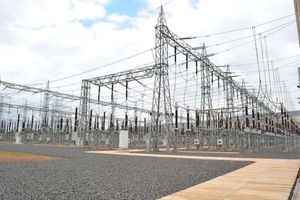
Rivatex East Africa Limited in Eldoret City in this picture taken on January 13, 2023.

Hundreds of textile workers at Rivatex East Africa in Eldoret are facing an uncertain future after the company announced major job cuts as part of a government-backed restructuring plan.
The plan involves leasing the firm to a strategic non-equity partner in a bid to revitalise its operations and reduce reliance on state support.
The redundancy notice has sent shockwaves through one of Kenya’s oldest textile firms as the government prepares to hand over the company to a new investor who won a 21-year lease tender. The investor is expected to inject fresh capital to revive the country’s struggling textile and cotton industry.


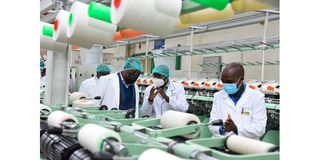
Industrialization Principal Secretary Peter Kaberia (left), is guided by Prof. Thomas Kipkurgat (centre), Managing Director of Rivatex East Africa Limited in Eldoret town, Uasin Gishu during a visit to check on the modernization progress of textile factory on September 09, 2021.
According to a company notice, about 400 employees whose contracts expired on August 30 were not renewed under the restructuring plan. The company has also issued a three-month redundancy notice to employees on permanent and pensionable terms as it prepares for the takeover.
“The company will adhere to the outlined labour laws in the redundancy process, as well as guidelines issued by the Ministry of Investments, Trade, and Industry,” said the management in a notice, urging affected staff to clear with the relevant departments.
Some employees confirmed receiving redundancy letters and said they were encouraged to reapply for jobs once the new management takes over.
“This job has been my main source of income for more than 10 years. I don’t know how I’ll provide for my family now that I havve been laid off,” said one worker who had received a termination letter.
The layoffs have left many households in distress, particularly among staff in the spinning, weaving, tailoring, and marketing departments.
“We have been issued termination letters and paid dues for the last five months. But the new entity has promised to revive the firm and create more jobs,” another employee said.
Kenya Tailors and Textile Workers Union (KTTWU) Secretary-General Joel Chebii urged Rivatex to ensure all employees are paid their dues, including terminal benefits, before the new investor takes over.
“We are not opposed to the handover, but workers must not lose their benefits. They should be fully compensated before the transition,” said Mr Chebii, who also chairs the Central Organisation of Trade Unions (COTU-K).
He also called on the incoming investor to prioritise former Rivatex employees when rehiring after the restructuring.
The strategic non-equity partner, believed to be from Benin, was selected earlier this year after the Cabinet approved Rivatex’s privatisation despite years of government and donor investment.
A source said the takeover process will take three months, during which the investor will inject working capital and technical expertise to modernise operations.
Senior officials from the Ministry of Investments, Trade, and Industry are expected to oversee the handover.
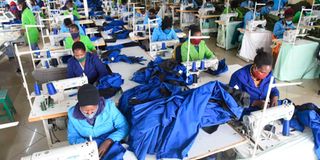
Workers at Rivatex in Eldoret.
President William Ruto, speaking last month, said the Treasury and the ministry would facilitate the process.
“We are bringing the private sector into the equation so that we can have an off-taker that provides seeds and planting materials to farmers and ensures a predictable offtake of cotton products,” Dr Ruto said.
“Rivatex has a huge capacity for textile production, and we want to revive that potential.”
Rivatex, which Moi University acquired for Sh205 million in 2007, has long struggled with financial and operational challenges, including high energy costs, inadequate raw materials, and inefficient production systems.
The firm reported a loss of Sh347.6 million for the financial year ending June 2023, raising its cumulative losses to over Sh3 billion.
Once a leading textile manufacturer producing up to 15.7 million meters of fabric, Rivatex was placed under receivership in 2000 following years of mismanagement.
Despite government and donor investments in upgrades, the company continues to operate below capacity. It has recently implemented cost-cutting measures, including recycling 32,800 kilograms of fibre waste worth Sh9.8 million to produce yarn for school uniforms.
During a recent visit, the Parliamentary Committee on Trade, Industry and Cooperatives said Rivatex’s limited market impact despite heavy investment was due to high operational costs, especially electricity.
“The high cost of energy remains a major challenge. While countries like Ethiopia and Uganda attract investors through affordable tariffs, Kenya is yet to operationalize industrial power rates,” said committee chair Bernard Shinali.
The committee recommended that government departments support Rivatex by purchasing its products to boost revenue and sustainability.
Vice chair Maryanne Keitany noted that inconsistent cotton supply and outdated ginneries continue to cripple production.
“There is a need to strengthen the cotton value chain — from providing quality seeds to upgrading ginneries — to ensure steady supply and optimal operations at Rivatex,” she said.
Kenya currently produces about 5,300 tonnes of cotton annually, far below the national demand of 38,000 tonnes, forcing the country to import cotton worth an estimated Sh17 billion each year.