Inside Eldoret’s Sh5.37bn housing project: 2,157 homes, 104 shops and a new way of living
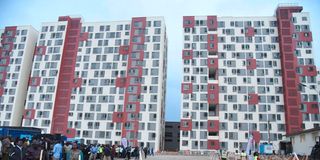
A section of the Pioneer Affordable Housing Project in Eldoret City, Uasin Gishu County opened by President William Ruto on October 18, 2026.

Eldoret’s skyline is changing after the unveiling of a Sh5.37 billion housing development in Pioneer Estate, featuring 2,157 residential units, 104 shops, and a range of community facilities.
President William Ruto unveiled the houses on Sunday night, saying the project demonstrates the government’s commitment to making home ownership possible for ordinary Kenyans.
The President dismissed critics of the government’s Affordable Housing Programme, saying the completion of major projects such as Eldoret’s Sh5.37 billion Pioneer estate demonstrates that his administration can deliver on its promise to make home ownership possible for ordinary Kenyans.


Speaking during the unveiling of the units, the President said the programme had faced scepticism, legal challenges and claims that it was unrealistic, but insisted that the homes now taking shape were evidence of progress.
“For those who thought this was a prank, for the many people who thought this would never happen, this is the evidence,” President William Ruto said.
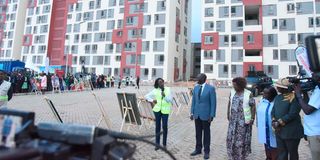
President William Ruto (second from left), Housing Cabinet Secretary Alice Wahome (third from left) and other officials during the opening of the Pioneer Affordable Housing Project in Eldoret City, Uasin Gishu County, on October 18, 2026.
He added: “I assure you no one is going to stop the affordable housing project.”
Located on 12 acres in Pioneer Estate, Kapseret Constituency, Uasin Gishu County, the project comprises 15 apartment blocks, each rising 14 floors above ground, alongside 104 shops and a range of social amenities.
During the Sunday evening ceremony, the President handed over keys to beneficiaries, including young people and workers whose participation in the construction industry, he said, had helped them move closer to home ownership.
The project is designed to accommodate different income groups, with a mix of social housing, affordable housing and market-rate apartments.
According to a project brief dated October 10, 2026, the development had reached 85 per cent completion, with October 20, 2026, set as the target completion date.
The project has a contract value of Sh5,371,073,500.80 and is being undertaken by Vaghjiyani Enterprises Ltd, with BECS Consultancy serving as the consultant.
Beyond the apartment blocks, the estate is planned as an integrated residential community, with facilities for shopping, childcare, recreation, waste management and other everyday services.
Three housing categories
The project brief lists 2,157 housing units distributed across three categories: 552 social housing units, 1,065 affordable housing units and 540 market-rate units.
The social housing category comprises one-, two- and three-room configurations, while the affordable housing units range from studios to three-bedroom apartments. The market-rate category consists of two- and three-bedroom apartments.
The mix is intended to provide housing options for households with different needs and financial capabilities within Eldoret’s expanding urban area.
During the unveiling ceremony, President Ruto said the programme was intended to give more Kenyans, particularly young people and lower-income earners, an opportunity to own homes.

A section of the Pioneer Affordable Housing Project in Eldoret City, Uasin Gishu County opened by President William Ruto on October 18, 2026.
He highlighted beneficiaries who had received keys to their houses, including a mechanic and Abigail, a young woman whom he described as having worked hard to acquire a home.
“Who would believe that in Kenya you can pay Sh32,000 and own a house? Today, it is a reality,” the President said, referring to the programme’s home-ownership proposition. The project information provided did not specify the unit category or payment terms associated with that figure.
Dr Ruto said the development demonstrated that home ownership need not remain beyond the reach of ordinary workers.
He also cited a plumber who studied at Eldoret Polytechnic under National Youth Service sponsorship and undertook an internship at the construction site, presenting the project as an opportunity for young people to gain practical skills while working towards financial independence.
A community beyond the apartments
The Pioneer estate is designed to offer more than residential accommodation.
Its planned facilities include a community centre, kindergarten, clubhouse, commercial stalls, playground and green open spaces.
Supporting infrastructure includes a power house, gate house, garbage receptacles, boundary wall, sewer reticulation, paved roads, parking, overhead water tanks and landscaping.
The President also highlighted piped gas as part of the development’s facilities, saying the project was intended to offer residents a modern living environment.
Dr Ruto described the housing programme as an effort to create communities where Kenyans from different economic backgrounds could live together.
“This is not just brick and mortar. Everyone has their space here,” he said, arguing that the programme was intended to accommodate different housing needs rather than segregate residents.
He said the development would combine home ownership with access to commercial and communal facilities, helping create a neighbourhood where residents could live, work and access essential services.
The project brief also includes photographs showing cabro paving, electricity supply, street-lighting works and lift installation.
A section of the Pioneer Affordable Housing Project in Eldoret City, Uasin Gishu County opened by President William Ruto on October 18, 2026.
Jobs and local manufacturing
The housing project has also generated employment and business opportunities during construction.
According to the project brief, more than 850 local workers had been engaged, with the workforce expected to expand as construction progressed.
During the ceremony, Ruto cited a cumulative figure of about 400,000 workers involved in construction activities associated with the project. He also said construction-related activities had generated more than 5,000 jobs daily in Eldoret. The figures were not reconciled with the project brief.
The President said the project had created opportunities for local artisans and small businesses, including food vendors, transport operators and suppliers of construction materials.
He cited Sh264 million channelled to the Jua Kali sector through the Pioneer development, saying the government had deliberately sought to ensure local enterprises benefited from the investment.
The project has also created demand for building materials. Ruto cited the use of 394,000 bags of cement and four million kilogrammes of steel, which he said had been manufactured in Kenya.
He added that 97 per cent of the materials used in the development were locally sourced.
The President said local artisans had been prioritised for the fabrication of doors, windows and fittings, creating opportunities for small enterprises and skilled workers.
He also announced plans to begin manufacturing lifts locally, saying seven manufacturers had been awarded contracts. The lifts used in the Pioneer project, he said, would be among the last to be imported under the government’s planned shift towards domestic production.
Ruto said the housing programme was intended to stimulate economic activity beyond construction sites by connecting public investment with local manufacturing, employment and small businesses.
Part of a wider housing drive
The Pioneer development is among several housing projects the government is pursuing in Uasin Gishu County.
President Ruto said the county had about 12,000 housing units under development, including projects in Railways, Kidiwa and Lumumba.
Nationally, he said more than 300,000 housing units were being developed, with 45,000 expected to be ready by January 2027. He also cited a target of 45,000 completed units by the end of the year.
The President defended the programme against criticism over its feasibility and the deductions used to support it, saying the government remained committed to expanding access to decent housing.
He argued that the initiative would enable more households to own homes and reduce pressure on agricultural land as urban populations grow.
The Pioneer project began on July 15, 2024, under a 24-month contract. Its completion is expected to add residential accommodation, commercial premises and community facilities to Eldoret’s urban infrastructure.
For the government, the development is a flagship example of its Bottom-Up Economic Transformation Agenda, which seeks to expand economic opportunities by linking housing delivery with employment, local manufacturing and enterprise growth.
Follow our WhatsApp channel for breaking news updates and more stories like this.