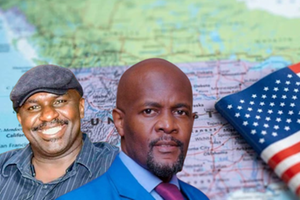
When David Ngugi Ngigi first stepped onto American soil seven years ago, he carried with him more than just the modest belongings packed in his suitcase.
He had an unshakable conviction that somehow, against all odds, he would find his place in the healthcare system.
Today, at 50, he is a Licensed Practical Nurse (LPN), working as a travel nurse across American hospitals. His childhood dream is now his daily reality.
David’s story begins in Dandora, a densely populated, low-income neighbourhood in Nairobi. Born into a family of six children where he was the third-born, David’s early life was marked by both intellectual curiosity and financial hardship.
“From as early as I can remember, I was fascinated by science and medicine. I would picture myself in a white coat, moving through hospital corridors, saving lives,” David tells Nation Lifestyle.
However, the path to realising this dream was anything but straightforward. Despite demonstrating academic promise and scoring well in his high school examinations, David found the doors to higher education firmly closed.
“My father worked for an Indian company in Nairobi,” David explains, “and while he worked tirelessly, his earnings could barely cover our basic needs, let alone my university tuition.”
This financial barrier forced David to confront a difficult reality - his dream of becoming a medical professional would have to wait.
“There’s something about poverty,” David reflects, “that plants in people a stubborn kind of hope. I watched my father struggle every day to provide for us, and that became my motivation to work harder and seize every opportunity that came my way.”
David Ngugi Ngigi who lives and works in the US.
Photo credit: Pool
His first job after high school was at a construction site, where he earned just Sh70 per day (less than $1 at the time). From there, he transitioned to work as a butcher, then as a restaurant attendant, later becoming a theatre manager, and eventually starting his own small printing and stationery business. Each role represented not just a means of survival but a lesson in perseverance.
In 2018, after years of working odd jobs and saving diligently, David got an opportunity to move to the United States. “I knew this was my turning point,” David recalls.
The transition wasn’t easy. David arrived with minimal savings and no professional network. Fortunately, he was able to stay with his cousin Stan, an ICU nurse who became both his anchor and inspiration.
“Stan didn’t just give me a place to stay,” David explains. “He introduced me to the reality of nursing in America - the challenges, the rewards, the day-to-day realities. Our late-night conversations about patient care, about the satisfaction that comes from helping others, reignited my passion for healthcare.”
Determined to establish himself, David made the strategic decision to move to Seattle in 2021. There, he enrolled in a Certified Nursing Assistant (CNA) programme while working as an Uber driver to support himself.
“Becoming a CNA was eye-opening,” David says. “It gave me my first real exposure to patient care - helping them walk, changing linens, providing basic but essential support. It was hard work, but it confirmed that I was on the right path.”
David’s work ethic during this period was extraordinary. Between his CNA shifts and Uber driving, he was earning up to $2,600 per week (approximately Sh336,050).
Like many immigrants chasing the American dream, David found himself tempted by alternative paths to success. As he worked in healthcare, he noticed friends and acquaintances finding financial success in the trucking industry.
“There was one story in particular,” David says, “about a Kenyan who went from odd jobs to owning multiple trucks. The idea of being my own boss was appealing, and I thought this could be a way to fund my nursing education.”
David’s foray into trucking proved to be both challenging and enlightening. The long hauls - some covering 4,200 kilometres from Seattle to Oklahoma - were physically and mentally gruelling.
“The money was decent at first,” David explains, “but after the Covid-19 pandemic hit, my weekly earnings dropped to between $1,000 and $1,200. [Sh129,250 to Sh155,100]. More importantly, I found the work isolating and unfulfilling.”
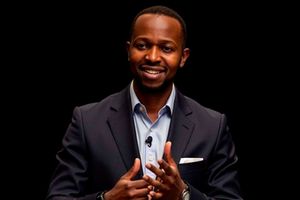
David Ngugi Ngigi.
Photo credit: Pool
A pivotal moment came during one particularly exhausting route. “I was physically and mentally drained,” David remembers. “In that moment of stillness, I realised I was chasing success but ignoring purpose. Trucking might have been profitable, but it wasn’t what I was meant to do.”
Without hesitation, David left the truck with his co-driver and booked a flight back to Seattle.
Returning to healthcare, David enrolled in an LPN programme, committing fully to his original dream. The next two years would test his resolve like never before.
“I worked double shifts - 16 hours a day - at a memory care facility as a CNA,” David recounts. “After my shifts, I’d go straight to morning classes. Then I’d study at the library for two hours every day just to keep up, especially with subjects like anatomy and pharmacology where the terminology was challenging.”
The emotional toll was equally significant. “The loneliness was overwhelming at times,” David admits. “I had to sacrifice nearly all my social time to keep up with the coursework. What saved me was finding a church community that provided both spiritual nourishment and a sense of belonging.”
In 2024, David’s perseverance paid off when he earned his LPN licence. Today, as a travel nurse, he enjoys both professional fulfilment and financial stability. “My earnings have more than doubled from my CNA days,” David notes. “I typically make between $50 and $60 per hour [Sh6,460 to Sh7,752], depending on the location and assignment. The travel nursing model is particularly advantageous - with stipends for housing and per diem, a significant portion of my income isn’t taxable.”
Looking ahead, David isn’t resting on his accomplishments. He’s setting his sights on becoming a nurse practitioner with a specialisation in mental health. “Mental health is one of the most pressing crises of our time,” David observes. “I want to be part of the solution, to help address this growing need.”