'Gene drive mosquitoes’ set for 2029 release to fight malaria in East Africa
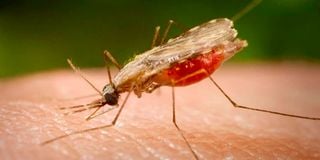
Anopheles mosquito. It is the main main vector for malaria. Africa bears nearly the entire global burden of malaria.

What you need to know:
- Scientists in Tanzania plan Africa’s first gene drive mosquito trial by 2029 to fight malaria resistance.
- Gene drive technology aims to stop malaria transmission as rising drug and insecticide resistance weakens current interventions.
Scientists at the Ifakara Health Institute in Tanzania say that four years from now, Africa will see its first gene drive trial. The project will involve releasing mosquitoes co-developed with Imperial College London using advanced genetic technology.
Not all modified mosquitoes use “gene drive” technology. This particular tool, supported by the Gates Foundation, ensures that malaria-blocking traits are passed on to future generations. Researchers believe the innovation could dramatically reduce malaria infections and deaths, especially among children under five who remain the most vulnerable.
Dr Dickson Lwetoijera, the principal research scientist at Ifakara, explained that his work focuses on outdoor mosquito behaviour and genetically based tools designed to complement and extend current control strategies. He said this progress follows research by Transmission Malaria, a team from Imperial College London working with the Ifakara Health Institute and the National Institute of Medical Research in Tanzania. The team developed genetic technology that prevents mosquitoes from transmitting the malaria parasite and includes a gene drive to ensure future generations remain resistant to the parasite.
Transmission Zero, an international research programme, aims to develop and test mosquito population modification gene drives for malaria elimination. Its modular effector and drive systems, built on minimal genetic changes to the mosquito genome, allow for staged, adaptive and informed development and testing in semi-field and field conditions.
The technology, African scientists say, could greatly reduce malaria cases. “Each year, more than 263 million people contract malaria, which is endemic in 83 countries. In 2023, there were 600,000 deaths, with African countries accounting for 94 per cent of these. Children under five made up 76 per cent of the fatalities,” Dr Lwetoijera noted.
He added that current prevention methods are becoming less effective as mosquitoes develop resistance to insecticides and barrier-based controls. Malaria parasites have also developed drug resistance, creating an urgent need for new solutions.
In July last year, African scientists in Rwanda raised concerns that mosquitoes on the continent appeared to be “beating” humans. They warned that artemisinin resistance had been found in over 10 per cent of malaria-infected individuals in Uganda, Tanzania, Ethiopia, Eritrea and Rwanda, according to a peer-reviewed Science study.
Artemisinin, the cornerstone of malaria treatment, is the key ingredient in Coartem®, a fixed-dose combination of artemether-lumefantrine. Coartem is Kenya’s most widely used malaria drug, topping the country’s essential medicines list. The spread of artemisinin-resistant parasites across East Africa could therefore result in millions of deaths without urgent health policy changes.
Novartis, the Swedish drug-maker that developed Coartem in 1999, confirmed that the Anopheles stephensi mosquito species has evolved to resist artemisinin. This invasive mosquito, which travels by road in shipping containers, has spread rapidly in recent years, reaching Ethiopia (2016), Sudan (2016), Sri Lanka (2017), Somalia (2019), Nigeria (2020), Yemen (2021), Kenya and Ghana (2022), according to the Kenya Medical Research Institute (Kemri).
“We have already noted partial resistance in Rwanda and will soon be running trial sites in Kenya,” said Dr Caroline Boulton, head of the antimalarial drug development programme at Novartis.
Research shows how resistance is spreading. In Eritrea, PfK13 mutations—markers of artemisinin resistance—increased from 8 per cent of cases in 2016 to 21 per cent. Between 2017 and 2022, the PfK13 R622I mutation spread across three Ethiopian regions, and by 2022 similar mutations were present in Uganda, exceeding 20 per cent prevalence in many districts.
In Rwanda, where artemisinin resistance was first detected in Africa, the PfK13 R561H mutation reached 20 per cent prevalence in Masaka and 10 per cent in Rukara by 2018. In Tanzania’s Kagera region, bordering Uganda and Rwanda, the prevalence of resistant mutations reached 22 per cent in Karagwe district by 2021.
History shows the danger of delayed responses. Malawi, Kenya and South Africa switched to sulfadoxine pyrimethamine as first-line malaria treatment between 1993 and 1998 after chloroquine resistance spread. But by the time policies changed, SP’s effectiveness was already compromised.
This is why researchers at Ifakara have turned to gene drive technology, working tirelessly to create lasting solutions.
How the technology works
Dr Lwetoijera explained that Transmission Zero’s approach to vector population modification is stepwise and adaptive. The core idea involves separating the transmission-blocking effector from the gene drive into distinct modular constructs and strains. This separation allows evaluation of effector strains in malaria-endemic settings without the regulatory risks linked to gene drives.
Additionally, constructs expressing a static drive source can boost the frequency of the effector without triggering a full population-wide drive, enabling wider but contained spread.
“All genetic modifications are minimal and, where possible, fully integrated into a host gene through an Integral Gene Drive. This reduces the risk of resistant alleles emerging against either the effector or the drive,” he assured.
“Building on successes so far, Transmission Zero aims to move these technologies closer to application while expanding our tools and understanding their impacts. The ultimate goal is to begin population-wide gene drive field trials by 2030.”
Policy and funding challenges
Dr Abraham Mnzava, senior malaria coordinator at the African Leaders Malaria Alliance (Alma), observed that modifying mosquitoes so they cannot transmit malaria could be a game changer. “We thought by now malaria mortality would be drastically reduced. But climate change, drug resistance, invasive mosquito species and funding gaps still present huge challenges that demand new tools,” he said.
He added that Alma has generated about $175 million in kind—but less than 2 per cent in cash—while the US and Europe continue to scale back malaria funding. “We need African governments to step up, provide approvals and put in place proper policy frameworks,” he urged.
Dr Mnzava stressed the importance of harmonising regulations, as in some countries vector control products are classified as agricultural chemicals, forcing researchers to repeat laboratory work already done by WHO. This delays approvals and increases costs.
Before any work involving genetically modified mosquitoes begins, Transmission Zero seeks and receives authorisation from all relevant institutional and state authorities. If timelines hold, 2029 could mark the start of a new chapter in Africa’s fight against malaria.