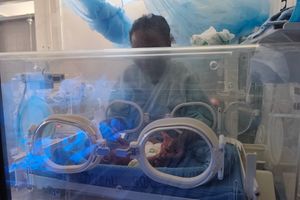
75 days without a death: Inside Homa Bay’s maternity revival

What you need to know:
- Based on the population and number of women of reproductive age in Homa Bay, the Ministry of Health set a target of 150 facility-based deliveries per month.
- However, throughout 2025, this number was frequently exceeded, with some months recording over 250 deliveries.
Eight years ago, when Snighter Achieng was pregnant with her first child, she received a stark warning: do not go to Homa Bay County Teaching and Referral Hospital unless you want to lose your baby.
"But it was the only option then because of affordability," she recalls. "There were so many stories about women being mishandled by nurses, sometimes even losing their babies as a result."
The maternity ward she walked into was one where mothers frequently complained about poor hygiene. Bedding was often torn or stained with blood. Nurses had to work with old, worn-out equipment, and mothers were sometimes required to buy non-pharmaceutical items such as gloves before receiving assistance.
Last June, Achieng returned to the same hospital to deliver her second child. What she found was a different place entirely.
"Comparing my experience at the hospital eight years ago, I can say services have improved. Mothers are no longer worried about developing complications during delivery," she says.
Today, many women who deliver at the facility refer their friends and colleagues there, citing major improvements in care, hygiene, and professionalism. Achieng is one of them.
A county defined by loss
Until a year ago, Homa Bay County consistently ranked among the counties with the highest rates of maternal and infant mortality. Deaths in maternity wards were reported almost weekly across various hospitals, and for years, this profound loss remained one of the most critical challenges for the region's health department.
According to the 2022 Kenya Demographic Health Survey (KDHS), 91 per cent of women in the county seek skilled delivery care—a rate higher than the national average of 89 per cent. However, when delivery occurs outside a health facility, the risk of complications rises sharply, sometimes resulting in the deaths of both mother and child.
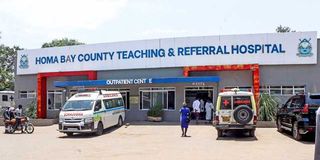
Homa Bay Referral Hospital.
The data painted a grim picture: the county records 32 neonatal deaths per 1,000 live births, significantly higher than the national average of 21. The infant mortality rate stands at 42 per 1,000 live births, with an under-five mortality rate of 61 per 1,000, compared to national averages of 32 and 41 respectively.
What changed
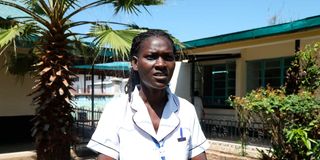
Linda Tindi, the nursing officer in charge of the new-born unit at the hospital, attributes the turnaround to several interventions introduced by the county government and partner organisations.
A key initiative has been offering comprehensive refresher training for nurses and clinical staff. Personnel have been enrolled in advanced courses to manage critical conditions such as birth asphyxia—a serious condition where a new-born has insufficient oxygen and blood flow before, during, or after delivery, which can lead to brain damage.
Tindi is one of several nurses who have received specialised training in childbirth and neonatal care.
"Paediatric nurses have been instrumental in our maternity unit," she says. "Currently, two of my colleagues are undergoing similar advanced training focused on reducing mortality rates. Once they graduate, they will further strengthen our paediatric care."
The installation of modern equipment has been equally vital. The maternity unit now maintains a constant oxygen supply and is equipped with monitors to track infants' blood sugar levels and other vital functions.
To support new-borns with respiratory distress, the hospital uses CPAP (Continuous Positive Airway Pressure) therapy—a non-invasive method that delivers gently pressurised air, often with added oxygen, to keep infants' airways open and assist their breathing.
"With this equipment, we can now comfortably manage infants who are born with breathing difficulties," Tindi explains.
The hospital has also installed radiant warmers, devices that provide gentle overhead heat from a quartz element to help new-borns maintain a stable body temperature. Temperature control is critical in the new-born unit, as low temperatures can lead to serious complications or fatalities.
"We also maintain an adequate supply of essential drugs such as caffeine citrate, which helps new-born’s with breathing difficulties. There is always a follow-up system in place to manage any stock-outs," Tindi adds.
Several key pieces of equipment were donated during World Prematurity Day, celebrated in the county on November 18, 2024. Additional support came from the Clinton Health Access Initiative, which provided nurse training, and from USAid's Momentum Country and Global Leadership programme, implemented by Jhpiego.
No one dies when giving life
Hospital Nursing Director Carol Adongo emphasises that a dedicated team works around the clock to ensure that "no one dies when giving life."
Central to this effort is a rigorous weekly review process—the Maternal and Perinatal Death Surveillance and Response (MPDSR)—which brings together health workers and county leadership, including Governor Gladys Wanga and Health Executive Grace Osewe, to analyse near-misses and prevent future deaths.
"We hold weekly meetings to review any difficult cases from the previous week and identify the best ways to manage them," Adongo explains.
New mothers are consistently educated on kangaroo care and infection prevention measures to stop avoidable infections.
The hospital now includes Emergency Maternal Obstetric and New-born Care (EmONC) training in its core programmes, equipping healthcare providers with the knowledge and skills to manage critical complications during pregnancy, childbirth, and the postpartum period.
EmONC is divided into two levels: Basic EmONC, which covers essential lifesaving interventions, and Comprehensive EmONC, which includes advanced procedures such as surgery and blood transfusions.
"We run simulation programmes where staff practise managing high-risk maternal cases—the kind that, without proper intervention, can turn fatal," Adongo explains. The response from the referral system has also improved significantly, she adds.
The numbers
Data from Homa Bay County Teaching and Referral Hospital show that 2,835 deliveries were recorded between January and November last year, including 193 involving HIV-positive women. Of these, 2,825 were live births, meaning only 10 infants died within the hospital during that period.
There were 22 reported cases of eclampsia, three ruptured uteruses, and 64 cases of obstructed labour during the same timeframe. One case of sepsis was reported in 2025. Hospital management reports that many such complications were successfully addressed, saving mothers' lives.
Based on the population and number of women of reproductive age in Homa Bay, the Ministry of Health set a target of 150 facility-based deliveries per month. Throughout 2025, this number was frequently exceeded, with some months recording over 250 deliveries. The volume was so high at times that new mothers had to share beds.
September saw a peak of 292 deliveries, while January had the lowest at 200. January saw 194 live births out of 200 deliveries, and May recorded 268 live births out of 270.
The year marked a significant milestone, recording the lowest number of maternal and infant deaths in recent history.
"We attribute this growth directly to the quality of care we now provide," says Adongo.
This success is also due to recent staff additions, including a consultant, 12 new nurses for the maternity unit, and two medical officers.
"We now always have a team ready to respond to emergencies," she says.
75 days without a death
In July last year, the hospital marked 75 days without a maternal or new-born death—a milestone that staff celebrated. The management aimed to mark 100 days next.
Governor Wanga states that her administration has prioritised a series of interventions focused on increasing investment in maternal and new-born units across the county's hospitals. Key strategies include leveraging partner funding for facility upgrades, implementing systematic MPDSR, and strengthening referral pathways.
One tangible outcome is the new mother and child block at Ndhiwa Level 4 Hospital, constructed with support from the Safaricom M-Pesa Foundation. The facility has already eased pressure on maternity services by providing additional delivery rooms, postnatal beds, and improved neonatal care for women in Ndhiwa and Nyatike.
At the county hospital, some mothers receive "mama packs" containing diapers and other essentials to encourage skilled deliveries.
"To sustain this progress, we maintain active data and MPDSR systems, ring-fence funds for emergency obstetric care, secure supply chains, provide continuous staff training, operate a functional referral network, and maintain formal partnerships for facility upgrades," the governor explains.
A hospital for mothers and children
Building on this progress, the county government is planning to establish a dedicated mother and child hospital.
According to Osewe, the county has entered a partnership with Yazmark International to construct a 50-bed facility designed to improve maternal, new born, and child health services while easing congestion in existing maternity wards.
"Once completed, the facility will substantially increase bed capacity and enhance access to specialised maternal care. These investments demonstrate the county's commitment to sustainable solutions that ensure mothers and new-borns receive safe, dignified, and quality healthcare," says Osewe.
For a county once defined by loss, the focus now is on sustaining progress and ensuring that every birth is safe.