A heritage in peril: Illegal sand mining threatens Lamu’s coastline
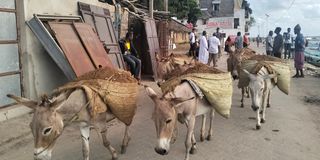
Donkeys carrying sand head to a construction site in Lamu Island.

What you need to know:
- The most visible impact of the illegal mining is structural collapse of buildings along Lamu's shoreline.
- In Wiyoni and Shella, structures that have stood for decades are now crumbling into the ocean as sand extraction destabilises their bases.
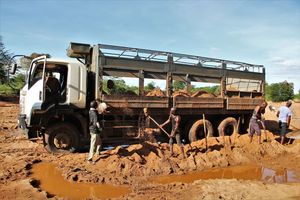
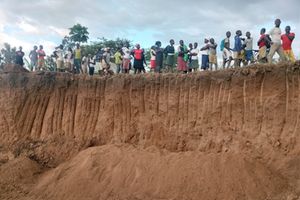
Lamu’s coastline, a Unesco World Heritage Site celebrated for its centuries-old Swahili architecture and pristine marine ecosystems, is facing an existential threat from rampant illegal sand mining. What began as small-scale harvesting by donkey cart operators has escalated into an environmental catastrophe, eroding foundations, destroying habitats, and jeopardising the region’s cultural and ecological integrity.
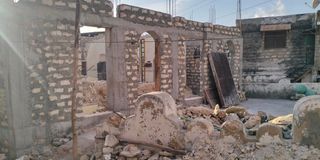
A construction site in Mkomani, Lamu Old Town.
Illegal sand harvesting is literally washing away buildings and destroying marine habitats that have sustained local communities for centuries.
The crisis has reached alarming proportions in 11 coastal areas, including the historic settlements of Shella, Matondoni, and Pate Island, where conservationists warn that continued sand extraction could permanently alter the region's delicate coastal ecosystem.
Other affected areas are Wiyoni, Kipungani, Manda-Maweni, Shella, Ras Kitau, Kizingitini, Mkokoni, Kiwayu, and surrounding coastal zones.
The most visible impact of the illegal mining is structural collapse of buildings along Lamu's shoreline. In Wiyoni and Shella, structures that have stood for decades are now crumbling into the ocean as sand extraction destabilises their bases.
"We've witnessed buildings and other structures collapsing and getting washed away by the ocean since their foundations have continued to be weakened by uncontrolled sand harvesters," said Mohamed Athman, executive director of Lamu Marine Forum. "Such activities endanger construction sites and even the workers themselves and need to be stopped."
The phenomenon represents a dangerous cycle: as construction booms across Lamu driven by tourism development and population growth, the demand for sand increases. Yet the very extraction of this sand weakens the coastal infrastructure that supports the construction industry.
Beyond the immediate threat to infrastructure, the environmental toll is devastating marine life across the archipelago.
Mr Athman explained that the destruction extends far beyond the visible shoreline damage. "Illegal sand mining has significantly degraded marine ecosystems by destroying habitats, causing erosion, and disrupting natural processes. This unsustainable practice has led to biodiversity loss, impacted water quality, and even affected coastal protection and livelihoods."
The Wiyoni Public Beach, once a vital ecosystem supporting diverse marine life, has been particularly hard hit. The beach served as a natural barrier protecting inland communities from ocean storms and provided crucial breeding grounds for marine species that support local fishing communities.
Local authorities acknowledge they are struggling to contain the crisis, partly because many operations occur under cover of darkness. Lamu Municipality Manager Abdulswamadu Abdallah said the nocturnal nature of much of the illegal harvesting makes enforcement extremely difficult.
"We've tried our best to control sand harvesting but still, some individuals operate predominantly at night, evading detection by local authorities.," Abdallah said. "We need concerted efforts from everyone, including the National Environment Management Authority and the police to end this."
Another major challenge is that much of the sand harvesting occurs on privately owned land, making it difficult for authorities to intervene without legal pushback.
The situation stems from a high demand for construction materials in Lamu, driven by rapid urbanisation. However, the sand being extracted is not just harmful to the environment but is also unfit for construction.
“Not all sand harvested is fit for construction works. Such sand is saline and substandard. When mixed with metal, it causes oxidation that expands the same metal, causing corrosion and incompatibility, hence compromising the entire structural integrity of the buildings,” said Alex Jimbi, Lamu chief officer for Roads, Transport, Infrastructure and Public Works.
Mr Jimbi, an architect by profession, criticised contractors who bypass county regulations and conservation standards, calling for stricter enforcement and a review of conservation laws.
“Where we are standing, the developments undertaken in this place need to be controlled. In Lamu, we’re using sedimentary rocks which are porous in nature. So, construction here isn’t so simple. The water, sand and ballast used for concrete should all be free of salt,” he explained.
Quality of construction
The consequences of this unregulated sand supply are already being seen in the quality of construction. Several buildings, experts say, are being put up without proper oversight or architectural approvals.
“New houses have sprung up and I am sure not all are approved by the Lamu Municipality. These sites receive sand from everyone without minding about its state. That’s why in some places, you’ll spot buildings collapsing even before they reach completion. It’s dangerous,” said Twalib Sagaf, an architectural expert based in Lamu.
He said areas like Wiyoni, Kashmir, Kandahar, Hidabo, and Bombay have witnessed a surge in construction projects, many of which lack professional oversight and environmental consideration.