A lifetime of pain: How generations of women learn to endure pelvic pain
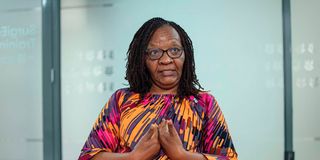
Margaret Nyambura, who has battled chronic pelvic pain for 29 years, during the interview on February 5, 2026.

What you need to know:
- Dr Dennis Mureithi acknowledges that pain among women has been normalised, leading to poor health-seeking behaviour and, as a result, late diagnoses.
Margaret Nyambura was 32 when the pain became unbearable. She is now 61. In between, she raised two daughters, became a grandmother, and not a single day passed without the pain reminding her it was still there.
But this pain did not begin at 32. It started much earlier, when she was 13, the very first time she had her period.
From that first day, something felt wrong. The cramps were not ordinary. They were the kind that stopped her in her tracks, bent her double, and made her wonder if what she was going through was normal. But she had no one to ask. Talking to her mother about it felt impossible: too personal, too uncomfortable, and too difficult to put into words.
Dr Dennis Mureithi, an obstetrician/gynaecologist and laparoscopy specialist, during the interview at The Hem Practice clinic in Thika on February 5, 2026.
At the time, she was living with her youngest maternal aunt, a college student who understood the pain better than anyone else. Her aunt suffered the same way. Her periods were so painful that she would miss work entirely, lying in bed waiting for the worst to pass. It was this aunt, not a doctor, not a health worker, who sat with the young Margaret and helped her understand what her body was going through.
There were no hospital visits. No tests. No diagnosis. No one was asking what was causing the pain or how to treat it properly. The goal was simply to get through it: whatever days it would take, using whatever was available, waiting for the pain to ease, then carrying on with life.
As Margaret puts it, pain management was never about understanding what was wrong. It was about survival.
“The issue was dealing with the pain so that I could go to school. I took all types of painkillers, and when the pain subsided, I continued with my life. Consulting a doctor or exploring why the pain existed was not part of the picture. I don’t think there was a concept of not coping. You just coped,” she recalls.
In addition to severe menstrual pain, she experienced ovulation pain that alternated from the right side to the left. During her A-levels, she discussed this with her parents, and her father took her to see a doctor.
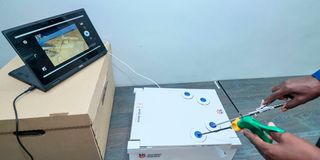
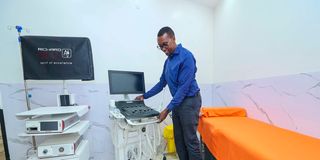
Dr. Dennis Mureithi showcases the endo bora pelvic trainer during a facility tour at The Hem Practice in Thika.
“I remember trying to explain the mid-monthly pain very clearly, but I don’t remember being told anything. I left the consultation with painkillers and no explanation. The painkiller dealt with the pain, so life continued,” she says.
The first diagnosis
At 26, Nyambura got married, and three months later, she conceived. It was during early pregnancy that she experienced a pain so horrific it sent her crawling on the floor.
She visited a gynaecologist for the first time in her life and was diagnosed with fibroids. The doctor explained that the fibroids had likely always been there, causing years of pain, but had remained dormant. Pregnancy hormones, however, had activated their growth.
“As the baby grew, the fibroids were also growing. One fibroid was attached to the uterine wall, raising concern. Doctors opted for close monitoring rather than surgery during pregnancy. I sought a second opinion and was informed that in some cases, as the baby grew and the uterus expanded, the fibroid could get compressed and immobile, which is exactly what happened,” says Margaret.
“I carried the pregnancy to term but experienced complications during labour. The doctors said the fibroids were interfering with the contractions. Labour was induced, I delivered safely, and the fibroids were left in place,” she adds.
For several years afterwards, the pain reduced to discomfort, and Margaret went on to have two more children. After her third child, however, her health deteriorated. Her haemoglobin levels dropped, and she began to faint frequently. Doctors recommended a hysterectomy.
“At that point, I was no longer interested in having more children. In 2007, at the age of 42, after nearly 29 years of pelvic pain, I underwent an open hysterectomy. My uterus was removed, but my ovaries were left intact to preserve hormonal balance and reduce the severity of menopausal symptoms. The horrible pelvic pain stopped immediately,” she says.
She still experiences mild ovulation pain and occasional hot flushes because her ovaries remain, but the debilitating discomfort that had defined much of her life ended. However, her experience has repeated itself across generations, affecting both her daughters.
“My firstborn began experiencing intense pelvic pain in late primary school. It got so bad that it disrupted her secondary school education, and she had to be withdrawn from boarding school and transferred to a day school. Each month, I would be called to take her to the hospital for injections because oral painkillers were no longer effective.
Pain is poorly understood. People don’t realise how debilitating it can be, that it can knock you out of normal life completely,” says Margaret.
Her eldest daughter was never thoroughly diagnosed during adolescence. Margaret. recalls that she was simply given injections. There was no pelvic examination. Only later, as a married woman, did she undergo proper evaluation.
An inherited pain
And then came her second daughter, Joy Wambui, with similar pain. Her periods started at age 12, in Class Six.
“I was excited to finally experience what everybody else in my class had. The other girls had already told me what it was like; however, none of them talked about pain. When they eventually came, my excitement disappeared immediately. My very first experience was just pain. When I asked my peers about it, they were confused. They were like, ‘No, I don’t feel pain. What are you talking about?’” says Joy.
Joy spoke to her mother, gradually learning that both her sister and mother had lived with similar pain, though it had never been clearly explained to her before. Around that time, she made her first visit to a gynaecologist and was prescribed pain medication. Because she was in day school, managing the pain was somewhat easier, as she could take medication from home.
That changed when she joined a boarding secondary school. Assuming the school sanatorium would help, she did not carry her medication. Instead, each month she was given what she describes as a white tablet and told it would settle the pain. It did not.
Also read: The hidden pain of teenage endometriosis
“I went to the school so often I started being labelled a malingerer. At one point, my parents were called and told that I was faking illness. But I was genuinely in pain,” Joy says.
“With no support from teachers or house mistresses and little understanding of menstrual pain, I began carrying my own medication to school. I realised that from the sanatorium, I wasn’t going to get help,” she adds.
Over time, her condition worsened. Her menstrual cycle lengthened, bleeding became heavier, and the medication she relied on stopped being effective. She started taking it more frequently, and sometimes it would run out, forcing her to return to the sanatorium. This only reinforced her reputation as a problem student.
After finishing high school, Wambui returned to a gynaecologist. Once more, there was no diagnostic testing, only pain management. As the years passed, the pain intensified and spread across more of the month.
“Before, the pain would start about three days before my period. Then it became a whole week: during my period and after. I’d only have about one good week in a month,” she says.
The pain increasingly disrupted her daily life and work. At times, it became so severe that she had to visit a chemist for injectable pain relief. Even then, the relief was temporary. After a couple of hours, she would still need more medication.
Last year, she began experiencing fainting spells. Blood tests revealed low haemoglobin levels, and she underwent iron infusions. However, her symptoms persisted. Eventually, she was placed on a strict pain-management regimen, requiring medication every two hours.
Further investigations, including scans and additional tests, revealed evidence of endometriosis and uterine polyps. Conservative treatment options were attempted, including hormonal therapy intended to suppress her periods. However, they failed to do so, and her painful periods continued.
As her condition progressed, Joy was prescribed increasingly strong medication, including Tramadol, an opioid, alongside other drugs to manage pain and nausea.
“The medication itself makes you nauseous, so you need even more medicine just to cope with the side effects. The financial burden has also been significant. I spend about Sh3,000 to Sh4,000 a month on just one medication,” she explains.
With pain management and hormonal options no longer effective, surgery became the final option. Wambui is now scheduled to undergo surgery in March.
As a mother, Margaret acknowledges the fear and uncertainty parents face.
“It’s such a fine balance, trying to find what works while worrying about how disruptive the treatment itself might be. Some medical interventions can cause significant side effects, making decision-making even harder. What I learned is that I handled my daughters’ pain better than mine was handled. Not perfectly, but better. Because I was able to walk with them, take them to doctors, and try to look beyond just surviving the pain,” she concludes.
A normalised suffering
Dr Dennis Mureithi acknowledges that pain among women has been normalised, leading to poor health-seeking behaviour and, as a result, late diagnoses.
“Because of delayed diagnosis, patients often present late. By then, they’re exhausted, depressed, and stuck in a hopeless cycle. Pain leads to emotional distress. Hormonal changes worsen it. You cannot manage this condition with medication alone. Patients often need a multidisciplinary approach: psychotherapy, pain management, sometimes surgery, and in complex cases, pain specialists,” says Dr Mureithi.
He describes pelvic pain as pain or discomfort felt in the lower abdomen or pelvic region, the area below the belly button and above the thighs, between the hip bones. It can also radiate to surrounding areas, such as the lower back or hips. Pelvic pain can take many forms: it may be sudden and sharp (acute) or develop gradually and persist over time (chronic). Some people experience a dull ache or pressure, cramping or throbbing sensations that come and go, or pain that feels twisted or knotted.
He explains that there are many causes of pelvic pain. It can stem from underlying gynaecological, urological, gastrointestinal, or musculoskeletal conditions. Gynaecological conditions that can cause pelvic pain include endometriosis, ovarian cysts and cyst rupture, pelvic inflammatory disease , fibroids and adenomyosis, ectopic pregnancy, ovarian torsion, and period pain or menstrual cramps (dysmenorrhoea). Bladder conditions such as urinary tract infections and kidney stones, or digestive tract conditions like irritable bowel syndrome and abdominal or groin hernias, can also be responsible.
As an obstetrician and gynaecologist, Dr Mureithi is dedicated to advancing women’s healthcare, addressing pelvic pain, and advocating for minimally invasive surgery and its availability in rural and peri-urban communities in Kenya.
“In our clinic, The Hem Practice, which primarily focuses on gynaecological conditions, we see about 25 women a week. Roughly 70 per cent present with some form of pelvic pain, with common conditions including fibroids and endometriosis. I perform about five surgeries a week related specifically to pelvic pain. Most of these are laparoscopic,” he says.
“When a patient suffers from chronic pain over a long period, the body undergoes a process called pain centralisation. Under normal circumstances, a stimulus, like a pinpric, sends a signal to the brain, which interprets it as pain and triggers a withdrawal reflex. However, if this cycle repeats for years, the brain’s pain-processing centre becomes overloaded. The volume is effectively turned up, causing the brain to interpret even normal, innocuous sensations as massive amounts of pain. This neurological shift explains why traditional painkillers often fail and why patients frequently spiral into a cycle of depression and hopelessness,” says Dr Mureithi.
“In modern gynaecological practice, a patient presenting with pelvic pain requires a consultation that goes far beyond the physical site of discomfort. One of the first questions I now ask is: ‘How is your sleep quality?’ We have come to understand that pain is not a static sensation; it is deeply synergistic with the brain’s response. When a patient is sleep-deprived, the intensity of their pain is heightened. By addressing this through simple, non-addictive interventions like magnesium or melatonin, rather than traditional drugs, we can significantly reduce the perceived intensity of their suffering,” he adds.
Dr Mureithi’s decision to set up his clinic and his advocacy for minimally invasive surgery was inspired by his spouse’s story. In their second year of marriage, she was diagnosed with acute-onset pelvic pain. Then a gynaecologist in training, he took her to see his older colleagues, who suggested she had an ectopic pregnancy. They performed surgery, only to find there was none.
By the time she was eventually diagnosed with irritable bowel syndrome, she had undergone major abdominal surgery, had a 10cm belly scar, and was still dealing with the pain that had taken her to the hospital in the first place.
“Instead of all that, the medics should have just made a 10-millimetre incision, put in a camera, looked around and confirmed there was no ectopic pregnancy, and then come out. Instead, they gave a patient a 10-centimetre wound for no reason. It was at this point that I realised things needed to change, because the facility had a laparoscopic tower and equipment donated by partner universities, but no one had the skill,” says Dr Mureithi.
Surgery on wheels
Six years ago, he and his co-founder launched the Lap on Wheels programme to bridge the gap in surgical access. What began as a passion project, using a borrowed truck from a friend’s mobile kitchen to transport a laparoscopic tower, has now served nearly 1,000 patients. Dr Mureithi and his team visit level-four and level-five hospitals in counties to provide free or subsidised surgeries for patients who would otherwise face long recovery times from open surgery, and to train experienced surgeons to transition from open surgery to laparoscopic techniques.
The impact is best seen in cases like ectopic pregnancies. Traditionally, an ectopic pregnancy meant major open surgery and a month-long recovery. With laparoscopy, a woman can be operated on in the morning and be walking, pain-free, within hours.
“We must move away from the cultural notion that suffering is a natural part of womanhood. If a young girl is missing school due to pain, it is a red flag. We have the technology, the medication, and the surgical expertise to ensure that no patient has to live in a hopeless cycle. By building better statistics and increasing clinical suspicion among pharmacists and general practitioners, we can finally give pelvic pain the national priority it deserves,” concludes Dr Mureithi.