A mother's final 72 hours: From toothache to tragedy at Mama Lucy Hospital

What you need to know:
- Munai's death summary, seen by the Nation, showed she had been admitted with complaints including toothache, jaw pain, neck swelling, and difficulty speaking and breathing.
- Physical findings revealed swelling under the lower jaw, tongue swelling with the tongue resting on the floor of the mouth, inflammation affecting the tongue and surrounding area, poor oral hygiene, and partial trismus (difficulty opening the mouth).
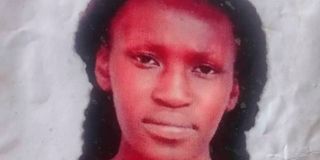
Eliud Okenye remembers the Sunday he took his wife, Viona Munai, to Mama Lucy Kibaki Hospital as a day of expectant hope. Munai was nine months pregnant, just two weeks away from delivering their second child. But a persistent toothache had become unbearable.
What followed over the next 72 hours was not the joy of a newborn's cry, but a descent into a medical nightmare marked by silence, swelling, and sudden, unexplained death.

After X-rays revealed issues with two of her teeth, Munai, 18, was admitted at 9pm.
By Monday morning, when Okenye returned to the ward, one tooth had already been extracted. The red flags appeared almost immediately.
"The side where the tooth was extracted from had started swelling, and the swelling was moving downwards toward her neck," Okenye recalls.
Despite the visible inflammation, the medical team proceeded. By Tuesday at 11am, the second tooth was out. The reaction was catastrophic.
The swelling doubled, spreading across her neck and beginning to constrict her airway. As Munai struggled for every breath, her husband pleaded for intervention.
"I asked doctors to check on her, to do something, but they were harsh. They ignored me. When I persisted, they called security and had me thrown out of the hospital premises."
Haunted by a sense of dread, Okenye returned to the hospital early Wednesday morning. A security guard offered only a vague update: his wife had been taken to the operating theater. For hours, he sat on a cold bench outside the doors, watching other patients enter, exit, and recover. No one spoke to him.
By 1pm, the silence was broken by a sight no husband should ever witness. He was ushered into the theater to find his wife's body already covered. She was dead. So was their unborn child.
"The explanation offered by the staff was a confusing timeline of delays. They claimed Munai's breathing had deteriorated suddenly and that they had intended to perform an emergency C-section. However, they admitted she had waited outside the theater for one hour and 45 minutes because the room was still occupied. She died before she got to the surgical table," says Okenye.
For Nicholas Ntoka, Munai's father, the grief is sharpened by a painful, lingering question.
"The tooth was the problem, yes, but we wish she had just been given drugs to ease the pain until she gave birth. Why extract the teeth then?" He asks.
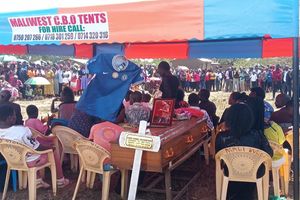
The family is now planning a double funeral for mother and child, set for March 21 in Western Kenya.
"The bodies have been preserved at Mama Lucy Kibaki Hospital mortuary. We decided against a postmortem due to the cost and only opted to have the baby removed from the mother's body for independent preservation," says Okenye.
Munai leaves behind a two-year-old child who does not yet understand why his mother isn't coming home. His father, a casual labourer who earns a living drawing handcarts, must now figure out how to balance raising a toddler with going out to provide for him.
"It hurts so much to lose a wife and a child. I just need to know the real cause of death. I need justice for myself and for our remaining child," says Okenye.
Dr Esther Dede, the hospital's deputy medical superintendent and a dentist, reports that the couple arrived at the facility on Sunday night at 9pm and that she and her team were immediately alerted to Munai's presence and condition.
She explains that upon arrival, Munai was severely ill, unable to swallow or speak due to swelling below the tongue and around her airway. Her condition was deemed an emergency resulting from a severe dental infection originating from a tooth.
Munai's death summary, seen by the Nation, showed she had been admitted with complaints including toothache, jaw pain, neck swelling, and difficulty speaking and breathing.
Physical findings
Physical findings revealed swelling under the lower jaw, tongue swelling with the tongue resting on the floor of the mouth, inflammation affecting the tongue and surrounding area, poor oral hygiene, and partial trismus (difficulty opening the mouth).
"At this point, all emergency protocols were activated. The patient was admitted within two hours of arrival. By 10:40pm, she was in maternity as an emergency medical case, and all necessary treatment plans were instituted. She was placed on IV medication and IV antibiotics as per national and hospital guidelines," says Dr Dede.
"At this point, she was with her spouse, who was informed that the next day she would undergo an extraction as part of the treatment plan for her condition. So on Monday morning, the procedure was done with no remarkable incident. She was well aware that she had two offending teeth that needed to be removed, and these were extracted on different days — Monday and Tuesday — both without complication," notes Dr Dede.
She explains that on Wednesday morning, just as Munai was scheduled to go to the theater for emergency intubation, she died.
"What the deceased had was a life-threatening condition, and this was worsened by the fact that she was pregnant. During pregnancy, immunity is lowered, which complicated the condition. It was unfortunate that we lost her and lost the baby.”
Dr Nehemiah Langat, the facility's medical superintendent, explains that the patient was received with complaints of a swollen jaw and was admitted promptly, despite not having the financial means to pay for hospital services.
"It is sometimes said that extraction is not necessary or is contraindicated in a pregnant mother, but we know from science and from our experts that extractions can be done safely during pregnancy. That was exactly the guidance from our senior dentists in the facility," says the medical superintendent.
"We attended to her on the first day through extraction. Usually, the first step is to extract the tooth and then monitor as you administer antibiotics intravenously. This is not something that can be done on an outpatient basis, which is why she was admitted to the ward.”
He adds that after the procedure, Munai was taken to the ward for monitoring. “Due to her pregnancy, she was placed in the maternity unit so she could also be attended to by our obstetricians and gynaecologists. The condition worsened on the second day. The swelling increased and affected the neck, which contains vital organs for breathing. Her breathing became laboured due to airway obstruction caused by the infection. So on the third day, upon review by the dentists and obstetricians, it was noted that she needed an ENT (ear, nose, and throat) review. The ENT surgeon came, and she was also seen by the obstetrician and gynecologist.”
Due to her deteriorating breathing, a decision was made by the experts to take Munai to the theater. Unfortunately, the theaters were occupied with ongoing cases, and she had to wait.
"The purpose of taking her to the theater at that time was not to deliver the baby, but to establish an airway through intubation while continuing treatment. As we prepared to proceed once space became available, the patient died. We lost her at around 9:50am," says Dr Langat.
"We took her to the theater because we wanted to save her life. However, by the time she was passing that morning, while waiting to go in, our team of obstetricians had assessed and documented that the foetal heartbeat was absent. It wouldn't have made sense to extract the baby at that time. That would be done later by the pathologist in the other unit," he adds.
A death summary from Mama Lucy Hospital shows that Munai died on February 25, three days after admission, due to Ludwig's angina; a rapidly spreading infection of the lower facial tissues, commonly arising from infections in the mouth, teeth, gums, and tongue.
According to Dr Kahura Mundia, a dentist and maxillofacial surgeon, this condition causes airway obstruction through swelling of the tongue and pus accumulation in the neck that can extend into the chest. It also leads to reduced mouth opening and difficulty in speech and feeding. If not rapidly managed, the infection can cause breakdown of skin in the neck, chest, and abdomen. Fatalities may occur when the disease has spread too extensively, and recovery can be slow even with treatment.
In a statement issued in his capacity as President of the Kenya Dental Association, Dr Mundia notes that the loss should serve as a reminder of the urgent need to strengthen maternal healthcare services and to always prioritise the safety of mothers.
"Oral health checks and education are important components of care at antenatal clinics. Untreated dental infections during any stage of pregnancy can lead to serious health problems. We wish to advise and assure all Kenyans that dental checkups, oral health education, and treatment are safe for expectant mothers when provided correctly and with timely referrals by trained professionals, ranging from community oral health staff to dental surgeons and specialists. Delays and postponements in seeking quality and safe dental care must be avoided for they can result in foreseeable and preventable treatment complications," says Dr Mundia.
He calls for routine dental screening, oral health education, and clear referral systems to be included in antenatal and mother and child health services, particularly where this has not yet been implemented. He also urges county governments to support access to quality public dental care by ensuring adequate and functional infrastructure, equipment, a consistent supply of clinical medicaments and materials, and sufficient qualified staffing in dental departments across public health facilities.
"We are saddened as a fraternity that the majority of Kenyans seek dental care only at the last minute, when the disease condition has already worsened. Let us commit to regular dental checkups whenever simple symptoms like sensitivity or dental pain present themselves. No mother, father, or child should lose their life while seeking essential healthcare. The Kenya Dental Association remains committed to advocating for increased access to preventive and quality dental treatment services for all Kenyans.”