A nation poisoned: Inside Kenya’s unchecked pesticide crisis
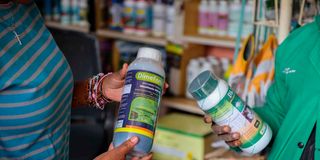
Some of the pesticides smuggled into Kenya through the Tarakea border point in Tanzania.

What you need to know:
- In quiet villages, fresh graves stand as silent witnesses to generational poisonings as toxic chemicals continue to trigger a spike in cancer, infertility, and kidney disease among Kenyan farmers.
In the quiet village of Mbaria in Meru County, the soil is rich, but the cost of tilling it has become deadly. The landscape is dotted with more than 10 fresh graves of farmers who succumbed to cancer. For those still living, the symptoms form a haunting checklist of neurological decay: tremors, loss of sensation, and failing eyesight.
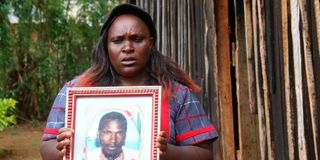
Lucy Makena's family is a living map of this crisis. She lost her father-in-law to liver cancer and her father to complications of diabetes and blindness. Today, her mother battles breast cancer that has metastasised to her brain, while her uncle fights throat cancer. Other villagers battle neuropathy, diabetes, liver and kidney diseases, early menopause, low libido in men, and parkinsonism.
The crisis has drawn the attention of Prof Zakayo Thaimuta, a pathologist who in October conducted a landmark study in the village. After collecting blood and urine samples from 70 farmers, the results were chilling: 100 per cent tested positive for paraquat.
Paraquat is a highly toxic herbicide linked to Parkinson's disease and lung damage. It was banned in the UK in 2007 but remains widely used in Kenya due to its low cost.
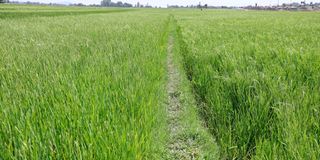
A rice plantation in Mwea, Kirinyaga County. Some rice farmers have reportedly used banned pesticides to boost crop yields and profits.
"What is interesting is that we found traces in farmers who left the fields three or four years ago," the pathologist notes.
The science explains why. While paraquat has a short distribution half-life in the body, it arrests the liver's detoxifying enzymes, leaving the organ vulnerable. In water, its half-life is a staggering 8.2 years. The researcher's findings suggest the chemical is passed through breast milk and may be linked to a spike in childhood illnesses and infertility in the region.
He highlights the case of a woman who worked on a farm for 17 years. While she appeared healthy enough to continue working, her youngest son, born during her tenure in the fields, developed severe complications in his testes 16 years later. Medical teams at Meru and Nanyuki Level 5 hospitals were forced to make a devastating decision: to remove the boy's testes.
"It might mean that there was paraquat in the milk the boy was consuming. The mother may have transmitted the chemical. How else would the child get it?" Prof Thaimuta explains.
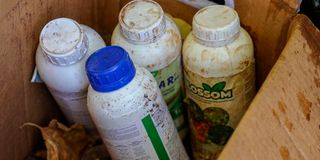
Some of the pesticides smuggled into Kenya through the Tarakea border point in Tanzania.
This generational toxicity is linked to a surge in early infertility and kidney failure across the region. In Meru, a recently installed haemodialysis machine is already at full capacity, overwhelmed by residents whose kidneys have buckled under the chemical load.
Two farms, two standards
Perhaps most alarming is the admission from farmers that they are fully aware of the danger. This has led to a disturbing "two-tier" agricultural system. "People are having two levels of production. They have tomatoes for the market, which they spray heavily, and then tomatoes for their own consumption, which they preserve without chemicals," says the Meru-based researcher. This means that while farmers protect their own families, the heavily-sprayed produce is sent to township markets to be consumed by the general public.
A crisis beyond Meru
The crisis is not isolated to Meru. In Naivasha, flower farm workers have tested positive for both paraquat and glyphosate. In Thika, legal advocates are representing over 100 cancer victims who trace their illness back to the plantations.
Advocate Gilbert Njoroge has been spearheading a legal battle for Naivasha flower farm workers. Out of 63 clients tested, 15 showed dangerously high levels of glyphosate and paraquat in their blood.
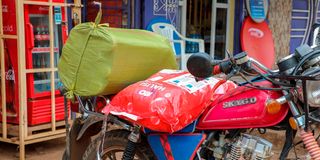
A rider at Tarakea border between Tanzania and Kenya transporting pesticides on October 14, 2025.
The situation in Thika is even more dire, where exposure dates back to the 1990s. Workers there describe a total lack of protection; instead of overalls and respirators, they were given gunny bags and simple dust masks. Many mixed these chemicals with their bare hands.
"The number of cancer cases has been overwhelming. In just a two-week period, the number of people seeking redress more than doubled. We've seen more than 15 new cancer cases in a fortnight," says Njoroge.
Legal teams are now preparing to file test results from Thika in court as they fight for medical compensation.
The smuggling pipeline
Despite being classified as Highly Hazardous Pesticides (HHPs) by the World Health Organization, these chemicals flood Kenya through porous borders. Approximately 42 per cent of pesticides imported into Kenya are considered potentially dangerous, yet they remain available thanks to a thriving illicit trade.
In Kimana, Oloitoktok, the reason for smuggling is cost. "In Tanzania, you can get a litre for Sh2,500, while here it is Sh5,000 or Sh6,000," says farmer Paul Kironyo.
Security agencies struggle to keep up with smugglers. Chemicals are hidden inside other goods and transported via motorcycles, bicycles, or on foot through secret paths. While recent KRA raids on agrovets have driven the trade underground, they haven't stopped it.

Michael Mbugua, sub-county Agriculture officer for Loitoktok, during the interview.
Charles Wambua, a consultant agronomist, notes the policy gap: "Kenya may stop distributing a drug like Dimethoate, but it's still sold just across the border in Tanzania for Sh900. The replacement drug in Kenya costs Sh3,000. A desperate farmer will always choose the cheaper one that they know works, even if they aren't told it can kill them."
Testing the border
With knowledge of how easily these chemicals flow into Kenya, our investigative team decided to put the border's security to the ultimate test. Crossing into Tanzania via Oloitoktok, we headed for Tarakea, a bustling hub for agricultural trade.
Inside a Tanzanian agrovet, the availability of banned substances was startling. Products strictly prohibited on Kenyan soil were displayed openly, sold at a fraction of the cost. The team purchased several high-risk chemicals, including Snowtiger (containing Chlorfenapyr, banned in many jurisdictions for its extreme toxicity), Avirmec (containing Abamectin, a potent nerve agent used as an insecticide), and Profecron (a heavy-duty organophosphate).
Death in the rice paddies
The trail of smuggled chemicals leads directly to the rice paddies of Mwea, Kirinyaga County. Here, farmers are fighting a losing battle against the Golden Apple Snail, an invasive species that can wipe out 80 per cent of a rice crop in days. While legal alternatives exist, farmers claim they only kill snail eggs, whereas the black market chemicals clear the adults instantly.
In Ndorome village, Jane (not her real name) shares her experience. For three years, she used a chemical locally known as "Dudu". She only stopped when her body began to fail.
"I didn't know where it came from. I just went to the shop and asked for something to kill snails. I was told the medicine was killing my nerves," she says, describing the onset of neuropathy.
Another resident, Wairimu (not her real name), explains the clandestine nature of the trade: "If you don't know someone who knows the seller, you get nothing. They look at you with suspicion. You have to send a 'handler', usually one of the young men who work as sprayers."
Mutua (not his real name), a sprayer with five years of experience, reveals the macabre logistics of the trade. To bypass major highways and roadblocks, distributors use creative and chilling camouflage.
"They use motorcycles to carry drums or even a human coffin. The coffin is nailed shut, often with a cross on top. No policeman is going to stop a rider with a coffin at night to check for pesticides," he explains.
The chemicals arrive in Embu and are then ferried into Mwea via ‘panya’ routes (secret paths). They are never sold in original bottles; instead, they are dispensed into small plastic bags or unlabelled containers, often for as little as Sh50 per "pump" dose.

Charles Wambua, an agronomist in Kimana, Kajiado County, during the interview.
But the price of a clean harvest is physical breakdown. "Your legs feel dead. You lose your appetite for days, as well as sexual function," Mutua says.
For sprayers like Makau (not his real name), who has worked the fields for 15 years, the job is slow suicide. He earns Sh150 per knapsack sprayed. Over the years, his eyesight has dimmed, and he frequently suffers from "dead limbs" after a day in the paddies.
"We know it's dangerous, but when the snails start cutting the rice at the base, and you've invested Sh15,000 in your acre, you don't think about your health. You think about the hunger of your children," Makau says.
The data behind the deaths
A study by the Centre for Environmental Justice and Development (CEJAD) has finally provided the data to back up these harrowing testimonies. The findings reveal a systemic failure in pesticide management and a "double standard" in international trade that is poisoning rural Kenya.
The study identified 527 pesticide products in use across Kajiado, Kirinyaga, and Nakuru counties. Of these, 167 were classified as Highly Hazardous Pesticides. Kajiado County led the grim tally with 102 hazardous products, followed by Kirinyaga (69) and Nakuru (37).
The health implications are staggering. The study revealed that 42.9 per cent of the HHPs are reproductive toxicants, capable of causing infertility in adults and developmental defects in children, while 40 per cent are classified as human carcinogens. Perhaps most troubling, 37.5 per cent of the active ingredients identified are banned in other countries, yet continue to be exported to Kenya by major multinational agrochemical manufacturers. The full CEJAD report, which details specific companies and products, is publicly available.
The study highlighted a dangerous lack of awareness regarding post-usage safety. Nearly half of respondents (47.7 per cent) admitted to decanting pesticides into unmarked containers, while 30.8 per cent reported reusing original pesticide containers for household tasks.
"These containers were being used for water and food storage, and even for making toys and decorations," the report notes. "This presents a high risk of accidental poisoning, especially for children."
The immediate physical toll is evident: 36.4 per cent of farmers reported adverse effects like skin rashes, dizziness, and difficulty breathing immediately after spraying. More alarming is the chronic illness rate; in Kajiado, nearly 28 per cent of families reported suffering from chronic conditions, including cancer and kidney disease.
A system in collapse
Michael Mbugua, the sub-county Agriculture Officer for Loitoktok, confirms that the battle against these chemicals is being lost at the border. The frontier with Tanzania is marked only by beacons and ‘panya’ routes that cut through communal homesteads.
"Farmers tell us openly: 'If it is cheaper and effective, why can't I use it?'" he says.
Mbugua has observed a haunting ecological shift in the region. "I visited a farmer who had an 'aha' moment. He realised bees no longer visit his farm. Even where bees remain, the impact is visceral. Honey harvested from hives near these farms has a strange, chemical taste. The bees visit the sprayed flowers, and the poison ends up in the honey."
The most significant barrier to reform is a crippling lack of resources. While the Ministry of Agriculture's functions are devolved to the counties, the ground-level reality is one of abandonment.
The institutional neglect is perhaps best illustrated by the staggering shortage of agricultural extension officers. In Rombo, a ward with intensive agricultural activity, a single officer is expected to oversee more than 8,000 farmers — a nearly impossible task made worse by the total lack of a motorcycle or fuel for field visits. Kimana and
Entonet fare slightly better with one officer each, though the latter possesses the only functioning motorcycle for the entire sub-county.
Most dire is Kuku Ward, a significant horticultural zone that currently has no officer at all, leaving its farmers with zero government oversight or safety training.
The ideal ratio is one extension officer to 600 farmers. In Kajiado South, that ratio stretches as high as 1:8,000.
"We have wards with no officers at all due to retirements and lack of replacements. To cross a whole ward, you need a motorcycle and fuel. Without these, we cannot reach the farmers to warn them that what they are feeding the community is poisonous," Mbugua admits.
Fighting back
At the centre of the storm is Frederick Muchiri, CEO of the Pest Control Products Board (PCPB). Established in 1995, the board is mandated to oversee every pesticide that enters or leaves Kenya.
"Pesticides are toxic substances. They are manufactured to kill. Because of that, they need a regulatory mechanism to ensure that we continue living while the environment remains safe," Muchiri states.
He reveals a stark geographical divide in Kenya's illegal pesticide trade. While products entering through Lunga Lunga at the Coast are often domestic, targeting bedbugs and cockroaches, the stretch between Taveta and Oloitoktok is different. Here, the trade is purely agricultural, fuelled by Tanzanian agrovets strategically positioned just across the border to lure Kenyan farmers.
Since 2023, PCPB has abandoned a passive approach in favour of intelligence-led raids. This has led to the confiscation of 2.5 tonnes of illegal pesticides between Lunga Lunga and Namanga, 50 metric tonnes of unauthorised products seized nationwide (including three full shipping containers currently held at the Port of Mombasa), and Sh3 million worth of illegal goods seized in a single raid in Garissa.
Despite these successes, Muchiri points to a frustrating legal bottleneck. He highlights a recent case involving a major distributor who was smuggling chemicals from Oloitoktok to the Mount Kenya region via clever courier networks. When finally caught, the dealer pleaded guilty.
"The law allows for a maximum fine of Sh250,000. Yet, the magistrate fined him only Sh30,000," Muchiri notes. "We have a feeling some of these guys are protected by the same systems supposed to enforce the law. You arrest them today, they pay a small fine, and they are back in business tomorrow."
To bypass this perceived local protection, the PCPB has begun arresting suspects using police from different jurisdictions and charging them in distant courts to avoid the influence of local cartels.
Addressing worker exposure, Muchiri acknowledges the high cost of safety. While professional Personal Protective Equipment (PPE) is often out of reach for small-scale farmers, he notes that Kenyan universities have piloted a specialised "Tropical PPE" suitable for the local climate, now granted a standard by KEBS.
"At a cost of Sh2,100, it is far more affordable," says Muchiri — though still a hurdle for the poorest labourers who currently resort to wearing old clothes or gunny bags.
Some names have been changed to protect the identity of sources who spoke on condition of anonymity.
Look out for the second and last part of this story tomorrow.


