Africa CDC lifts Mpox emergency After 17 months, citing 60pc drop in cases
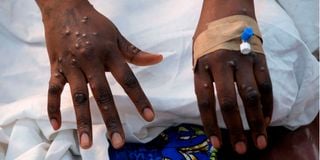
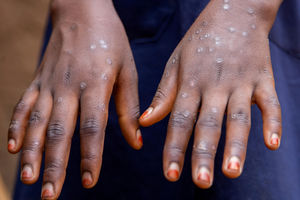
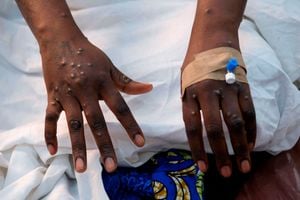
The hands of a patient with skin rashes caused by the Mpox virus.

What you need to know:
- The emergency declaration was issued in August 2024, marking the first time Africa CDC exercised its expanded mandate to declare a continental public health emergency.
- At that time, the continent faced a dramatic escalation in cases, with 80,276 suspected Mpox cases and 1,340 deaths reported in 2024 alone.
The Africa Centres for Disease Control and Prevention (Africa CDC) has officially lifted Mpox as a public health emergency of continental security after 17 months of coordinated response that saw cases decline by 60 per cent and deaths drop significantly across the continent.
Director General, Dr Jean Kaseya, announced the decision on January 22 following recommendations from the Africa CDC Emergency Consultative Group (ECG), marking a major milestone in Africa’s growing capacity to manage complex public health crises through coordinated continental action.
“Following the recommendation of the Africa CDC Emergency Consultative Group, I hereby announce the lifting of Mpox as a Public Health Emergency of Continental Security (PHECS). This decision reflects Africa’s growing capacity to lead complex public health responses, grounded in strong political leadership, regional solidarity, and effective international partnerships,” announced Dr Kaseya.
The emergency declaration was issued in August 2024, marking the first time Africa CDC exercised its expanded mandate to declare a continental public health emergency.
At that time, the continent faced a dramatic escalation in cases, with 80,276 suspected Mpox cases and 1,340 deaths reported in 2024 alone. This represented a fivefold increase in cases and a twofold increase in deaths compared to 2023, with the Democratic Republic of Congo bearing the heaviest burden, accounting for 96 per cent of cases and 97 per cent of deaths.
The outbreak exposed long-standing inequities in global health as Mpox in Africa had received limited international attention and insufficient investment for decades.
Despite bearing the largest disease burden, African countries had minimal access to vaccines, diagnostics, and treatments that were readily available in other regions. This systemic inequality, combined with evolving epidemiological patterns, contributed to the scale and severity of recent outbreaks, particularly among vulnerable populations.
However, African leaders mobilised quickly to address the crisis. A high-level emergency regional ministerial meeting in Kinshasa in April 2024 generated crucial political commitment for coordinated action. Following the PHECS declaration, Africa CDC established an Incident Management Support Team, co-led with the World Health Organization and guided by the "4-Ones" principle: one team, one plan, one budget, and one monitoring framework. This approach proved to be a scalable and effective model for outbreak management.
The response mobilised over $1 billion in financing and delivered concrete results on the ground. Health workers strengthened community-based surveillance through digitalised systems, while laboratory and genomic sequencing capacity expanded more than tenfold.
Sixteen countries received over five million Mpox vaccine doses, and more than 2,000 African and international scientists collaborated on a unified research agenda to better understand the outbreak and improve response strategies.
Between early 2025 and late 2025, suspected cases declined by 40 per cent and confirmed cases dropped by 60 per cent. Moreover, the case fatality rate among suspected cases fell from 2.6 per cent to 0.6 per cent, reflecting improved disease detection, clinical care, coordination, and accountability across all levels of the response system.
In Kenya, the first Mpox case was confirmed on July 29, 2024 in a 42-year-old male truck driver who travelled from Uganda. The outbreak, caused by the Ib variant from the Democratic Republic of the Congo had 447 suspected cases, 48 confirmed, and a positivity rate of 10.7 per cent by February 2025.
Kenya implemented extensive measures, screening over 930,000 travellers at 26 entry points and training 137 health workers and 555 airport staff on symptom identification and prevention. In April 2025, Kenya received 10,700 doses of the Mpox vaccine for frontline health workers and at-risk populations. By July 2025, there were 314 confirmed cases in the country.
Meanwhile, the Africa CDC has clarified that the lifting of the emergency does not mean Mpox has disappeared from Africa. The disease remains endemic in several countries, and while the PHECS declaration ends, the work continues under a new framework.
“The lifting of the PHECS does not mark the end of Mpox in Africa. Rather, it signals a transition from emergency response to a sustained, country-led pathway toward elimination. Mpox remains endemic in several settings, and continued vigilance, targeted investment, and innovation will be essential to consolidate gains and prevent resurgence,” said Dr Kaseya.