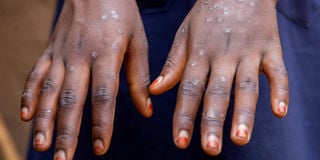
As mpox cases continue to increase across the country, Kenya's long-distance truck drivers are on the frontline in the fight against the virus.
While the disease may be a distant headline for many, for truckers navigating the Northern Corridor, the threat is a daily reality they are actively working to contain.
Mombasa County, a major hub that hosts many drivers from across Eastern Africa who operate daily at the Port, recorded 139 cases by July. The first confirmed case involved a long-distance driver.
According to the Northern Corridor Transit and Transport Coordination Authority (NCTTCA), their decision to intervene is a vital step in bridging the gap between official health advisories and on-the-ground action. Citing a recent study, NCTTCA Executive Secretary John Deng said over 60 per cent of truck drivers along the corridor have significant health challenges, a major concern for road safety.
“The findings emerge as the corridor continues to be a critical conduit for trans-boundary infectious diseases, including Ebola, Marburg, Covid-19, HIV/Aids and, recently, mpox. Recent research proves truck drivers are more vulnerable,” said Dr Deng.
The Authority has rolled out a primary healthcare service along the corridor through North Star Alliance, which runs clinics that collect and relay health data daily. This information is shared with national hospitals in member states for timely action to prevent the further spread of communicable diseases.
Mpox tests are being conducted at several Roadside Stations (RSS), including Maungu Lorry Park, Shell and Premium Energy Bonje, Darussalam Parking and Hotel, and the Malaba County government facility. The Ministry of Health has also provided guidance.
According to Principal Secretary for Public Health, Mary Muthoni, the government has been mobilising resources to improve mpox preparedness and response capabilities.
“Our focus is on expanding testing facilities, intensifying public awareness campaigns, and coordinating with county health systems to ensure a unified, effective approach to protect all Kenyans,” said the PS.
The latest report by the Ministry showed that cases were confirmed in 22 counties, including Busia (63), Nakuru (21), Kilifi (17), Makueni (13), Nairobi (13), and Bungoma (3).
"In response, we are working with different stakeholders to improve our ability to prevent and control infections, boost community engagement and communication, and enhance our capacity for diagnosis and contact tracing,” said the Director-General of the Ministry of Health, Dr Patrick Amoth.
Mpox is a viral infection that spreads through close contact and is usually mild, though it can lead to death. The Ministry has added that it can be spread through touch, kissing, sexual intercourse, or by talking or breathing next to an infected person. Symptoms include a high fever, a skin rash, headaches, and swollen lymph nodes.
The Ministry has also raised concerns about public panic whenever people spot rashes, clarifying that Mpox rashes are totally different from those caused by chickenpox, eczema, and heat rashes.