Africa's disease outbreaks surge 40 per cent as misinformation fuels health crisis
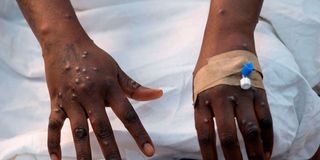
An Mpox patient's hands. Confusion about diseases such as Mpox, measles, Marburg and Ebola is leading to misdiagnosis and panic, leaving millions at risk.

What you need to know:
- One of Africa’s most pressing challenges is its heavy dependence on external funding.
- In 2022, low-income countries in Sub-Saharan Africa relied on external aid for 31 per cent of health expenditures—up from 11 per cent in 2003.
- Meanwhile, domestic government spending dropped from 33 per cent in 2002 to just 21 per cent.
In Addis Ababa
The growing threat of misinformation, disinformation, and chronic underfunding of public health in Africa is hampering the continent's ability to detect, respond to, and contain recurring outbreaks of infectious diseases.
This, the Africa Centres for Disease Control and Prevention (Africa CDC) warned, has left millions at risk as well as undermined trust in health systems.
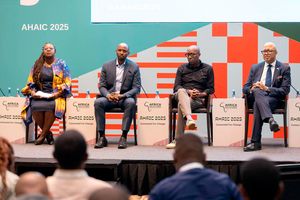
Speaking on Thursday during the opening of the second Journalists’ Workshop convened by the African Union, Dr Raji Tajudeen, acting deputy director-general of Africa CDC, noted that the rapid spread of false or misleading information during health emergencies continues to erode public trust, fuel stigma and delay timely treatment.
“Confusion about diseases such as Mpox, measles, and chickenpox leads to misdiagnosis and panic. When people don’t understand what they’re facing, fear fills the gap—and fear is fertile ground for misinformation,” said Dr Tajudeen.
He emphasised the vital role journalists play in countering health misinformation by providing timely, factual, and clear information. Journalists are frontline responders in the battle against infodemics. You have the power to shape perceptions and drive action by delivering clear, accurate, and trusted information to the public,” he told participants.
Apart from misinformation being a communication challenge, Dr Tajudeen stressed that it is a public health threat, calling for stronger collaboration between the media and health institutions to combat false narratives and ensure communities receive reliable, actionable information.
Prof Yap Boum II, Africa CDC’s deputy incident manager, said the continent faces deeper challenges in communicating science—including complex data, scientific jargon and cultural and linguistic barriers.
However, Prof Boum pointed to language as the most significant hurdle "since much scientific research is published in English, excluding many non-English-speaking communities especially in the continent".
Technical English
"Imagine conducting malaria research in Gabon and publishing it in highly technical English—those findings may never reach the very people who need them most," Prof Boum explained, adding that to improve accessibility, Africa CDC is now advocating for scientific publications to be available in all African Union languages.
Beyond the challenge of infodemics, Dr Tajudeen also outlined a set of persistent structural issues that continue to fuel Africa’s disease burden.
“Fragile health systems, fragmented disease surveillance, limited local production of medical supplies, and chronic funding shortfalls all contribute to the continent’s vulnerability. These weaknesses not only hamper responses to current outbreaks—such as Mpox, Ebola, and Marburg—but also create fertile ground for future epidemics.”
Disease outbreaks have surged dramatically in recent years.
In 2024 alone, Africa recorded 213 outbreaks, up from 152 in 2022—a staggering 40 per cent increase.
While countries like Rwanda and Uganda have successfully contained Marburg and Ebola outbreaks, respectively, the overall trend remains alarming.
"Africa remains the epicentre of global outbreaks despite the tremendous strides made since the Covid-19 pandemic," Dr Tajudeen cautioned.
To address this, Africa CDC has launched several initiatives, including the Continental Surveillance Advisory Group, aimed at improving disease forecasting and early warning systems.
"We’re transitioning from event-based to case-based and indicator-based surveillance systems," Dr Tajudeen noted, "but current systems are still not integrated enough to effectively predict and prevent outbreaks."
He further emphasised that apart from just technological tools, building a robust health security infrastructure for a population of 1.4 billion people demands solid financial and political commitment.
One of Africa’s most pressing challenges is its heavy dependence on external funding. In 2022, low-income countries in Sub-Saharan Africa relied on external aid for 31 per cent of health expenditures—up from 11 per cent in 2003. Meanwhile, domestic government spending dropped from 33 per cent in 2002 to just 21 per cent.
This overreliance on external support has left African health systems vulnerable to geopolitical shifts.
For example, the US withdrawal from the World Health Organisation and USAid cuts are expected to widen funding gaps, especially for programs like Pepfar, which provides life-saving HIV treatment across the continent.
"For regions like Africa, where 55 per cent of development assistance has historically come from USAid, this creates a massive gap in health financing," said Katie Dain, CEO of the NCD Alliance, during a forum held earlier this year.
Against this backdrop, Dr Tajudeen called for a shift toward greater domestic investment in health.
"By strengthening domestic health financing and reducing reliance on external aid, African countries can build more resilient and sustainable health systems," he said.
Last month, Africa CDC released a flagship report on health financing, urging member states to meet the Abuja target of allocating 15 per cent of national budgets to health. Currently, only three countries—Rwanda, Botswana, and Cape Verde—have met this target.
To close the funding gap, Dr Tajudeen proposed homegrown solutions such as solidarity levies on airline tickets, alcohol, and mobile services, along with tapping into Africa’s $95 billion in annual diaspora remittances.
“Key steps toward self-reliance include the launch of the Africa Epidemics Fund and the expansion of the African Pooled Procurement Mechanism, which aims to strengthen supply chains and increase negotiating power for health commodities.”
However, another major vulnerability remains: Africa’s dependency on imported medical supplies. The Covid-19 pandemic laid bare the continent’s limited access to vaccines and personal protective equipment due to global supply chain disruptions.
"Africa produces less than one per cent of its vaccines. This must change," Dr Tajudeen asserted.
During the pandemic, some African countries had reached zero per cent vaccination mark, while on the other hand, some European countries reached the 100 per cent vaccination mark.
This gap highlighted the inequities in global vaccine distribution, with wealthier nations securing large vaccine supplies early, while many African countries faced delays due to limited access and supply constraints.
But encouragingly, progress is underway. As of 2024, 574 manufacturers, including 25 vaccine producers, are operating across Africa.
“Eight countries now have Maturity Level 3 (a stable, well-functioning, and integrated national regulatory authority system that ensures the quality, safety, and efficacy of medical products) —double the number from the previous year. In partnership with Afreximbank, Uneca, Unicef, and Paho, more than $3 billion has been mobilised to expand local manufacturing capabilities.”