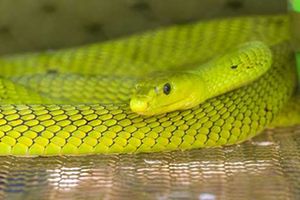
Alarm as Murang’a residents continue dying of snake bites
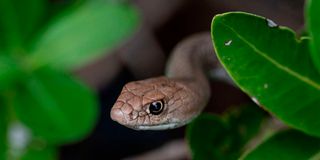
In in the past five years, Murang'a County has reported 327 snake bites with 52 resulting in casualties.

What you need to know:
- Lack of snakebite emergency response in the county keeps causing avoidable deaths among residents, with Murang’a South, Kiharu and Ithanga/Kakuzi being the most venomous sub-counties.
- Victims in the county are treated at health facilities in Nairobi, Kiambu and Machakos counties.
Murang’a County government needs to establish at least three snake bite treatment centres to control the rampant cases of snake bites in the region.
This is according to Central region human-wildlife conflict liaison officer James Mugo, who addressed residents during a sensitisation forum in Murang’a South.
In in the past five years, Mr Mugo said, the county has reported 327 snake bites where 52 have resulted in casualties.
“The data we have is that the victims suffered difficulties accessing emergency healthcare. Most did not even go to hospital and they died at home,” he said. “This is one neglected aspect of our healthcare.”
Lack of snakebite emergency response in the county keeps causing avoidable deaths among residents, with Murang’a South, Kiharu and Ithanga/Kakuzi being the most venomous sub-counties.
“The county has poor snake bite response. It lacks an action plan regarding emergencies resulting from snake bites,” Mr Mugo said.
Victims in the county are treated at health facilities in Nairobi, Kiambu and Machakos counties, “as if Murang’a does not have any awareness programme about snake bites.”
Those who die, he said, are the poor who fail to mobilise resources to hire ambulances to ferry them to hospitals.
Most underprivileged people resort to traditional therapies of trying to suck the poison out of the wound after getting bitten. That further endangers their lives.
Murang’a medical Superintendent Leonard Gikera said the region’s Level Four hospitals should administer anti-venoms to victims of snake bites.
“We have the capacity especially at Murang’a Level Five. We can deal with such emergencies. The problem is the speed with which the victim gets to us,” he said.
“It is important to map the risky zones and figure out how medical response can be taken closer.”
Dr Gikera said residents living in snake-infested zones of the county be sensitised about various types of bites and the dangers attached.
“But the most important thing should be to ensure snakes live where they are supposed to, away from human habitation and this is the work of Kenya Wildlife Service . We can speak of eliminating the threat instead of on how to treat it,” he said.
[email protected]