Autism is not a curse: A Kenyan mother’s campaign for understanding and inclusion
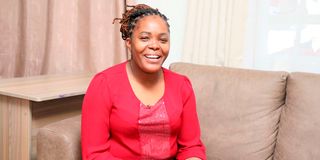
Lilian Wamuyu Mwangi, a mother raising twin daughters with autism, during the interview at her house in Kasarani, Nairobi, on June 21, 2025.

What you need to know:
- Through struggle and resilience, Lilian Mwangi transforms her autism journey into advocacy, awareness, and hope for families.
- Crowned Autism Ambassador, Lilian fights stigma, pushes for inclusion, and shows autism is difference, not tragedy.
On most mornings, Lilian Wamuyu Mwangi’s life is shaped by sensory meltdowns, followed by long therapy sessions. She is a mother of three—11-year-old twin daughters and an eight-year-old son.
When the twins were born in 2014, they seemed healthy. But as they grew, delays in development became increasingly visible. While Lilian worried, paediatricians reassured her that the girls would eventually catch up.
Everything changed on May 8, 2017, during a school visit. “I remember that day like it was yesterday. We were hopeful that enrolling them in school would help. Instead, the administrator handed us a referral to an assessment centre,” she recalls. “I walked out dazed.”
That night, she scoured the internet for answers, only to become more confused. Weeks of second opinions ended with a formal diagnosis at the Kenya Institute of Special Education. “I thought to myself, this can’t be our life. Are we cursed? So much was running through my mind.”
Desperate, Lilian tried every available therapy—speech therapy, occupational therapy, dietary changes, supplements. “If it was available, we tried it,” she says.
But therapy came at a steep cost. Each session was about Sh3,000 per child, three times a week. That meant Sh36,000 monthly per child—beyond the reach of most families. A local organisation offered partial support, but Lilian still shouldered most of the bills.
Beyond the financial burden, the emotional toll was crushing. Meltdowns erupted without warning, leading to sleepless nights and exhausting mornings. The constant strain contributed to the collapse of her marriage.
In 2022, searching for connection, Lilian turned to social media. She launched Diary of an Autism Mum, a raw and unfiltered space to document her family’s journey. “It grew out of a deep need to help the world better understand autism—what it truly is, how it manifests, and the everyday realities families like ours face,” she explains.
Her openness resonated with many, but it also drew criticism. Videos of meltdowns were dismissed as poor discipline, with some accusing her of exploiting her children. Yet countless parents reached out with gratitude. “They reminded me why I started—to educate, advocate, and show that autistic children are not broken, just different.”
In April, during Autism Awareness Month, Lilian joined the Mr and Miss Autism Kenya pageant and was crowned Autism Ambassador 2025. She now organises caregiver wellness days, hosts community talks, partners with therapists, and advocates for inclusive education policies. “Inclusion isn’t just about special schools. It’s about children learning alongside their peers—with support,” she says.
Her twins reflect autism’s diversity: one excels at puzzles, the other thrives in rhythm and dance. But Kenya’s system isn’t built for this. Diagnostic centres are scarce, professionals are few, and therapy costs remain prohibitive. Stigma, however, is often an even greater challenge.
A 2021 study in the National Library of Medicine highlighted how myths, curses, and community rejection deepen the struggles of caregivers in Kenya. Families are often isolated, sometimes torn apart.
Dr Mary Madumadu, a child neurodevelopment specialist at the Nairobi Outpatient Centre, says autism remains misunderstood in Kenya—socially, medically, and emotionally. “Anything that’s not working well in a child’s development is often dismissed as abnormal, instead of investigated,” she notes.
Language development, she explains, begins at birth, through simple acts like eye contact between a baby and mother. “That eye-to-eye, brain-to-brain connection starts the process of social and language development. In autism, that process is disrupted.”
The causes, Dr Madumadu adds, are complex: some genetic, others linked to birth trauma or environmental factors. She cautions about excessive screen exposure in early childhood: “Babies today bond more with screens than with parents. They learn to ‘talk’ to screens, not people. That disrupts brain development.”
Early signs include poor eye contact, withdrawn behaviour, and delayed speech. “Don’t wait. Early intervention works best before the brain matures. If you intervene early, you can change a child’s trajectory,” she says.
Still, many children spend years in therapy with little progress because they are enrolled in general rather than autism-specific programmes. Key red flags—reduced social engagement, fading eye contact, and behavioural regression—must never be ignored.
For Lilian, the journey continues. She works to enhance the quality of life not just for her daughters, but also for herself. “Autism didn’t break us,” she says softly. “It became our path. My children are beautiful, and the world is better because they are in it.”