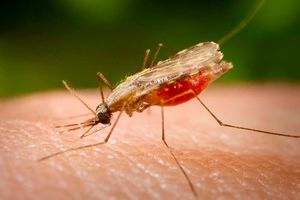
Back to the drawing board: Treated nets fail as resistant mosquitoes fuel malaria resurgence
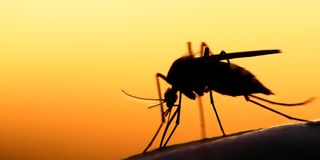
Unlike others, An. funestus thrives in permanent water bodies and can transmit malaria even during dry seasons, making it a persistent year-round threat.

What you need to know:
- In 2023, the WHO African Region shouldered the world's most significant malaria burden, accounting for 94 per cent of all cases and 95 per cent of all deaths.
- Over the past five years, the region has seen an alarming increase of 23 million cases and 24,000 deaths. Within this context, Kenya faces a severe crisis, ranking 14th globally for malaria mortality.
Imagine carefully treating a mosquito net with a potent insecticide, trusting it will protect your family from malaria. You hang it to dry, confident that tonight, your child will sleep safely. You go to bed secure in the belief that malaria is a battle you've won.
But then, the unthinkable happens. A few weeks later, your child falls ill. At the clinic, a lab test delivers the devastating news: malaria. And the cause is even more frightening. You are told a new species of mosquito has invaded your area; one that has developed a powerful resistance to every insecticide at your disposal. The net you relied on is now useless.
This alarming scenario is a reality for families in parts of Migori, Bungoma, Kisumu, and Kilifi, where the Anopheles funestus mosquito has developed intense resistance to pyrethroid insecticides—the primary chemical used in treated nets. This resistance is fuelling a resurgence of malaria in Kenya, undoing years of progress and sending scientists at the Kenya Medical Research Institute (Kemri) back to the drawing board.
The origin
After mass net distribution in the early 2000s drastically reduced mosquito numbers, the An. funestus has bounced back with a vengeance.
The precise origin of the Anopheles funestus mosquito in Kenya is unclear, but it is believed to have come from the wider tropical African population. Over time, it has established itself and diversified within the country.
Distinct populations now exist in western, coastal, and Rift Valley regions, indicating a long-standing presence that has led to local genetic adaptation, not a single, recent introduction. Researchers confirm the species is well-established in various ecological niches, including around Lake Victoria and other water bodies across the
country.
Malaria burden
In 2023, the WHO African Region shouldered the world's most significant malaria burden, accounting for 94 per cent of all cases and 95 per cent of all deaths, according to Kemri researchers. Over the past five years, the region has seen an alarming increase of 23 million cases and 24,000 deaths. Within this context, Kenya faces a severe crisis, ranking 14th globally for malaria mortality. With 3.4 million cases and over 11,000 deaths reported in 2023, researchers are now urgently seeking solutions to save thousands of Kenyan lives.
According to the Kenya Malaria Indicator Survey (2020), malaria has a national prevalence of six per cent with three-quarters of the population at risk. The disease burden is not evenly distributed, however; the lake endemic region has the highest prevalence at 19 per cent, followed by the coastal endemic region at five per cent. The primary malaria vectors in these high-risk areas are An. funestus s.s., An. arabiensis, and An. gambiae s.s.
The study by Kemri in partnership with Wellcome Sanger Institute, which collected An. funestus mosquito samples from high-prevalence regions in western and coastal Kenya, has revealed a previously unknown genetic adaptation in this malaria vector across Africa.
“The findings, published in Science, are based on the analysis of hundreds of modern and historic specimens collected from 16 African countries. By comparing samples from as far back as 1927 with those from 2014-2018, the research provides unprecedented insight into the mosquito's genetic diversity, population structure, and its evolving resistance to insecticides,” Kemri explained in an official statement.
“Understanding the genetic make-up of An. Funestus is critical to optimising the deployment of malaria control strategies,” said Kemri’s Dr Eric Ochomo who was the lead scientist of the Kenyan arm of the study.
“Kemri is proud to be at the forefront of this effort, generating knowledge that directly supports Kenya’s and Africa’s fight against malaria,” he added while warning that the escalating levels of insecticide resistance and adaptive changes in mosquito populations threaten recent gains in malaria control.
The peer-reviewed study that has also been published in Nature analysed 103 whole-genome sequences from An. funestus mosquitoes collected in Kenya prior to the 2017 introduction of non-pyrethroid insecticides. From this data, researchers determined the population structure, identified insecticide-resistant alleles linked to pyrethroids, and mapped patterns of gene flow.
“Vector control interventions such as the use of insecticide-treated nets and indoor residual spraying averted 79 per cent of malaria cases between 2000 and 2015 in sub-Saharan Africa. Despite increasing coverage of these tools, malaria remains the most prevalent vector-borne disease, resulting in 263 million cases in 83 malaria-endemic countries in 2023, an increase of 11 million malaria cases compared to 2022, with 597,000 deaths,” the researchers further highlighted while pointing out that several countries in sub-Saharan Africa reported a resurgence of malaria prevalence post-2015 owing to a mix of factors influencing the transmission and infection efficiency of Anopheles species and Plasmodium falciparum.
Kemri and partners explained that the resurgence of malaria is driven by several key factors: “Emergence and spread of vector resistance to insecticides, parasite resistance to antimalarial drugs, the deletion of histidine-rich protein 2 and 3 (HRP2/3) genes, which can compromise rapid diagnostic tests, the occurrence of residual transmission attributed to behavioural changes in malaria vectors and lately, the emergence of invasive vector species such as Anopheles stephensi.”
The resistance problem is compounded by the mosquito's habits. Unlike others, An. funestus thrives in permanent water bodies and can transmit malaria even during dry seasons, making it a persistent year-round threat.
In Western Kenya, researchers found that An. funestus demonstrates remarkable adaptability and a strong preference for human blood. In some regions, it has a higher vectorial capacity than An. gambiae. Combined with its preference for stable, permanent breeding sites, this suggests An. funestus is more resilient to environmental change than An. gambiae sensu lato. This resilience poses a major challenge to malaria control, as the species can transmit the disease even during dry seasons.
“The study revealed that An. Funestus populations in equatorial Africa are highly interconnected genetically, stretching across vast regions, while others, such as in Ghana and Benin remain distinct. Such patterns have major implications for how malaria interventions are designed and deployed. For example, this difference in the genetic makeup enables us to understand why an intervention may be effective in one part of the continent but ineffective in another despite each of them having An. Funestus. Importantly, the research found that insecticide resistance mutations already present in the 1960s have intensified over time, underscoring the species’ extraordinary adaptability to new mosquito control tools”, Dr Ochomo told Nation.
He highlighted that the discovery—a genetic target for gene drives previously identified in An. gambiae also exists in An. funestus—opens promising new avenues for applying this cutting-edge biological tool against the deadly vector.
“This is a prime example of how international collaboration, anchored in strong African science, can yield discoveries with the power to save lives,” said Kemri acting Director General, Prof Elijah Songok. “Kemri remains committed to advancing research and partnerships that deliver practical solutions for malaria elimination in Kenya, Africa, and beyond.”
The resistance is not new. In October of last year, researchers announced a critical finding: one of Kenya's major malaria mosquitoes, An. funestus, is genetically mutating to resist the insecticide DDT (dichloro-diphenyl-trichloroethane).
The discovery, published in the peer-reviewed journal Molecular Ecology by a team led by the University of Glasgow and Tanzania's Ifakara Health Institute, highlights a significant challenge for malaria control.
DDT, developed in the 1940s as the first modern synthetic insecticide, was initially highly effective in combating malaria and other insect-borne diseases. However, due to environmental and health concerns, its use has been heavily restricted. The Kenyan government banned DDT for livestock use in 1976 and for agricultural spraying in 1986, permitting its application only for disease vector control.
“Our discovery raised serious concerns about the effectiveness of current malaria control methods, which rely heavily on insecticides,” said lead author Joel Odero, a PhD student at the University of Glasgow School of Biodiversity and research scientist at Ifakara Health Institute. “Understanding this resistance is key to combating a disease that still kills hundreds of thousands of people every year, mostly in Africa.”
Speaking to Nation, Prof Fredros Okumu, a Kenyan parasitologist and mosquito biologist at the University of Glasgow, noted that there is no time to waste. “We need to determine whether this type of resistance could occur in other insecticide families which are currently being rolled out in products across Africa.”
After identifying the resistant population, Prof Okumu explained to Nation that the An. funestus samples were collected from a region near a large, historical DDT stockpile. The study concluded that this prolonged environmental contamination likely exerted selective pressure on the mosquitoes, driving the emergence of resistance.
A call for urgent, innovative action
Faced with this evolving threat, the government and its partners are scrambling for new solutions. Public Health Principal Secretary Mary Muthoni stated that the Ministry of Health has partnered with 'Malaria No More Japan' and Kemri to monitor drug resistance and research the effectiveness of innovative tools like ceiling nets.
PS Muthoni told Nation that the initiative was launched in response to confirmed mutations making the malaria parasite resistant to key drugs and insecticides. The programme will roll out first in Homa Bay before expanding to other high-burden areas, as the ministry focuses on deploying innovative solutions.
“We held a strategic meeting with the 'Malaria No More Japan' team to deepen our collaboration in the fight against malaria in Kenya. This engagement reinforces ongoing efforts under the Kenya Malaria Strategy 2023-2027, including targeted innovations in high-burden regions, research on ceiling nets in Homa Bay, and strengthened partnerships with Kemri to advance diagnostics, drug resistance surveillance, and evidence-informed policymaking.”
She further noted that the partnership aligns with Kenya’s broader goals for Universal Health Coverage and health security.