Blocking more than blood: The unexpected risk of menstrual cups
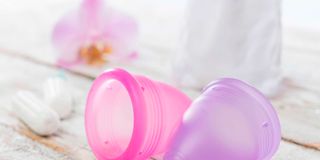
Menstrual cups come in various sizes and shapes and are designed to form a seal against the vaginal walls to prevent leaks.

What you need to know:
- A menstrual cup is a reusable, bell-shaped device inserted into the vagina to collect menstrual blood during menstruation.
- It's a flexible, often silicone or latex, alternative to tampons and pads.
Every month, millions of women face the same routine challenge of managing their menstruation. For Jalia Wambui, this monthly ritual transformed 14 years ago when a friend from the US handed her a small, bell-shaped silicone device—a menstrual cup.
"When I used the cup, it felt quite liberating. It's perhaps the best thing that has happened to me ever since I started my menses," Wambui recalls, though she admits the journey wasn't always smooth. "When I first started using it, it was uncomfortable and I was worried whether I had positioned it well."
A menstrual cup is a reusable, flexible device inserted into the vagina to collect menstrual blood. Made typically of silicone or latex, it serves as an alternative to tampons and pads. These cups come in various sizes and shapes, designed to form a seal against the vaginal walls to prevent leaks.
Wambui's initial experience with the cup was short-lived due to discomfort. Later, when another friend mentioned it, the price—between Sh1,500 and Sh3,000, approximately 15 times more expensive than a packet of pads—deterred her. This prompted her to retrieve her original gift.
"When I use it, I have to wear a liner for safety purposes. In case it spills, it doesn't soil my clothes," she explains. "When I eventually bought some, I was shown how to use them. But I wasn't told about the dangers, and I don't know any. But yes, wrong placement can lead to leaks. When this happens, I take it out and try to fit it again."
The practicality of menstrual cups comes with maintenance requirements. "The thing about a menstrual cup is that you need water to clean it. When it's full, you remove it, clean it, and put it back. I know that's not what most people want to hear. They think it's disgusting, and some young girls find the idea really uncomfortable," says Wambui.
Despite recently purchasing new cups, Wambui still uses the first one her friend gave her 14 years ago. While she's uncertain about potential risks of long-term use, she ensures thorough cleaning after each use.
"Some cups are bigger, others are smaller, so you need to pick one depending on your flow and whether you have given birth," she notes.
Bladder infection
"I can always feel it when the cup is full. I also think it's quite hygienic. Even if you don't have water, you can always use a tissue or a cloth to wipe it clean and re-use it. That makes it especially convenient for people who live in places with limited access to adequate water."
However, health experts are now warning women about the importance of properly positioning menstrual cups to avoid potential kidney problems. Misplaced or ill-fitting cups can compress the ureters, leading to conditions like kidney swelling (ureterohydronephrosis), which may cause symptoms such as blood in the urine and pelvic pain.
This cautionary warning follows a case published in the BMJ journal involving a 30-year-old woman who incorrectly positioned her cup, blocking the flow of urine into her bladder. For six months, she experienced mild lower abdominal pain that created a persistent urge to urinate. During this period, she noticed blood in her urine several times—unrelated to her menstrual cycle—without fever or typical bladder infection symptoms.
Although blood tests showed normal kidney function and a urine test revealed blood and some protein, her bladder appeared normal. A specialized CT scan, however, discovered that the tube carrying urine from her right kidney to her bladder was swollen, and the opening to her bladder had narrowed.
The scan revealed her menstrual cup was positioned on the right side of her vagina, in close proximity to the opening of the tube from her right kidney to her bladder, coinciding with her kidney swelling.
Doctors believe the menstrual cup's position likely physically blocked proper urine drainage. After discontinuing use of the cup, her symptoms completely resolved, and an ultrasound confirmed her kidney swelling had decreased.
"When the terminal part of the ureters passes into the bladder, they are close to the vagina, which can affect urinary drainage from the ureter. Correct positioning along with choosing the correct cup shape and size is important to prevent negative effects on the upper urinary tract," the study states.
The woman was advised to avoid using the menstrual cup during her next period and return for a follow-up scan a month later. The subsequent scan showed significant improvement—the swelling had subsided and urine was draining normally from both kidneys. Her complete symptom resolution led doctors to conclude that the misplaced menstrual cup had obstructed urine flow from her right ureter.
In their analysis, the study authors note that a literature review on menstrual cup usage reported possible complications including pain, vaginal wounds, allergic reactions, leakage, urinary incontinence, dislodgement of intrauterine devices, and infections. While the review indicated no increased infection risk compared to other menstrual products, a few serious complications were documented, including toxic shock syndrome and effects on the upper urinary tract.
Read: Cups of grace
"Complications of menstrual cup usage are probably few but poorly described. A few cases of more serious complications, including effects on the upper urinary tract, have been reported, including the present case. The increasing use of menstrual cups calls for more knowledge on complication rates to enlighten both users and clinicians," the study emphasizes.
It further recommends: "Users of menstrual cups should be made aware of symptoms that call for medical evaluation and receive the necessary information to be able to choose the correct cup size, material, shape, and insertion method. Clinicians ought to include it in their differential diagnoses in women with menstrual cups."
Uterine prolapse
The researchers clarify that upper urinary tract effects aren't exclusive to menstrual cups, as similar kidney injuries have been reported with other intravaginal devices.
"Presently, menstrual cups can be bought and used without clinical advice from a health professional, which emphasizes the importance of detailed and clear patient information material. Furthermore, we suggest that clinicians should be made aware of this possible complication and include it in their differential diagnoses in patients using menstrual cups."
Some Kenyan doctors, however, have dismissed the study. One claimed "it makes no anatomical sense."
ScienceDirect offers an explanation: "The vagina and the area where the right kidney empties into the bladder are in close proximity due to the way the urinary and reproductive systems are arranged in the pelvis." It adds, "The ureter, which carries urine from the kidney to the bladder, passes near the bladder and vaginal wall, often lying just behind the uterine artery in females. This close relationship can sometimes lead to complications during hysterectomies or other pelvic surgeries."
Dr Nelly Bosire, a gynaecologist, strongly disagrees with the study's findings: "The cup has no access to ureters, so it cannot be causing damage to kidneys in any way. A cup is placed just like a tampon. If it feels uncomfortable, it means it is not yet properly placed. Once it is in position, one shouldn't even be aware it is in there."
She further argues: "This doesn't even begin to make medical sense. Otherwise, we would be in trouble with medical devices such as ring pessaries, which we use in the vagina for treatment of uterine prolapse (when the uterus drops down into the vaginal canal). The menstrual cup is in the vagina for a few days a month. The ring stays there permanently. What should we expect to cause more trouble?"
Dr Owiti Maureen, a gynaecologist at Kenyatta National Hospital, explains that while most manufacturers provide instructions on cup insertion, certain pre-existing conditions may predispose some women to kidney issues when using menstrual cups.
"Anyone with ectopic kidneys (kidneys in the wrong place such as the pelvis) are more prone to issues; so they may be more susceptible than people with normally placed kidneys," she explains.
Dr Owiti notes that the primary challenge is ensuring women have access to clean water when traveling to remote areas to maintain proper hygiene.
"The cup should be encouraged but many Kenyan girls and women are conservative, so the uptake of this method is still very low," she concludes.