Boost for dairy and pyrethrum farming as spatial plan launched

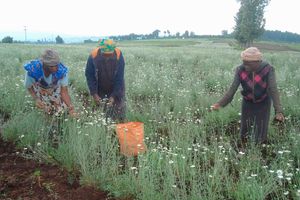
Farmers receive pyrethrum planting materials donated by Nyandarua County government under the Agriculture Spatial Plan implementation programme.

What you need to know:
- Interventions include subsidised artificial insemination services, the cultivation of climate-friendly fodder and production of animal feed supplements.
Nyandarua County's Agriculture department is set to benefit significantly from the implementation a new spatial plan, a climate change-driven document developed by multi-sectoral stakeholders. This follows more than a year of trials and mapping conducted by the Environment and Climate Change departments in collaboration with staff at the Agriculture department.
The spatial plan was prioritised after the 2022 general election to guide the county's administration on development programmes and project placements. Guided by climate factors and weather patterns, dairy and pyrethrum farming were identified as key areas for intervention. These efforts aim to promote sustainable agriculture and increase farmers’ incomes.
During the launch of dairy and pyrethrum programmes at Ol Joro Orok Stadium, Governor Kiarie Badilisha said: "The journey has taken us about one and a half years, starting from mapping, experiments and now the implementation. We have invested heavily to ensure success in both the dairy and pyrethrum sectors. We have involved the cooperative movement, recognising that climate change mitigation requires collaboration across all departments and stakeholders," he said.
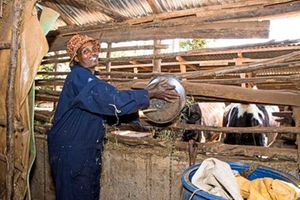
The dairy programme aims to increase milk production by 50 per cent, from 318 million to 477 million kilos per year, potentially doubling farmers' incomes from Sh13 billion to Sh26 billion. Interventions include subsidised artificial insemination services, the cultivation of climate-friendly fodder and production of animal feed supplements.
Ms Millicent Wambui, a farmer from Ndaragua, shared her struggles with dairy farming due to rising production costs and changing weather patterns. She had reduced her herd from 13 cows to three.
"The cost of production became prohibitive and unpredictable rains worsened the situation. Massive deforestation left the land bare, leading to extreme heat," she said.
Before climate change impacts, Ms Wambui harvested an average of 15 kilos of milk per cow at a production cost of Sh10 per kilo. However, costs later rose to between Sh17 and Sh25 per kilo, making dairy farming unprofitable. She is now among the beneficiaries of the fodder trials conducted before the programme's official rollout.
The county's Environment and Climate Change Executive Samuel Wachira noted that the fodder trials were a collaborative effort between agricultural extension officers and climate experts.
"The mapping for the spatial plan was intensive, but the results are promising. The fodder distributed to farmers is based on our findings, with considerations for dry and cold areas, ensuring we have species like super napier grass that can thrive in various conditions," he said.
Governor Badilisha emphasised the importance of quality and quantity in animal feed. "The government is promoting fodders ideal for each region, including maize, sunflower, desmodium, lucerne, sweet potato vines, brachiaria grass and sorghum. These are already performing well and are beneficial for livestock and poultry farming," he explained. The target is to increase average milk production per cow to 15 kilos per day from the current five kilos.
For successful implementation, the county government has employed additional extension officers and partnered with organisations like the Kenya Animal Genetic Resource Centre and Digicow. Cooperative societies have also recruited animal health assistants to support the programme.
For pyrethrum farming, the county has distributed planting materials worth Sh25 million and procured 50 driers, including 20 solar driers from the national government. The target is to increase pyrethrum acreage from 600 acres to 2,000 acres by next year. Historically, the county had 4,000 acres of pyrethrum, which fell to 75 acres but increased to 600 acres during recent trials.
Governor Badilisha highlighted the global demand for organic pyrethrin and new partnerships with processors like Kentegra, a Nairobi-based biotechnology company specialising in the production of organic insecticide pyrethrum for home biocide, agricultural and pharmaceutical pesticide markets..
"Pyrethrum is the only industrial crop in Nyandarua with lower climate change risks compared to potatoes and vegetables. It has the potential to create employment and provide a stable market for farmers," he said.
James Karanja, a farmer involved in the trials, noted that he sells pyrethrum at between Sh300 and Sh400 per kilo.
"The crop is easier to manage, has low harvest losses and is creating rural employment," he said.
As Nyandarua moves forward with these initiatives, the focus remains on sustainable agricultural practices and improving the livelihoods of its farmers through climate-resilient strategies.