The Sh21.5bn question: Can Kenya save Mau Forest this time?
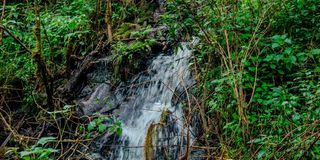
A small waterfall in the Mau Forest in this photo taken on October 13, 2024.


Grace Chepkemoi used to walk 10 minutes to fetch water from the spring near her home in Njoro. Now it takes 45 minutes, and even then, what she finds is barely a trickle.
"The spring is dying," she says, echoing a refrain heard across communities surrounding the Mau Forest Complex. "We've heard so many promises before."
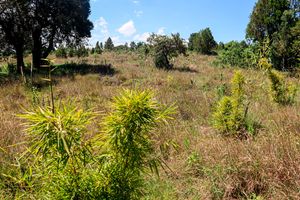
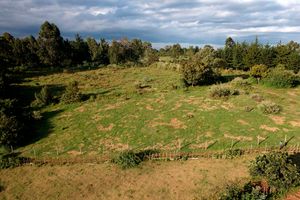
Kenya's largest forest, covering 403,000 hectares (roughly 995,000 acres) and once standing as East Africa's most vital water tower, has been the subject of numerous restoration pledges, task force reports, and political grandstanding over the past two decades. Yet illegal charcoal burning, unchecked timber harvesting, and encroachment have only intensified.
Now comes another promise: a Sh21.5 billion, 10-year programme dubbed the Mau Forest Complex Integrated Conservation and Livelihood Improvement Program (MFC-ICLIP), unveiled by the government in Nakuru with familiar fanfare, ambitious targets, and an unusual addition: an annual conservation marathon.
Read: Water towers at risk: Audit questions and plot to silence the guardians of Kenya’s key forests
A crisis decades in the making
Mau feeds 12 major rivers, including the Nzoia, Yala, Nyando, Sondu-Miriu and Mara, which drain into Lake Victoria, sustaining millions across the region. The forest generates 600 megawatts of hydropower, according to government estimates.
"If we lose Mau, we lose food security, water security, and our economic backbone," Festus Ng'eno, the Principal Secretary for Environment and Climate Change, said during the programme's launch.

The Environment and Forestry PS Engineer Festus Ng'eno (centre) and other officials during a tree planting initiative at Barget Forest in Mau Forest Complex, Nakuru County on August 29, 2025.
"MFC-ICLIP is a 10-year, transformative and novel initiative to forest restoration by integrating livelihood improvement. It is a programme for everyone seeking to unite communities, the private sector, development partners, NGOs, conservationists, county governments, schools and stakeholders, under the rallying call 'Linda Mau, Boresha Maisha' (Protect Mau, Improve Lives)."
Yet despite having 21 public forests nominally managed by the Kenya Forest Service and one community-managed forest, weak institutional frameworks have allowed systematic destruction to continue unchecked. Years of deforestation, overgrazing, and poor farming practices have stripped the land of its natural cover, leaving soils exhausted and prone to erosion.
The pollution crisis compounds the problem. Local communities have limited access to formal waste disposal systems, and some dump garbage into rivers, wetlands, and open land. Plastic waste clogs waterways. Organic waste produces methane. Untreated industrial and agricultural runoff introduces toxins into soil and water.
Rivers that once rushed from Mau's highlands now struggle to sustain downstream communities. Wetlands have shrunk. Wildlife has vanished. And the people who depend on the forest face waterborne diseases, respiratory problems from burning waste, and declining agricultural productivity.
The plan
The new restoration programme, developed in partnership with the private sector, development partners, non-governmental organisations and other stakeholders, will target 317,115 acres of degraded Mau Forest complex blocks, including the Eastern, Molo, Western and South West blocks, as well as adjacent farmlands. It rests on four major components, each with eye-catching targets.
First, sustainable landscape management involves the restoration of 33,138 hectares of forest, 66,000 hectares of wetlands, 100 kilometres of riverbanks, and 40 springs. To prevent further encroachment, 300 kilometres of forest boundaries will be fenced, and 40 ranger outposts will be renovated.
Second, breaking communities' dependence on forest resources through alternative energy and water systems: The programme promises solar, biogas, and efficient stoves for 100,000 households; clean energy systems in 500 schools; rehabilitation of 206 dams; and modern water harvesting systems for 4,000 households and schools.
A small waterfall in the Mau Forest in this photo taken on October 13, 2024.
Third, community livelihood improvement through sustainable agriculture: This includes training farmers in sustainable land management across 143,000 hectares; distributing two million avocado seedlings to 100,000 farmers; providing 50 cooperatives with milk coolers and storage facilities; and developing value chains in honey, sunflower, potatoes, pyrethrum, and dairy. A carbon project will attempt to monetise restoration efforts.
"Livestock farmers are degrading land when feeding their animals," said Jonathan Mueke, PS for the State Department of Livestock.
"Our solution is to support the dairy sector by strengthening the value chain, starting with the donation of two milk coolers in the Mau region. We are also introducing a livestock identification and traceability system commonly known as the 'Animal Track', which will boost incomes, control diseases, and keep livestock out of the forest."
Fourth, promoting a circular economy and environmental education: This pillar includes 100 public awareness campaigns, 100 decentralised recycling hubs, three material recovery facilities, 500 colour-coded waste bins for schools, 500 Mazingira Clubs, 50 model schools, 200 youth-led innovations, research funding at graduate and postgraduate levels, gazetting of cultural shrines, and annual Mau Summits.
In an unusual twist to traditional conservation programmes, the government has introduced an annual conservation marathon, the Annual Mau Marathon, which will form the highlight of the annual Mau Summit throughout the 10-year implementation period.
"The annual conservation marathon is a bold step towards taking the conservation efforts beyond the boardrooms to the hearts of the people," PS Ng'eno said. "By running for the Mau, we are running for clean rivers, improved livelihoods, renewable energy, biodiversity and a healthier Kenya. Each stride taken on the Marathon Day is a stride towards restoring degraded landscapes and uplifting local livelihoods."
According to the PS, who also serves as the patron to the programme, the government has already begun rolling out tree-growing activities since the programme's inaugural meeting in July. 150,000 tree seedlings have been planted at the Eastern Mau Forest ahead of the official launch scheduled for October 24 by President William Ruto.
Nakuru Governor Susan Kihika, the chief guest at the marathon launch event, stated that the county has installed air quality monitoring sensors to track pollution levels and make informed environmental decisions. She also reiterated the county's commitment to restore 60,000 hectares of degraded land by 2030 through partnerships with local communities.
"We are working to ensure that communities are not only informed but fully involved in conservation decisions. This fosters a culture of ownership, responsibility, and long-term stewardship," Kihika stated, making a rallying call to all stakeholders and the public to register for the conservation marathon.
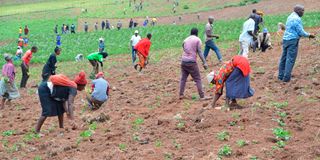
Residents of Teret location in Njoro, Nakuru County on September 25, 2023 plant tree seedlings at Logman Forest, which is part of the Eastern Mau forest complex.
Why past efforts failed
Previous restoration attempts have faltered on political interference, corruption, inadequate funding, and weak enforcement. Evictions of forest settlers in 2019 sparked controversy and were later partially reversed. Promised compensation never materialised for many families. Replanting programmes saw poor survival rates. And illegal activities resumed as soon as political attention shifted elsewhere.
The institutional problems that allowed Mau's degradation remain largely unresolved. The Kenya Forest Service has historically lacked resources, personnel, and political backing to enforce conservation laws. County governments and national agencies operate with minimal coordination. Land tenure disputes continue to simmer. And the economic pressures driving communities to exploit the forest, poverty, landlessness and unemployment, persist.
The programme includes "mechanisms for coordination among ministries, county governments, and stakeholders," but offers few details on how these will differ from past coordination failures.
The Mau restoration effort is embedded within President William Ruto's broader 15 billion tree-planting initiative launched in December 2022, which aims to increase Kenya's forest cover from approximately 7 percent to 30 percent by 2032, and is part of the National Landscape and Ecosystem Restoration Programme.
"This is not just an environmental programme," said Deborah Barasa, the Cabinet Secretary for Environment, Climate Change & Forestry. "It is a shield against hunger, migration, and conflict. Restoration will generate Sh50 billion annually, strengthening both peace and prosperity."
Even correctional facilities are participating. Dr Salome Wairimu, Principal Secretary for the State Department of Correctional Services, said: "Our 135 prisons have already planted six million seedlings, and we are targeting 100 million."
Njoro MP Charity Kathambi emphasised that education, awareness, and legislation must go hand in hand to secure Mau for future generations. "It is time to take action to save our climate," she said.
PS Ng'eno positioned restoration as transcending mere tree planting: "Restoration is not just about trees. It is about water, energy, food security, and dignity. It is our shared legacy."
Environmental experts note that successful restoration requires several critical elements often missing from government programmes: sustained funding beyond electoral cycles, genuine community participation in decision-making (not just implementation), rigorous monitoring and evaluation, transparent reporting, accountability for officials who enable illegal activities, and addressing the root causes of poverty that drive forest exploitation.
Back in Njoro, Grace Chepkemoi remains cautiously hopeful but wary. She's watched too many programmes launch with fanfare only to fade into memory.
"We'll see if this one is different," she says, balancing a jerrycan on her head for the long walk home. "But the spring doesn't care about promises. It just keeps dying."