Cancer patients dying, surgeries cancelled as blood screening reagents run dry
With the regional blood bank unable to screen for infections, surgeons are being forced to cancel operations, leaving cancer and maternity patients in a fight for survival.

What you need to know:
- Cancer patients, who are among the highest consumers of blood products due to aggressive therapies and disease-induced aanemia, are bearing the brunt of the shortage.
A blood reagent shortage has paralysed major hospitals in the North Rift region, forcing surgeons to cancel life-saving operations and leaving cancer patients to die.
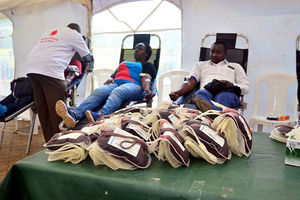
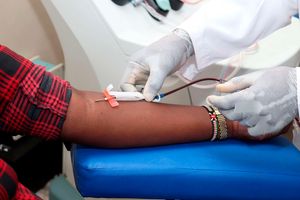
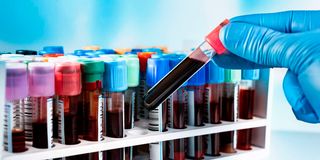
For at least two weeks, the Regional Blood Transfusion Centre in Eldoret has been unable to routinely screen donated blood for Transfusion-Transmitted Infections such as HIV, hepatitis, and syphilis. This supply failure has left regional blood banks entirely depleted, triggering a devastating bottleneck: families are ready to donate blood, but medical facilities lack the chemical tools required to test and safely clear it for use.
An internal alert revealed that hospitals are unable to access blood products due to a shortage of screening reagents at the regional blood bank. All concerned users have been advised to take note of this and plan accordingly until further communication is issued.
The human toll of this administrative failure is escalating rapidly across Uasin Gishu and surrounding counties. Clinicians at Moi Teaching and Referral Hospital (MTRH) and other regional facilities paint a harrowing picture of empty blood banks and agonising triage decisions.
"We are even cancelling surgeries because of no blood. This has been on and off for a while, like two months, but the issue has become more serious now," a senior medical worker on the ground revealed, speaking on condition of anonymity.
The source noted that cancer patients, who are among the highest consumers of blood products due to aggressive therapies and disease-induced anemia, are bearing the brunt of the shortage.
"There are many cancer patients who are dying. There are patients we need to take to the theatre, but they are dying because we cannot operate on them and they need blood," the clinician said, adding that because the crisis spans the entire North Rift region, an accurate tally of the lives lost remains difficult to quantify administratively.
"Even when desperate families step forward to donate blood directly for their ailing relatives, they are being turned away. We are sending relatives to be screened for blood, but they come back saying there are no reagents," the source added.
The roots of the crisis point to a structural and financial disconnect between county-level emergency needs and national supply chain management. Because blood safety and management remain a national government function under the Ministry of Health, local hospitals are legally and financially restricted from managing the pipeline independently.
Medical insiders report that MTRH had previously stepped in to salvage the situation by directly purchasing emergency screening reagents using its own funds. However, institutional budgets have worn thin, and new state regulations have complicated emergency purchasing.
Sources close to hospital operations blame the impasse on systemic hitches tied to the Electronic Government Procurement (e-GP) system, the online state platform mandated by Parliament for public resource tracking. The supply chain for blood and blood products is managed through the Kenya Tissue and Transplant Authority, utilising the e-GP platform to procure critical laboratory reagents, medical consumables, and equipment needed for safe blood services.
"There is a big problem right now because when MTRH is not supporting, the regional blood bank is just flat. The blood bank is supported by the Ministry of Health. There is a procurement problem at that level. The kits are just not there, and these things are not budgeted for by local referral hospitals," a source explained.
The crisis has forced regional authorities to aggressively mop up and exhaust existing blood reserves from smaller satellite centers across neighboring counties, leaving the entire region with zero safety net.
When reached for comment, Thomas Rotich, a researcher and officer at the Kenya National Blood Transfusion and Transplant Service in Eldoret, acknowledged the screening standstill but maintained that the center had managed to ration out a few previously processed units for critical emergencies.
"We had some challenges screening it, but we still had some units that we had screened earlier and have been dispatching," Rotich stated. He confirmed that the absolute freeze on screening had been in effect since the beginning of the week. "We have not screened from Monday."
However, Rotich offered a glimmer of hope for the region's straining health care facilities, indicating that an emergency shipment of the vital laboratory supplies had finally been processed.
"The reagents have been sent today. So from tomorrow, we are good to go," Rotich said on Friday.
While the arrival of the reagents may soon restart the processing machines in Eldoret, health care workers warn that the backlog of cancelled surgeries, depleted shelf stocks, and the trust broken among desperate patient families will take weeks to stabilize. For many fighting for survival in the local cancer and maternity wards, the administrative delay has already carried the ultimate price.
The crisis comes just weeks after international trade databases revealed that Kenya is a consistent exporter of blood products to the global market.
Data from the World Integrated Trade Solution, a premier trade repository managed by the World Bank and the United Nations – shows that in 2024, Kenya exported approximately 9,785kg of blood products. These shipments reached a sprawling list of destinations, including Uganda, Rwanda, Ethiopia, South Sudan, the United States, and the United Kingdom.
According to TrendEconomy, which aggregates official UN Comtrade statistics, the value of Kenya’s exports under Commodity Group 3002, a category that includes human blood, animal blood, antisera, and vaccines, totalled 1.98million (approximatelySh260million) in 2023.While this was a 54 per cent decrease from the1.98million (Sh260million )in 2023.While this was a 54 per cent decrease from the 4.38 million exported in 2022, the persistence of these exports remains a point of contention.
The top destinations for these products in 2023 were: Uganda (20 per cent, 402,000), Ethiopia (15.7 per cent, 402,000), Ethiopia (15.7 per cent, 313,000), Tanzania (6.98 per cent, 138,000), and South Sudan (6.41per cent,138,000), and South Sudan (6.41per cent,127,000). Crucially, 10.7 per cent of these exports ($214,000) fell under sub-code 300290, which specifically lists human and animal blood prepared for therapeutic or diagnostic uses.
Appearing before the Senate Standing Committee on Health, Cabinet Secretary Aden Duale stated that the Ministry of Health does not export donated human blood or blood components for the manufacture of blood-derived products abroad.
In a follow-up press statement, the ministry clarified that the "Human and Animal Blood" category in trade reports is a broad customs classification (HS Code 3002). This code acts as a catch-all for vaccines, toxins, antisera, and microbial cultures.
According to the ministry, Nairobi serves as a regional hub for multinational companies. Products are imported into Kenya and then redistributed to neighboring countries, appearing in data as "re-exports."
Kenya currently lacks plasma fractionation facilities, the specialised infrastructure required to turn raw blood into products like albumin or clotting factors. Ironically, Kenya is a net importer of these very products, spending $113 million (Sh14 billion) in 2023 to bring in blood-derived medicines from countries like India and Belgium.
While the government has denied the sale of donor blood, the reality in the trade ledgers is more nuanced. Several entities in Kenya are legitimately involved in the cross-border movement of biological materials that fall under the blood umbrella. When a local laboratory sends a patient’s blood sample to South Africa for specialized DNA testing or rare disease screening, that vial is technically recorded as an export of "human blood" under HS Code 3002.90.
Some companies in the country export blood collection tubes and diagnostic kits. While these are hardware, they are often grouped near blood-related codes in logistical tracking. The Kenya Tissue and Transplant Authority facilitates the movement of blood samples for international research and quality assurance, which also appears in customs data.
Despite these technical explanations, the optics remain challenging. Kenya continues to struggle to meet its annual target of 500,000 units of blood, often falling short by nearly half.
According to the World Health Organization, Kenya has an annual demand of approximately 500,000 units of blood. However, in the 2022/2023 financial year ending in June, the country collected 412,531 units, leaving a substantial gap in the supply of safe and adequate blood. The shortage of blood in Kenya is a result of several factors, including inadequate infrastructure, limited funding, and poor blood donor recruitment and retention.