Chinese tea culture and farming tech: A harmonious blend of tradition and innovation
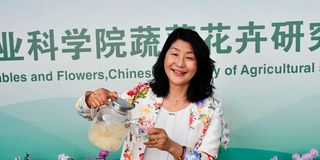
Prof Zhang Xiuxin serving peony flower tea on April 29, 2025 at Chinese Academy of Agricultural Sciences in Beijing, China.

What you need to know:
- Modern science has redefined traditional uses of the peony flower, transforming it from a purely ornamental treasure into a nutritious, health-boosting tea.
Drinking tea in China is not an option; it’s a culture that thrives in every household and eatery. Here, a visitor is welcomed with a cup of sugarless tea without milk - just boiled water and tea leaves. It is no wonder scientists keep inventing new farming technologies to ensure that the market always has a new tea brand.
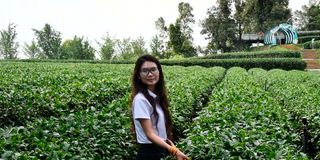
Wu Lang, head JinJing tea garden. The farm is located in the Southern part of China and occupies 133 hectares of land.
When Healthy Nation team recently visited the Chinese Academy of Agricultural Sciences in Beijing, the capital city of China, we were served peony flower tea. The fragrance of peony flower tea is pleasant, and its taste is pleasing both to the palate and the eye. Its tree is resistant to drought and cold, which is why it blooms only once in a year.
Modern science has redefined traditional uses of the peony flower, transforming it from a purely ornamental treasure into a nutritious, health-boosting tea.
“Tea peony is an important flower in China. In the past, peony flowers were primarily valued for their ornamental beauty, but recent research has revealed that peony petals contain beneficial nutrients like protein, vitamins, and amino acids. This discovery has led to the development of peony petal tea,” says Prof Zhang Xiuxin, chief scientist of the peony team at the Institute of Vegetables and Flowers.
Cooler temperatures
Peonies thrive in the cooler temperatures of spring in China, particularly during April and May, with a preference for temperatures between 15-20 degrees Celsius. Prof Zhang notes the short lifespan of peony flowers, but they are also utilised beyond their decorative value, being fermented for wine and beer in addition to being used for tea.
“If we keep the plants, they die in seven days. So, we have to harvest all the flowers and send them directly to the factory to make the various products,” Prof Zhang notes.
While the young Chinese generation enjoys a new peony-flavoured beer, China also exports the tea, along with other flower teas like jasmine, to other countries. Prof Zhang hopes peony tea, in particular, will gain global recognition as a valuable Chinese export, similar to the established presence of jasmine tea .
The country also exports peony flowers to European countries. Peony is also a medicinal plant and scientists say its roots are good for blood pressure and women’s health, making every part of the plant useful.
Due to the many benefits of peony plants, African agricultural students studying in China are optimistic that through modern technology combined with old agriculture methods, the plant can do well in any African country.
“I hope that through cooperation between China and Africa, we can introduce peony flowers to African countries. Despite the continent having high temperatures, I believe that peonies can be kept in greenhouses and do well,” Ayman Mohamed, a PhD student from Egypt, said.
China's tea market is vast, with numerous companies producing a wide array of tea brands to cater to its large population of 1.4 billion people.
During a seminar organised by the Institute of International Studies and Advanced Training, China International Communications Group (CICG), the Healthy Nation team visited the biggest tea farm in Hunan province - Jinjing tea.
The farm is located in the Southern part of China and occupies 133 hectares of land. The region is suitable for growing tea because of its high humidity, a 29-degree temperature, and abundant rainfall.
“We have built canals here to drain drain excess rainwater during floods and also to store and distribute water for irrigation during dry periods,” Wu Lang, head of JinJing Tea Garden, says.
The JinJing Tea Garden stands as a model of modernised tea production, blending biodiversity (100+ tea varieties) with industrial efficiency (10,000+ bags/day packaging).
At the garden, the choice between hand-picking and machine-picking reflects a careful balance between quality, efficiency, and market demand
“We use two tea harvesting methods: hand-picking and machine-picking. Hand-picking is favoured for tea meant for drinking. Machine-picking is preferred for export tea due to its efficiency and ability to harvest from the original source, extracting beneficial elements. Both methods are followed by automatic packaging,” Ms Wu explains.
Chinese farmers, with a history of tea cultivation since 1958, have developed a recurrent farming practice. They replant tea bushes every 15 to 30 years, replacing old, less productive plants with new ones to maintain optimal yields. This practice ensures continued high-quality tea production.
“Since ancient times, ancestors defined different seasons and times for agriculture, including tea farming. They justified tea farming as a culture that is carried to the next generation,” she adds.
Hunan province is recognised for its robust agricultural sector, with many families prospering through farming, particularly tea cultivation. The region serves as a model for agricultural development in Kenya and other African nations, with the China-Africa Economic and Trade Expo, hosted by Hunan every two years, providing a platform for collaboration and showcasing Kenyan produce. This years’ expo took place in June, with Kenyan farmers having their pavilion to showcase different agricultural produce.
“Since China's reform and opening up in 1978, over 800 million people have been lifted out of poverty, significantly contributing to global poverty reduction. In 2020, China achieved its goal of poverty alleviation, eliminating extreme poverty and reducing the world's poor population by 70 per cent,” said Yang Baozhen, former Chinese consul to France and senior project officer at the Canadian International Development Agency.