Cholera crisis: Poor sanitation turns Kilgoris town into a ticking time bomb
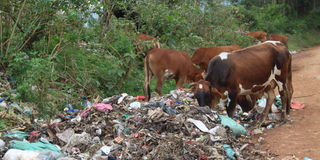
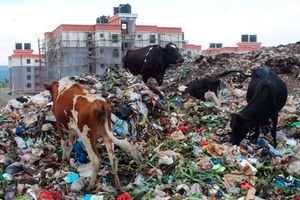
A makeshift dumpsite along the Kilgoris-Enoosaen road in Kilgoris town, Narok County on October 7, 2025.

What you need to know:
- Cholera is an acute diarrheal infection caused by consuming food or water contaminated with the bacterium Vibrio cholerae.
- It is a global public health threat and indicates inequity and lack of social and economic development.
- Access to safe water, basic sanitation and hygiene is essential to prevent cholera and other waterborne diseases.
On a sunny Tuesday evening in Igingo estate, Kilgoris, three children splash playfully in stagnant water. Their innocent game belies the grim reality of a cholera outbreak that has claimed five lives and hospitalised 46 others, thrusting this Narok County town into the national spotlight.
The human cost of the outbreak is stark. At a home in Migingo estate, mourners gather in pensive silence. Joseph Ongeri, a carpenter, has succumbed to the waterborne disease.

A culvert bridge across Kongit River that runs through Kilgoris town with contaminated water due to sludge washed downstream.
His wife, Esther, recounts his rapid decline. “A week ago, he was as fit as a fiddle. It started with a fever, then vomiting and diarrhoea. We rushed him to the hospital, but he died two days later,” she said, suspecting he consumed contaminated water while working away from home.
According to Narok County Public Health Officer Lucy Kashu, the disease, caused by Vibrio cholerae, a comma-shaped bacterium, can be fatal if not treated.
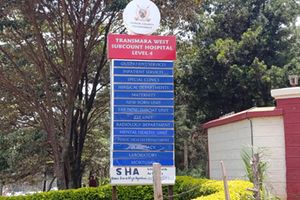
At Transmara West Sub-County Hospital, Alex Saidini is grappling with his diagnosis. “I came here vomiting, with a stomach upset, fever and diarrhoea. I didn't know I had a life-threatening disease,” he said, attributing his infection to a meal at a local hotel. His five family members, who did not eat there, remain unaffected.
“I thank God my family took quick action by rushing me to hospital for medical attention as word spread there was a cholera outbreak in Kilgoris,” Mr Saidini added.
In another ward, Mercyline Makori watches over her one-year-old child. “I fed her some bananas, oranges and milk that I bought from a local shop. She developed fever, vomited and had diarrhoea. I rushed her to the hospital, and the cholera tests turned out positive."
The outbreak has also exposed the vulnerability of those living alone. At Bondeni estate, Wilson Siankoi fell ill in his home with no one to raise an alarm. Neighbours grew concerned after his door remained closed for unusually long hours. “We found him very weak, surrounded by vomit. He died two days after being admitted,” recalled Charles Momanyi, a neighbour.

Nancy Samato, a mother taking care of her child at a cholera isolation ward in Transmara West Sub-county Hospital in Kilgoris, Narok County on October 7, 2025.
The source of the outbreak is tragically visible. In Kibera estate, vendors sell fruits and vegetables with little regard for public health standards. A short distance away, liquid and solid waste flows directly into River Kongiti — the primary source of drinking water for many residents.
The riverbanks are littered with metals, clothes, and food remnants. Sludge from hotels, homes and pit latrines snakes through trenches into the waterway, collecting in open spaces and posing a severe health risk. Despite cholera containment measures, including a ban on washing clothes along the riverbanks,, women continue to wash clothes in the contaminated river.
At the local trading centre, however, there is a semblance of order, with handwashing points set up and the hawking of foodstuffs banned by the public health department. Handwashing and occasional mask-wearing are enforced at Transmara West Sub-County Hospital, where cholera patients are treated under enhanced biosafety measures in the isolation ward.
The small agricultural town, the headquarters of both Emurua Dikirr and Kilgoris constituencies and a regional business hub, has been thrust into the national limelight by the cholera outbreak.
No sewage system
Health experts say the cholera outbreak has been triggered by a combination of factors.
Residents and the health experts point to a fundamental lack of infrastructure as the root cause. “Kilgoris town does not have a sewage system, a proper dumpsite, soak pits or public toilets. This is a public health disaster waiting to strike,” lamented Saphina Kemunto, a resident.
The town's slaughterhouse epitomises the neglect. A filled-up, doorless pit latrine stands nearby, its entrance covered by a tattered gunny bag. Blood and animal waste attract swarms of flies, creating a breeding ground for disease.
“This is not only an eyesore but a ticking health time bomb, said Ruth Wanjiku from Bondeni estate.
In response, county authorities have implemented containment measures.
“The county government has taken remedial measures to curb further spread of the disease, including inspection of 50 hotels and eateries, leading to the closure of 20 that did not meet the set public health standards,” said Ms Kashu.
Dr Francis Kiio, the county director for Health, said handwashing and use of soap have been made mandatory in all public places, including government offices, markets and hotels.
"Waiters in bars and hotels must wear masks, water must be boiled, and toilets cleaned regularly,” he stated.
Dr Caleb Chemirmir, the Kenya Red Cross Society Lead for Public Health, said the government and stakeholders are jointly working to ensure residents are not exposed to the risk of future waterborne disease outbreaks.
But even with these measures in place, the county government has barely scratched the surface in addressing the core issues that triggered the outbreak.
According to Ms Kashu, the affected areas include three civic wards in Kilgoris and Transmara West — among them Majengo, Migingo, Milimani, Complex, Kibera, KCC, Olosentu, ACK, Endonyo Oonkopit, Oldonya Oshara, Olalui, Oltaki and Maranatha estates.
Residents like Hellen Kenteiya demand the immediate relocation of the dumpsite, which contains hazardous medical and animal waste accessible to children.
“That we have needles and hospital waste, carcasses of dead animals and other solid waste from shops, markets and homes accessible to children is a serious matter that should be addressed immediately,” she said.
Governor Patrick Ntutu acknowledged the challenges, blaming past poor planning. He announced that land has been secured for a new dumpsite and that teams are working to unblock drainage systems. “The newly established Kilgoris Municipal Board is now addressing the provision of clean drinking water,” he said.
Yet, for the residents of Kilgoris, these promises offer little comfort as they navigate a landscape of raw sewage and contaminated rivers, waiting for the next health crisis to erupt.
According to the World Health Organization, cholera is an acute diarrheal infection caused by consuming food or water contaminated with the bacterium Vibrio cholerae. It is a global public health threat and indicates inequity and lack of social and economic development. Access to safe water, basic sanitation and hygiene is essential to prevent cholera and other waterborne diseases.
Most people with cholera have mild or moderate diarrhoea and can be treated with oral rehydration solution (ORS). However, the disease can progress rapidly, so starting treatment quickly is vital to save lives. Patients with severe disease need intravenous fluids, ORS and antibiotics.
Cholera can cause severe acute watery diarrhoea, which can be fatal within hours if untreated. Most people infected with V. cholerae do not develop symptoms but can spread the bacteria through their faeces for 1–10 days. Symptoms appear 12 hours to five days after infection.
Most people with the disease have mild or moderate symptoms. A minority of patients develop severe acute watery diarrhoea and life-threatening dehydration.
Cholera has been known for many centuries. The first pandemic, or global epidemic, was recorded in the 19th century. Since then, six pandemics have killed millions of people worldwide. The current (seventh) pandemic started in south Asia in 1961 and continues to affect populations globally.