Don't miss a dose: The complete guide to your child's vaccination schedule
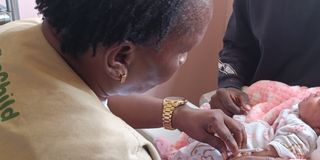
Ms Jael Aran, the Kisumu Central sub-County Immunisation Coordinator, administers a polio vaccine on January 29, 2025, to a newborn who was among the children who missed out on the vaccine due to a shortage in November.
What you need to know:
- Every child is born with an immune system still learning to respond to the world. In those first months and years, even common infections carry serious risks because the body hasn't yet built its own defenses.
- Immunisation bridges this gap by priming protection early, training the immune system to recognise and fight pathogens before they strike.
Public health authorities regularly launch nationwide vaccination campaigns for children under five, followed by door-to-door outreach to leave no child behind. Guided by World Health Organization (WHO) recommendations, these initiatives form a cornerstone of preventive healthcare, reaching even the most isolated households. They safeguard young children against serious, sometimes life-threatening diseases, many of which can cause permanent disability or long-term complications if contracted.
Every child is born with an immune system still learning to respond to the world. In those first months and years, even common infections carry serious risks because the body hasn't yet built its own defenses. Immunisation bridges this gap by priming protection early, training the immune system to recognise and fight pathogens before they strike.
For parents, understanding this process is the first step toward timely, confident decisions that protect their child from day one.
Immunisation works by introducing specially prepared biological substances that stimulate the body to produce antibodies against targeted infections. These antibodies are critical in protecting children from diseases that are often more severe in early childhood, particularly among those under five.
Vaccination follows a structured schedule recommended by WHO, designed to safeguard children at key developmental stages. At birth, babies receive the BCG, polio, and hepatitis B vaccines. At six weeks, they are given Hexaxim (DTaP-IPV-HB-Hib), a six-in-one combination vaccine alongside pneumococcal, rotavirus, and polio vaccines, all of which are repeated at 10 and 14 weeks.
Hexaxim combines six vaccine components into a single injection, offering early protection while reducing the number of separate jabs a child must endure.
These include diphtheria vaccine, which protects against an infection that can affect breathing and damage the heart; tetanus vaccine, which prevents severe muscle stiffness and life-threatening complications from wound infections; pertussis vaccine, which protects against whooping cough, a condition that can cause severe coughing fits and breathing difficulties in infants; polio vaccine, which prevents a viral infection that can lead to paralysis; hepatitis B vaccine, which protects the liver from a virus that can cause long-term liver disease; and the Haemophilus influenzae type b (Hib) vaccine, which helps prevent serious infections such as meningitis, pneumonia and bloodstream infections in young children.
Together, these vaccines provide broad protection during a child's most vulnerable months.
At six months, the influenza vaccine is introduced, with a repeat dose at seven months. At nine months, children receive the measles, mumps, and rubella (MMR) vaccine, alongside typhoid and inactivated polio (IPV) vaccines. The meningitis vaccine is given at ten months, followed by a booster dose three months later.
At 12 months, children may receive the meningitis vaccine (if missed earlier), along with hepatitis A, cholera, and chickenpox vaccines. At 15 months, they receive a second dose of meningitis, alongside pneumonia and MMR vaccines. At 18 months, booster doses of Hexaxim (DTaP-IPV-HB-Hib) and hepatitis A are administered. By two years, the typhoid vaccine is given to children following the private vaccination schedule.
The schedule may appear detailed, yet it is carefully designed to provide continuous protection during a child's most vulnerable years. However, consistency is sometimes disrupted by illness or missed appointments. When this happens, children can still be brought back for catch-up vaccines; additional doses administered to replace or complete any missed or delayed routine shots, ensuring protection is maintained. This is typically done during the next scheduled vaccine visit.
Despite strong scientific evidence, concerns and myths continue to shape some parents' attitudes toward vaccination. One common misconception is that multiple vaccines can overwhelm a child's immune system. Research shows, however, that a baby can safely receive several vaccines at once. Another widely circulated myth claims that the MMR vaccine causes autism, a claim that has been thoroughly disproven, with no scientific link ever established between the two. Misinformation like this creates unnecessary fear and can lead to missed opportunities for protection.
Ultimately, immunisation remains among the most effective tools in preventing childhood illness. It not only protects individual children but also strengthens entire communities. For parents and caregivers, following the recommended schedule ensures that children receive protection at the right time, giving them a stronger, healthier start in life.
The author is a midwife and vaccination nurse at Aga Khan University Hospital