Duale rejects organ trafficking report, says it was doctored

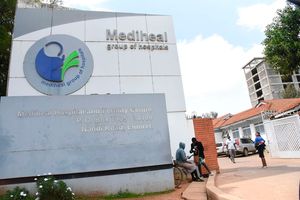
The entrance to Mediheal Hospital and Fertility Centre in Eldoret town, Uasin Gishu County.

What you need to know:
- The investigation focused particularly on activities at Mediheal Hospital, where several of the alleged irregularities were reported to have occurred.
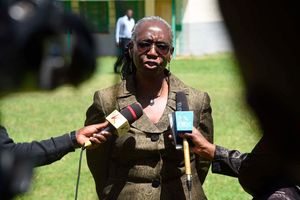
Health Cabinet Secretary Aden Duale has dismissed a fact-finding report on alleged organ transplant trafficking in the country, claiming it was ‘doctored and lacked unanimous support from the investigation team’.
Appearing before the National Assembly's Departmental Committee on Health, Mr Duale rejected findings from the Kenya Blood Transfusion and Transplant Service investigation despite the team being constituted by the Health ministry.
"The report was not endorsed unanimously due to significant dissenting views among the team members," Mr Duale told MPs. "It was not formally submitted to the Ministry of Health for consideration or action. As a result, the findings and recommendations are deemed non-binding and without legal or administrative standing."
Mediheal Hospital
The disputed report came from a 12-member team drawn from various organisations tasked with investigating alleged organ trafficking activities in Eldoret between December 5-8, 2023.
The investigation focused particularly on activities at Mediheal Hospital, where several of the alleged irregularities were reported to have occurred.
The report was supposed to provide answers to concerns over Israeli nationals receiving transplants in Kenya and returning to their home country, organised syndicates evading regulations in Kenya as occurs in organ trafficking, and the lack of relationship between the organ provider and the recipient.
The report was also supposed to address evidence indicating that several kidney transplants involving foreign kidney donors had taken place at the hospital, respond to allegations that doctors of Indian origin were carrying out the transplants, and that organ providers were originating from Central Asia.
The report, which has since been rejected by the CS, has led to the formation of a new Independent Investigative Committee of Organ Transplant Services comprising independent experts from both public and private healthcare facilities. It has been tasked with conducting a comprehensive audit of all organ transplant facilities across Kenya.
The new investigation will examine governance structures, clinical practices, ethical compliance, legal adherence, and patient safety standards at transplant centres, with particular focus on Mediheal Hospital.
"We need a thorough, unbiased investigation that will provide clear answers to these serious allegations," CS Duale stated during the parliamentary session.
The newly constituted committee has been given up to July 22 to submit its final report to the Ministry of Health.
According to the CS, Mediheal Hospital is still licensed and registered to conduct kidney and liver transplants. The hospital started kidney transplants in November 2018, following approval by Kenya Medical Practitioners and Dentists Council. It was also given approval to conduct liver transplants from November 4, 2019.
From the report findings, Mediheal has conducted a total of 372 kidney transplants, with most cases from Kenya, Uganda, Ethiopia, Burundi, DRC, Somalia, and a few from Australia, Israel, Japan, the USA, and the UK.
Three of these surgeries were open, while 369 were conducted through a minimally invasive procedure called laparoscopic nephrectomy.
According to the findings, 80 kidney transplants were conducted between November 2018 and February 2020, 70 transplants between September 2020 and July 2021, and 150 transplants between July 2021 and February 2023. Seventy-two transplants were conducted between February 2023 and November 2023.
The findings also showed that 70 of those who underwent transplants were over 60 years old, with the oldest recipient being 80 years old and the youngest being eight years old. Fifteen people died during the procedures.
Even though the report shows that donors appear before the hospital’s ethics committee prior to surgery, where they submit their legal affidavits, family statements, and consent to the process of transplantation, it also shows that the consent forms for the donors and recipients were not translated to allow them to understand the contents.
Other forms that were not translated included solid organ transplant test request forms, medical reports that recommended hemodiafiltration, a process that removes waste products from the blood, vaccination forms, renal transplant forms for donors, and kidney transplantation forms for recipients.
“All kidney transplant donations were from living donors, and donors from different nationalities were noted. Consent to donate was available in all sampled files and signed by an advocate, not translated to a language the donor and recipient could understand. Transplants were conducted despite poor donor-recipient cross-match results,” says the report.
The facility lacked clinical patient morbidity (resultant complications) and mortality (death) reports; and there were no long-term patient follow-up reports and documentation. There were no multidisciplinary committee meetings held in the hospital, and the composition was not complete as there were no patient representatives or advocates as per best practice,” the report adds.
The report adds that “of note, all foreign surgeries on both donor and recipient were cash transactions.”
The report also says that all the health workers who conducted the procedures, both local and foreign, “had the necessary registration and licences required for them to provide healthcare services in Kenya.”
“The reasons given as to why the foreign recipients come to seek medical treatment in Kenya cannot be ascertained. The number of surgeries, especially with the use of advanced technologies and fair costing of the transplant services, may make Kenya a hub of transplantations. We must be careful to protect vulnerable donors who may be coerced or paid to give away a kidney. All measures must be in place, including standardisation of consent to donate and receive the kidneys,” says the report.
On April 25, Mr Duale suspended Dr Maurice Wakwabubi, who was the acting head of the Kenya Blood Transfusion and Transplant Services, and Dr Everlyne Chege, the fact-finding committee’s technical lead.
“To strengthen the governance and regulatory framework for blood, cells, tissues, organs, and related human substances, the MOH has developed a draft Kenya Bill and Policy 2024 on blood, cells, tissues, organs, and related human substances to provide a comprehensive legal structure for ethical governance, quality assurance, safety protocols, and access and coordination of transplant and transfusion services across the country,” said CS Duale.
He added that “ The ministry has also drafted clinical guidelines and standards for transplantation to address ethical conduct, clinical procedures, and facility standards in alignment with international best practices and the development of a national transplant registry to strengthen regulatory oversight and improve responsiveness. This registry will serve as a centralised system to monitor donor-recipient matching, procedure compliance, and institutional performance.”