Ebola at Kenya's door, but where are the isolation centres?
A satellite image shows tents erected and vehicles at a new field hospital at Laikipia Air Base in Laikipia County, Kenya June 4, 2026.

Otieno Odhiambo has fished on Lake Victoria since he was 17. He learned from his father, who learned from his, and he knows the lake the way he knows his own hands. What he cannot tell is whether the man in the next boat, the one he has traded cigarettes, food and fishing line with for six years, is sick.
That man is Ugandan, operating out of a landing site near Busia on the Ugandan side. They meet most nights, sometimes closer to the Kenyan shore, sometimes further out. The lake does not have a border post; there is no checkpoint in the water, and no health officer stands at the point where Kenya ends, and Uganda begins.
Uganda has so far confirmed 20 Ebola cases, and two people are dead.
At Dunga Beach in Kisumu, the landing site wakes before 4 am. By the time the light comes up, the boats are already in, and the catch is being sorted, with men in gumboots wading through the shallows pulling nets while women in kangas wait with buckets and basins. This is not a place that has ever been locked down. Even during Covid-19, when the government announced restrictions, the fishermen kept going out. You cannot put a family on pause.
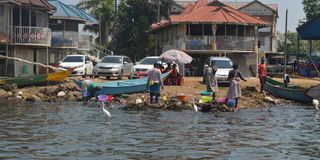
Dunga Beach, one of the five wetlands at the shores of Lake Victoria on July 12, 2022.
James Omondi, 41, fishes out of Dunga. He has heard about Ebola on the radio, knows it is in Uganda, knows it is serious and can name some of the symptoms. But he does not know whether his nets, which sometimes get tangled with those from Ugandan boats and have to be sorted out by hand, can carry the virus, or whether the shared fuel line, the tube passed between boats when someone runs low, is a risk.
"We share everything on the water. Fuel, food, sometimes we eat together if the night is long. If one of them is sick, then all of us could get infected," he says.
Lake Victoria is the second largest freshwater lake in the world, shared by Kenya, Uganda and Tanzania, with the Kenyan shoreline stretching roughly 200 kilometres across Kisumu, Siaya, Homa Bay and Migori counties. Confirmed and suspected Ebola cases in the Democratic Republic of Congo have crossed 1,000, with 254 deaths recorded, while Uganda has reported 20 confirmed cases, four current admissions and two deaths.
The World Health Organisation has declared the outbreak a Public Health Emergency of International Concern, and the Africa CDC has raised it to Grade 3, its highest risk category, citing confirmed cross-border transmission, delayed detection, high regional mobility, and the complete absence of licensed vaccines or approved therapeutics for the Bundibugyo strain driving the spread.
Kenya shares borders and high-volume travel corridors with both affected countries, and yet a Kenyan in Kisumu, Mombasa, Eldoret or Garissa who opens the Ministry of Health website looking for guidance will find nothing telling them where to go, what to watch for, or what the health system will do if they arrive at a facility with Ebola symptoms.
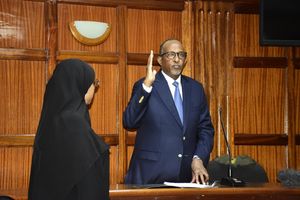
Cabinet Secretary Aden Duale has announced that Kenya has 22 designated isolation facilities across the country, but has not said where they are.
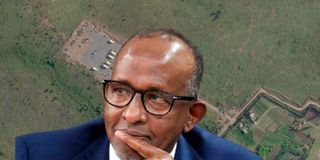
Health Cabinet Secretary Aden Duale. In the background is a satellite image of the US-backed Ebola quarantine facility in Laikipia.
In his public preparedness statement, the CS mentioned an eight-bed isolation and treatment unit at Kenyatta National Hospital, 49 beds ready for activation at the National Police Service Hospital, and 22 isolation facilities designated across the country. But a number without a location is not a facility. It is a press release.
No public list nor guidance document tells a county health officer in Mandera, a nurse in Homa Bay, or a bus driver who has just travelled from Kampala, where the designated centres are and how to reach them. The only contact information the Ministry has placed in public view is the general *719# health line listed at the bottom of government advisories, a USSD code designed for general health queries, not outbreak triage.
Pressed on the locations of the 22 isolation centres, the Ministry has since shifted its position, with the announcement moving away from 22 designated facilities and towards referral hospitals. In an affidavit filed in court, Duale stated that "the government of Kenya is putting up isolation and quarantine wards at all the referral hospitals in the country and the police and the armed forces hospitals."
While Kenyans wait for answers about their own preparedness, one Ebola facility is receiving attention and resources, but not for Kenyans. The Trump administration announced the facility as part of its Ebola containment strategy for the DRC outbreak. Its purpose is the observation of American nationals with high-risk Ebola exposure who are not yet symptomatic. Confirmed cases would be evacuated to Europe or the United States for treatment.
It was still under construction at the time of reporting, and that decision has placed CS Duale in contempt of court. The legal challenge, brought because the facility was authorised without the transparency and public participation the Constitution requires, is now before the courts. Duale has not complied with the court's orders.
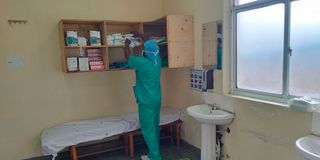
Part of the Infectious Disease Unit that will be used to isolate Ebola patients at Kenyatta National Hospital in Nairobi on June 12, 2026.
The question the decision raises is one that the Ministry has not answered. Kenya is a sovereign country with its own population facing its own Ebola risk, and the government has found the political will and the bilateral relationship to build a facility for American personnel while failing to publish a list of isolation centres for its own citizens.
The WHO's guidance on Ebola facility design rests on three principles: location, infection prevention and community buy-in. Kenya's public preparedness record does not yet demonstrate that any of the 22 designated facilities, wherever they are, have been assessed against these standards.
On location, WHO says the decision requires a thorough risk assessment involving public institutions, health workers, implementing partners and affected communities, with facilities placed near existing health infrastructure so that staff can be shared and infectious patients do not have to travel far. The land must be flat, secure, connected to water and telecommunications, and large enough to allow for expansion if the outbreak grows.
Crucially, community acceptance is not optional. Governments must implement risk communication and engagement strategies, and decisions must be accepted by the communities hosting the facility. In DRC's current outbreak, health centres have been attacked by communities that had no trust in the response and no ownership of the facilities placed in their neighbourhoods.
Kenya's Ministry has not yet demonstrated that it has conducted community engagement for a single one of its 22 designated centres.
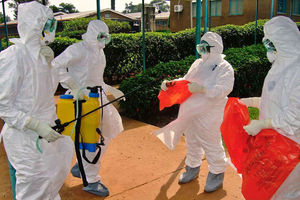
On infection prevention, every facility must have a screening and triage area at the entrance, an isolation area with unidirectional patient flow, designated zones for putting on and removing PPE, hand hygiene stations at every point of care, and safe waste management, including the segregation and disposal of blood and bodily fluids.
There must also be a minimum of one metre between patient beds, clear physical separation between high-risk and low-risk zones, and movement flowing in one direction only.
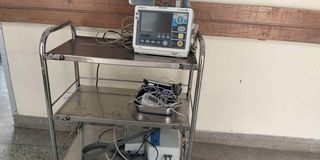
Equipment at the Infectious Disease Unit that will be used to isolate Ebola patients at Kenyatta National Hospital in Nairobi on June 12, 2026.
At KNH, the picture is somewhat clearer. Dr Daniel Nyukuria, the infectious disease specialist managing the isolation unit, confirmed that the facility has eight beds with capacity to expand, and that the Ministry is the coordinating body for identifying additional space.
The unit exists and has a specialist running it, but the coordination, the medic confirmed, is happening internally, and the public is not part of it.
The outbreak is at Kenya's door. The Bundibugyo strain has no licensed vaccine; Uganda, which has a far more mature Ebola response infrastructure than Kenya, has already recorded deaths, and cross-border movement between Uganda, DRC and Kenya is daily and high-volume.
A Kenyan who develops a fever, a headache and muscle pain after recent travel from Kampala needs to know one thing above everything else: where to go. As of the time of publication, the Ministry of Health has not told them.
Follow our WhatsApp channel for breaking news updates and more stories like this.