Ebola: Kenya on high alert as three medics among four new cases
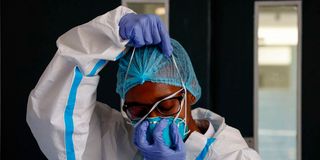
A nurse wears a protective mask at Nairobi Hospital where an Ebola patient was isolated immediately upon arrival and treated at the hospital's East Wing Isolation Facility, but later died, in Nairobi, on October 7, 2026.

Three health workers are among four new Ebola cases confirmed, raising the country’s total to seven, including the first patient who died, as the government intensifies contact tracing and quarantine measures to contain the outbreak.
Director-General for Health Patrick Amoth said the three health workers, aged 29, 35 and 32, had attended to the index patient during his hospitalisation before being placed in quarantine on October 9.
The fourth case involves a close male relative of the deceased who had been in quarantine since October 6.
“The health workers are two males and one female aged 29, 35 and 32 years, respectively, who managed the index case between 3rd and 4th October 2026 at the hospital,” Dr Amoth said in a statement issued on October 17.
“They have been in quarantine since October 9, 2026 and are currently receiving supportive care at the designated treatment facility.”
The four patients developed fever as their first symptom and were immediately isolated before samples were collected for testing. Their samples tested positive for Bundibugyo virus disease at both the National Virology Reference Laboratory and the Kenya Medical Research Institute laboratory.
The Ministry said the second and third patients were stable and responding well to supportive treatment, while updates on the progress of all reported cases would be provided as the situation evolves.

Dr Patrick Amoth, Health Director-General.
Authorities have identified 130 contacts, of whom 128, or 98.5 per cent, have been traced and placed in quarantine.
“Intensive efforts are ongoing to trace and quarantine the two (2) remaining contacts. In addition, new cases among quarantined contacts are possible until their 21 days monitoring period ends; if they develop any symptoms, they will be detected and treated just as quickly,” Dr Amoth said, arguing that the contact-tracing rate was above the global benchmark of 85 per cent considered necessary to help break the chain of transmission.
“The Ministry wishes to reassure Kenyans that the risk to the general public remains low as there is no evidence of community transmission of the disease,” he said.
The latest infections bring into focus the risks faced by health workers treating Ebola patients, particularly during the early stages of an infection, when symptoms may not immediately point to the disease.
Kenya confirmed its first case on October 6 after a Kenyan man who had been living in the Democratic Republic of Congo travelled to Nairobi through Uganda.
He was admitted to hospital but died on October 5, according to the World Health Organization, which said the case was reported to it by Kenyan authorities on October 6.
The patient’s travel history and treatment at several health facilities in the DRC prompted efforts to identify people who might have been exposed to the virus.
Two subsequent cases involved close relatives of the first patient who developed symptoms while already in quarantine. The Ministry’s latest statement says the four new patients were also in quarantine when their infections were detected, allowing health teams to isolate them early and reduce the risk of further exposure.
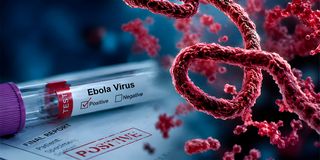
Blood sample drawn from patients suspected to be infected with Ebola should be tested within a short time to avoid further transmission.
The government is also monitoring four family members of the deceased and health workers who cared for him during his hospital stay. Those in quarantine are receiving mental and psychosocial support from dedicated health teams.
The outbreak is caused by the Bundibugyo strain of Ebola, a rare form of the disease. The WHO has said the ongoing outbreak in the DRC has required a coordinated response involving surveillance, contact tracing and other measures to prevent cross-border transmission.
Ebola spreads through direct contact with the blood or other bodily fluids of an infected person who is showing symptoms, or through contact with contaminated materials. It does not spread through the air in the same way as influenza or measles.
The Ministry has urged people experiencing fever, unusual tiredness, muscle or joint pain, sore throat, vomiting, diarrhoea or unexplained bleeding to report immediately to the nearest health facility, particularly if they may have been exposed to an infected person.
The government has said there are no restrictions on travel, trade or public gatherings and urged Kenyans to remain vigilant while relying on official updates.
Follow ourWhatsApp channel for breaking news updates and more stories like this.