Ebola: Kenya searches for missing Ugandan contact
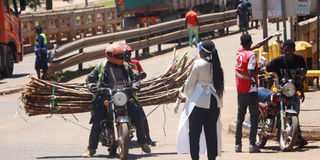
Members of the Kenya Red Cross response team direct travellers at the Malaba crossing-point between Kenya and Uganda after a man who had been living in the Democratic Republic of Congo travelled and died of a new Ebola outbreak involving the Bundibugyo species at the Nairobi Hospital, in Malaba, Kenya October 8, 2026.

Kenyan Health authorities are searching for a Ugandan national who is linked to Nairobi’s first Ebola case, who died on October 5. The identity and phone number of the man are known to health officials, but his whereabouts remain unconfirmed, raising fresh concerns about contact tracing across the region’s porous borders.
Director-General for Health Dr Patrick Amoth told the Nation that the man was among two contacts previously unaccounted for. The other has since been traced and placed in quarantine at Moi Teaching and Referral Hospital in Eldoret.
“We know him (the Ugandan) by name and passport number and from his phone but we are not able to reach him,” Dr Amoth said.
The man is using a South Sudanese telephone number, complicating efforts to establish his location. Health officials have also found no record of him travelling by air through Jomo Kenyatta International Airport or any other airport in Kenya.
“We suspect either he travelled by road or used a panya route but we have communicated with Uganda,” Dr Amoth said, referring to unofficial border crossings that can bypass formal immigration controls.
The search leaves one contact unaccounted for out of 130 identified by the Ministry of Health. On October 17, the ministry reported that 128 had been traced and placed in quarantine. With the latest contact now found, 129 have been accounted for.
The missing man’s movements remain unclear as Kenya works to contain the disease spread that has recorded eight cases, including one death, according to the figures provided by health officials.
Kenya confirmed its first Ebola case on October 6, involving a Kenyan man who had lived in the Democratic Republic of Congo. He travelled from the DRC through Uganda, arriving in Nairobi on October 3, and died on October 5.
Among the subsequent cases was a 49-year-old patient attendant who had cared for the first patient and later tested positive while in quarantine.
Contact tracing is central to containing Ebola because symptoms can take up to 21 days to appear. People exposed to an infected person must therefore be monitored for the full incubation period, with new cases still possible among quarantined contacts.
Prof Omu Anzala, a virologist serving on the National Task Force for Ebola, said each contact must complete 21 days of monitoring from their last relevant exposure. He expects monitoring to end around October 24 for passengers on the flight and October 26 for health workers.
The missing contact presents a challenge because authorities cannot complete monitoring without establishing his whereabouts and exposure history.
Kenya has screened more than 667,000 travellers at 26 points of entry, while mobile laboratories have been deployed at the Lwakhakha and Busia border points. Screening has also been intensified at Gate 16 at JKIA for passengers arriving from high-risk countries, including the DRC, Uganda and South Sudan.
The Ministry of Health maintains that the risk to the general public remains low and says there is no evidence of community transmission. It has not imposed restrictions on travel, trade or public gatherings.
People experiencing fever, unusual tiredness, muscle or joint pains, sore throat, vomiting, diarrhoea or unexplained bleeding have been urged to seek medical attention immediately. Ebola spreads through direct contact with the blood or body fluids of an infected or deceased person, not through the air.
The ministry has advised anyone with concerns to call the toll-free health line 719.
Follow our WhatsApp channel for breaking news updates and more stories like this.