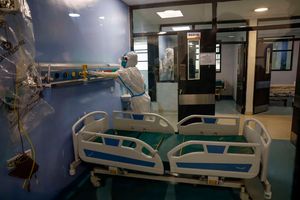
Ebola: State bans hotel meetings for public health officers

Public Health and Professional Standards Principal Secretary Mary Muthoni.


The government has suspended meetings, seminars and conferences scheduled in hotels for public health officials following confirmation of an imported case of Bundibugyo virus disease, a strain of Ebola.
Public Health and Professional Standards Principal Secretary Mary Muthoni directed all staff in her State Department to suspend hotel-based meetings with immediate effect from October 7 until further notice.
“All meetings, seminars, conferences scheduled to be held in hotels are suspended with immediate effect, as from Wednesday 7 October 2026 until further notice,” Ms Muthoni said in an internal memo to staff on Saturday.
She directed all directorates, divisions and programmes to activate established standard operating procedures for the prevention, preparedness and management of Ebola and other highly contagious infectious diseases.
Public Health and Professional Standards Principal Secretary Mary Muthoni.
The directive, PS Muthoni said, is intended to ensure technical officers remain available to support emergency preparedness, contact tracing and response operations aimed at containing the outbreak and preventing further transmission.
Ms Muthoni said any exemptions would require prior approval from her office, adding that all departmental heads must ensure strict compliance and the availability of technical officers to support ongoing emergency operations.
“We are telling our staff that they need to be available to respond to the emerging threat of Ebola. The government is committed and will ensure that Kenyans are protected and continue with their life,” she added.
The move comes as health authorities monitor about 66 people believed to have come into contact with the first confirmed patient, who died on Monday, October 5, at Nairobi Hospital.
The contacts are expected to undergo monitoring for at least 21 days, the recognised incubation period for the disease, at government expense.
The Ministry of Health has not reported any local transmission so far but has intensified surveillance across the country, particularly at points of entry through port health services, to detect suspected cases and prevent further spread.
Emergency preparedness measures also focus on strengthening coordination among health agencies and ensuring that personnel, equipment and other resources are available to support surveillance and rapid response operations.
The government is also screening travellers at key points of entry, tracing people who may have come into contact with the confirmed case and strengthening isolation facilities to manage suspected infections.
Contact tracing remains a critical part of containing Ebola outbreaks, with health teams identifying people who may have been exposed to an infected person, assessing their risk and monitoring them for symptoms.
Health Cabinet Secretary Aden Duale has reassured the public that Kenya does not have an active Ebola outbreak, describing the fatality as an isolated case imported from the Democratic Republic of the Congo.
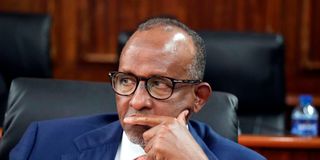
Health CS Aden Duale at a past event. He has disclosed that the US Ebola preparedness funds were allocated directly to partners for surveillance, clinical preparedness, emergency operations and logistics, not through the Ministry of Health.
During a tour of Nairobi Hospital’s 133-bed isolation facility on Wednesday, Mr Duale said health officials had traced 57 contacts, with 10 close contacts placed under strict quarantine at the National Police Service Hospital.
The ministry has screened more than 652,000 travellers at Jomo Kenyatta International Airport and border crossings, including Busia and Malaba, as part of efforts to detect suspected cases early and limit further transmission.
However, Mr Duale disclosed a funding gap of Sh2.69 billion needed to strengthen border logistics and procure infection prevention equipment, highlighting the financial demands of sustaining the response. He maintained that Kenya remained open to travel, trade and tourism as the government stepped up measures to contain the risk.
The government is also mobilising more than Sh70 billion in domestic and external financing to strengthen the Ebola response.
Follow our WhatsApp channel for breaking news updates and more stories like this.