What top Kenyan expert says you need to know about deadly virus
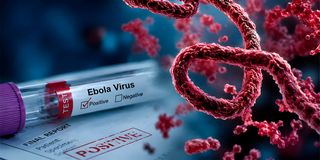
The confirmation of Kenya’s first Ebola case should end the comfortable fiction that preparedness is measured by the number of people screened at airports.

What you need to know:
- Ebola disease is a serious infectious illness caused by viruses in the Orthoebolavirus genus, within the filovirus family.
- It begins with fever, headache and muscle pain. It can quickly progress to vomiting and diarrhoea and damage the liver and kidneys.
Kenya had never recorded a confirmed Ebola case since 1976, when it was first recorded in the Democratic Republic of Congo. The disease has caused repeated outbreaks worldwide.
That streak was broken this week when a 39-year-old Kenyan man from the DRC was found to have Ebola.
We speak with Professor Marianne Mureithi, Medical Microbiology and Immunology professor and KAVI-ICR director at the University of Nairobi.
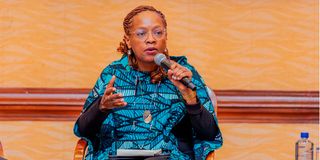
Prof Marianne Mureithi, 45, the first female medical microbiology professor at the University of Nairobi.
What is Ebola Disease?
Ebola disease is a serious infectious illness caused by viruses in the Orthoebolavirus genus, within the filovirus family. These include Zaire, Sudan and Bundibugyo viruses.
How does it manifest?
It begins with fever, headache and muscle pain. The disease can quickly progress to vomiting and diarrhoea and, in severe cases, damage the liver and kidneys. Some patients develop bleeding.
How does it spread from one person to another?
You have to be in close contact with someone who has Ebola. It does not spread through the air like Covid-19. Transmission occurs through direct contact with an infected person who is ill. People who develop symptoms should disclose their travel history. Early recognition and prompt treatment can improve survival.
Why do we call the different types of Ebola viruses, and not variants like we did with Covid-19?
Ebola is a broader group of diseases. With Covid-19, Delta and Omicron are variants of SARS-CoV-2. With Ebola, they are distinct species within the same genus. The larger family is called Orthoebolavirus, with species distinct enough to be classified separately, and each can have variants. This matters because a vaccine or treatment that works against one may not work against another.
Since the three viruses are not mutations, where then did the Bundibugyo virus come from?
It may have originated elsewhere, but it was first identified in Uganda. Ebola viruses are zoonotic, and fruit bats are among the suspected natural reservoirs, although the precise reservoir and source of individual spillover events are not always established. Bundibugyo virus was first identified during an outbreak in Uganda in 2007, with subsequent outbreaks reported, including in the DRC.
Is it easy to establish the first ever person that was infected?
The first infected person cannot be established. Scientists can use next-generation sequencing to identify and characterise the virus. For Bundibugyo, this was done by the US Centres for Disease Control and Prevention.
Is Bundibugyo more infectious than Zaire and Sudan?
Available evidence does not show that Bundibugyo virus is inherently more transmissible than other Ebola viruses. Mortality has varied between viruses and outbreaks. Historical Bundibugyo outbreaks have often reported lower deaths than many Ebola outbreaks. The observed case-fatality ratio is influenced by detection, speed of care and quality of treatment. A high death toll alone does not prove increased lethality.
What concern do you have with the Bundibugyo virus now?
The concern with Bundibugyo is the lack of proven medical tools. There is no licensed vaccine or approved treatment specifically for this virus. Rapid detection, good clinical care and prevention of transmission are therefore important.
Now that there’s no specific treatment for Bundibugyo, how then are they managing the disease?
Early and intensive supportive care improves survival. Clinicians manage fever, replace fluids and electrolytes, and monitor kidney injury, electrolyte disturbances and low blood pressure. Patients need a designated treatment facility and protected staff.
Why is the incubation period for this disease indicated as 21 days?
The incubation period for Ebola disease is generally two to 21 days. This range is based on observed exposure histories. The 21-day upper limit is why contacts are followed for 21 days. People are not considered infectious before symptoms begin; transmission occurs through infected body fluids or contaminated materials.
Where are we in terms of vaccine development?
There is no licensed Bundibugyo-specific vaccine. Candidate vaccines, including platforms from Oxford and IAVI, are under development. These are candidate vaccines in clinical development.
What happens at different levels of the clinical trials?
Phase 1 assesses safety, dose and immune response. Phase 2 involves more participants and refines the vaccination schedule. Phase 3 assesses protection against disease. Phase 4 involves continued monitoring after approval and wider use.
Has Kenya ever been part of previous vaccine trials?
KAVI-ICR, University of Nairobi, contributed to the global Ebola vaccine programme. KAVI-ICR conducted a Nairobi Phase 1 trial of Ad26.ZEBOV/MVA-BN-Filo and later participated in Phase 2 evaluation. The Nairobi Phase 1 study generated African safety and immunogenicity data published in the Journal of Infectious Diseases. The work reflects KAVI-ICR’s capacity to conduct vaccine trials and contribute African evidence. The licensed Zaire Ebola vaccine, Ervebo, is now being evaluated in the current Bundibugyo outbreak under research protocols. Its protection against Bundibugyo remains unknown, although animal data suggest possible cross-protection.
How many times should people be tested before they’re declared negative?
It depends on whether the person is suspected or recovering from confirmed Ebola. For suspected cases, specimen timing matters. A negative molecular test very early in illness may not exclude infection, so repeat testing is guided by symptom timing, clinical suspicion and the applicable national testing algorithm.
For a confirmed patient recovering from Ebola, protocols commonly require clinical recovery and two consecutive negative blood tests, ideally at least 48 hours apart. The treatment team follows the national discharge protocol.
How exactly is an Ebola test done?
Once you present yourself, there needs to be a laboratory that can confirm the infection. In the lab, a trained person safely collects blood using Personal Protective Equipment (PPE), and reverse transcription polymerase chain reaction (RT-PCR) detects genetic material from the virus. Testing uses validated assays in designated laboratories with strict biosafety and infection-control procedures.
The test must be capable of detecting Bundibugyo virus. If an early sample is negative but clinical suspicion remains high, repeat testing is guided by symptom timing and the applicable national testing algorithm. Confirmation and referral follow the national testing algorithm. Reference laboratories can use genomic sequencing to characterise the virus and support outbreak investigations.
Follow our WhatsApp channel for breaking news updates and more stories like this.