Experts call for safer care for newborns and mothers to prevent deaths
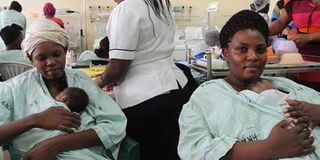
Mothers performing Kangaroo care at the KNH newborn unit. Most preterm deaths occur within the first three days of life. PHOTO | FILE | NATION MEDIA GROUP

What you need to know:
- 92 newborns and 16 mothers die daily in Kenya primarily from preventable causes such as premature birth, lack of oxygen during delivery and infections.
- Stillbirths remain high at 15 per 1,000 pregnancies.
Healthcare experts have issued an urgent call to the government to implement immediate reforms to protect newborns and mothers, warning that preventable errors in maternity and paediatric wards continue to claim lives daily.
The demands were made during the World Patient Safety Day Symposium 2025 at the Aga Khan University (AKU) Centre, where stakeholders outlined critical interventions. Reforms such as improved training for health workers, especially through simulation-based learning, better systems for early risk detection, and addressing policy and resource gaps in hospitals were advocated for by speakers. They also encouraged families to play a more active role in care, making safety a shared responsibility.
The meeting, themed “Safe Care from the Start: Preventing Harm in Neonatal and Paediatric Care”, brought together doctors, policymakers, researchers and community leaders, all of whom are united in their efforts to promote stronger patient safety measures in maternal and child healthcare.
Also read: Lessons from the grave: The brutal truth about Kenya’s neglected newborn and maternal care
The urgency of this issue is highlighted by alarming statistics indicating that neonatal mortality in Kenya is 21 deaths per 1,000 live births, accounting for more than half of all under-five deaths, according to the 2022 Kenya Demographic and Health Survey (KDHS).
Overall, under-five mortality stands at 41 per 1,000 —well above the global target of 25 per 1,000 by 2030. The infant mortality rate is 29 per 1,000, while the estimated maternal mortality rate is between 149 and 594 per 100,000 live births —still far from the global target of fewer than 70, according to World Bank Gender Data portal and Unicef.
In practical terms, this equates to around 92 newborns and 16 mothers dying daily in Kenya primarily from preventable causes such as premature birth, lack of oxygen during delivery and infections. Stillbirths remain high at 15 per 1,000 pregnancies.
“We cannot afford to accept preventable harm as part of the cost of care,” said Prof John Weru, interim associate Dean at Aga Khan University Medical College and chief medical officer at the University Hospital. “Every mother and child deserves care that is safe and dignified.”
“To keep mothers and children safe, we must do more than just treat them; we must prevent harm before it occurs. This requires well-trained teams, stronger detection systems and empowered families,” added Prof Pauline Samia, chair of Paediatrics and Child Health at AKU.
Dr Abdihamid Ibrahim Ahmed, Regional Health Specialist Coordinator at the United Nations Children’s Fund Eastern and Southern Africa Regional Office, emphasised the importance of safe care in maintaining public trust.
“Every child deserves safe, quality care from their first breath. Unsafe practices endanger lives and undermine confidence in health systems,” he noted.
Remote village
Mary Muthoni Muriuki, Public Health PS, highlighted Kenya's investment in primary healthcare, community health workers, and stronger care networks.
“This year's theme aligns with our mission to protect and nurture every child, whether they are in a remote village or an urban hospital,” she stated.
Globally, sub-Saharan Africa has the highest rates of newborn deaths, with one in 36 children dying before reaching their fifth birthday.
Experts warned that, without urgent action, Kenya risks failing to meet its 2030 targets for reducing child and maternal deaths.
“The cost of inaction is measured in lives lost. Safe care must form the basis of maternal and child health,” concluded Prof Weru.