Experts warn of dire consequences as over 100,000 Kenyan children miss key routine vaccines
Kenya alone accounted for 4.7 per cent of zero-dose children (those who did not receive any vaccine) in Eastern and Southern Africa and 0.9 per cent of zero-dose children globally. This was an increase by 90,000 compared to 2023.

What you need to know:
- Misinformation has been made easier by technology, leaving many parents falling victim to false information online, dissuading them from vaccinating their children
About 133,000 Kenyan children missed out on important routine vaccines in 2024, a new World Health Organization (WHO) report shows.
The report released on Tuesday in collaboration with UNICEF shows that while there are modest gains in vaccination coverage globally, Kenya’s data shows a slight drop in vaccination trends in children compared to the previous years.
"It's encouraging to see a continued increase in the number of children being vaccinated, although we still have a lot of work to do. Drastic cuts in aid, coupled with misinformation about the safety of vaccines, threaten to unwind decades of progress,” said WHO Director General, Dr Tedros Adhanom Ghebreyesus.
“WHO remains committed to working with our partners to support countries to develop local solutions and increase domestic investment to reach all children with the lifesaving power of vaccines,” he added.
Also read: Hopes and fears in new vaccination campaign
Kenya alone accounted for 4.7 per cent of zero-dose children (those who did not receive any vaccine) in Eastern and Southern Africa and 0.9 per cent of zero-dose children globally. This was an increase by 90,000 compared to 2023.
Last year, only four out 14 vaccines that are part of the Kenya Expanded Programme on Immunization (KEPI) schedule achieved coverage of at least 90 per cent or more.
Since 2002, Kenya has added nine new vaccines into its routine vaccination programmes. The Human Papillomavirus (HPV) for girls aged between nine and 14 is the newest vaccine introduced in 2020.
Last year, there were reported vaccine stockouts for Bacillus Calmette-Guérin (BCG) used for prevention of tuberculosis, Measles-Rubella (MR), and Oral Polio Vaccines.
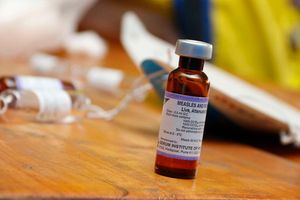
About 178,000 children missed their routine first dose of the measles vaccine, making it rank the second least covered vaccine after HPV, which only accounted for four per cent coverage last year.
In 2024, first dose (HPV1) programme coverage among girls was 79 per cent and last dose (HPVc) coverage was 36 per cent.
WHO has noted that Kenya reported measles vaccine stockouts in the years 2018, 2019, 2020, and 2024.
Compared to 2023, coverage of eight vaccines decreased (BCG, Diphtheria, tetanus and pertussis vaccine, first dose (DTP1) and third dose (DTP3), Inactivated polio vaccine, first dose (IPV1), Measles containing vaccine, first dose (MCV1), Pneumococcal vaccine, third dose (PCV3), Poliomyelitis vaccine, third dose and Yellow Fever. One vaccine remained constant (Measles, second dose ), with only one vaccine increasing in coverage - Rotavirus vaccine last dose.
WHO attributes the decline or reduced vaccination rates due to a combination of factors such as limited access to immunisation services, disrupted supply, conflict and instability, or misinformation about vaccines.
“Even small declines in immunisation coverage can dramatically raise the risk of disease outbreaks and place additional strain on already overstretched health systems,” said WHO.
“We must act now with determination to overcome barriers like shrinking health budgets, fragile health systems along with misinformation and access constraints because of conflicts. No child should die from a disease we know how to prevent,” said UNICEF Executive Director Catherine Russell.
Dr Adeel Shah, a paediatric Infectious Disease specialist, told Nation that while there is no serious effect if some children miss some of the vaccines given at birth, the sooner they get it the better.
He explained that while adverse effects with vaccines occur, they are quite rare.
“We do see common side effects such as pain, inflammation around the injection site or a bit of fever after the vaccine,” he said.
Prof Walter Jaoko, who teaches medical microbiology and tropical medicine at the University of Nairobi, told Nation that it is important for parents to vaccinate their children.
“Vaccination protects the child from getting infectious diseases and also controls transmission to others in the community. Therefore, not being vaccinated predisposes the children to measles, whooping cough, TB, polio, Diphtheria and all, with serious risks of complications from these diseases including blindness (measles), paralysis (polio) and even death,” he explained.
Prof Jaoko said that leaving children unvaccinated increases the financial cost to the country of treating diseases that would have otherwise been prevented by the vaccines.
“The costs of treatment by far outweigh that of prevention,” he said.
He explained that misinformation has been made easier by technology, leaving many parents falling victim to false information online, dissuading them from vaccinating their children.
“In the past, it was not easy to pass false information since the airways and print media were largely controlled by institutions that had a duty to behave responsibly by airing or printing factual stories. But with liberation through the internet, we lost that control and now anyone can post anything and anyone can access anything posted online. The problem is that there are people who take as gospel truth whatever they see on the internet,” he said.