Fact check: What the evidence says about Ruto's SHA figures
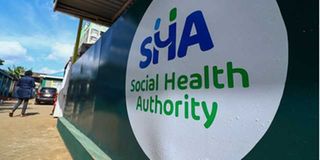
A Social Health Authority (SHA) signage. Ruto said 33.7 million Kenyans have registered with SHA, up from about 8m under the NHIF in 2022.

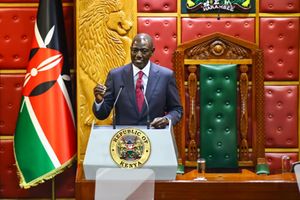
President William Ruto on Wednesday told Parliament that 33.7 million Kenyans have registered with the Social Health Authority (SHA), up from about eight million under the National Hospital Insurance Fund (NHIF) in 2022. He also said the government will soon clear billions of shillings owed to hospitals under the former health insurance scheme.
Delivering his fourth State of the Nation Address at Parliament Buildings, Nairobi, the President framed healthcare as part of the cost of living.
"For too many Kenyan families, falling ill has meant borrowing, selling livestock, disposing of land, or abandoning treatment altogether," he said, adding that the reforms aim to shift the cost of treatment to shared health financing rather than leaving it entirely on families.
He said 25.7 million more Kenyans have been brought into the national health financing system. Under SHA, he said, 53,465 patients are receiving cancer treatment, 24,468 are on dialysis and 89 have undergone kidney transplants, which he described as among the most expensive forms of care and often beyond the reach of ordinary households.
A fact-check found some evidence supporting the cancer figure, but not enough to fully verify it. On June 18, Health Cabinet Secretary Aden Duale told the Senate Standing Committee on Delegated Legislation that more than 43,661 cancer patients had benefited from the enhanced oncology package. He said more than 3,000 of them had completed treatment under the expanded cover.
The figure cited by Ruto is about 9,800 higher than the one Duale gave five months earlier. That increase is possible if more patients have joined the programme since then. However, the two figures may not refer to the same group. Patients who have benefited from the package are not necessarily the same as those currently receiving treatment.
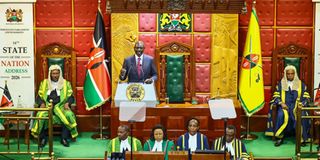
President William Ruto delivers his annual State of the Nation Address (SONA) before Parliament, flanked by National Assembly Speaker Moses Wetang’ula (left) and Senate Speaker Amason Kingi (right), at Parliament Buildings in Nairobi on November 18, 2026.
The dialysis figure could not be independently verified. The Ministry of Health has previously said SHA has funded more than 400,000 dialysis sessions. However, that figure refers to treatment sessions, not patient numbers. No publicly available figures support the claim that 24,468 patients have received dialysis under SHA.
The claim that SHA has funded 89 kidney transplants also lacks publicly available evidence. The only published reference point is data from the Kenya Renal Association, which showed that 829 people in Kenya had received kidney transplants by 2022.
However, that figure covers all transplants carried out over the years, regardless of who paid for them. As a result, it neither confirms nor disproves the President's claim.
Ruto acknowledged that the move from NHIF to SHA had initial challenges and said the government recognised "the legitimate concerns of Kenyans". He, however, did not detail the problems or the fixes.
On hospital finances, the President said the government has approved payment of Sh16 billion owed to public and private hospitals under the former NHIF, alongside Sh18 billion owed to public universities and the settlement of 28,726 verified pending bills worth Sh27.8 billion. The payments are going through due process at the National Treasury and will be made in the coming weeks.
"The goal is to progressively and eventually remove the crushing burden of medical expenses from Kenyan households, protect family savings and ensure that illness does not become a sentence to poverty," said Ruto.
Follow ourWhatsApp channel for breaking news updates and more stories like this.