Faulty tests fuel widespread misdiagnosis of brucellosis
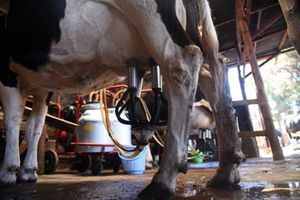
A cow milking pen. Cattle are naturally infected with brucellosis by ingestion of organisms, which are represent in large numbers in aborted foetuses, foetal membranes and uterine fluids.

What you need to know:
- Brucellosis is a bacterial disease caused by various Brucella species, which mainly infect cattle, swine, goats, sheep and dogs.
- Humans generally acquire the disease through direct contact with infected animals, by eating or drinking contaminated animal products or by inhaling airborne agents.
Imagine falling sick and being diagnosed with brucellosis. You endure a six-week regimen of heavy antibiotics, experience side effects such as prolonged fever, fatigue, and joint pain, only to find out later that the initial diagnosis was a false positive.
And now, not only did your money go to waste, but your body is also at risk of developing resistance to antibiotics.
These cases, according to new research, abound in all parts of the country due to a highly inaccurate test used in many public health facilities to diagnose brucellosis.
The research conducted by the International Livestock Research Institute (ILRI) between 2018 and 2019 shows that the Febrile Brucella Agglutination Test (FBAT) test is cheap (Sh26) and therefore readily available.
According to the World Health Organization, brucellosis is a bacterial disease caused by various Brucella species, which mainly infect cattle, swine, goats, sheep and dogs.
Humans generally acquire the disease through direct contact with infected animals, by eating or drinking contaminated animal products or by inhaling airborne agents. Most cases are caused by ingesting unpasteurised milk or cheese from infected goats or sheep.
Eric Fevre, professor of veterinary infectious diseases jointly appointed by ILRI and the University of Liverpool, notes that the research was sparked by previous research conducted in 2012 in Busia.
“We were interested in understanding the prevalence of brucellosis. In the hospitals where we were working, we found that in the records, there were a lot of brucellosis cases being diagnosed. The tip had come from the government, which said it had spotted an issue and needed us to research into it and give it feedback,” says Prof Fevre.
"We followed that up and realised that many of those patients who were being diagnosed actually didn't have the disease. They were being treated for brucellosis even though they didn't have it. We then carried on doing similar kinds of studies in other parts of the country.”
He says they eventually realised that it was a common issue. “There were people who had the disease who were not being diagnosed with it, and there were people who didn't have the disease who were being diagnosed with it because the tests that were being used in the hospital setting were not doing a good job,” he adds.
He explains that in Busia, hospital records showed that 825 people had been tested for brucellosis. Some 162 had been found to be positive, while 663 were found to be negative. After running other tests, they found that only 15 out of the 162 were genuinely positive. The rest were false positives.
“What that tells me is that they're not being treated for whatever it is they actually have. For me, that's the biggest problem—that you end up going away for six weeks treating what you think is brucellosis, and at the end, you're nowhere further forward. You're still sick. In the meantime, those patients have paid a lot of money because the drugs they use for brucellosis are not cheap,” he explains.
“So, either the patient is paying to the pharmacy, or the hospital is giving them drugs, and it's the Kenyan government that's paying. That means a lot of expenditure that's not necessary on drugs. Then, the drugs that are used to treat brucellosis are antibiotics. If you're using antibiotics that you don't need to use, which are not the first line, but the ones that are being used are reserved antibiotics, then what you're doing is putting a lot of antibiotics out there in the community when they're not needed, and that is a risk for the development of antimicrobial resistance,” he adds.
Prof Fevre also notes that in other parts of Kenya, particularly among pastoralist communities, they have very close interactions with their livestock. He explains that three-quarters of households have at least one livestock (either cattle, goats, or sheep) that are infected with brucellosis, which increases the risk of infection.
“Those animals present a risk to the people who keep them, either because those people are assisting the animals in the birthing process, or they're getting milk from them, which they're giving to their children and sharing with neighbours,” he explains.
He highlights that sick animals frequently abort their first pregnancies but can otherwise appear healthy. And in humans, the disease’s symptoms—chronic fever, joint and muscle pain, fatigue—can be confused with other illnesses such as flu or malaria.
The research findings also suggest that an estimated Sh43.7 million per year is currently spent unnecessarily treating those falsely testing positive by FBAT.
The researchers suggest a new type of test, the Rose Bengal Test ((RBT) that was mainly used to test animals but not routinely for humans. At around Sh50 per test, the Rose Bengal Tests cost slightly more, but in the long run, using them would save Kenya millions of shillings.
More data
“This is a story of a successful, two-way partnership between researchers and the government, which is not as common as it should be. We did some initial scientific work, but it was government officials from the Zoonotic Disease Unit, the very people responsible for these issues, who approached the research team, actively asked for more data, and even wrote letters of support to help the researchers secure funding. This led to a new round of research, conducted in partnership with the government to generate more results,” says Prof Fevre.
According to the study, Kenya's National Strategy for the Prevention and Control of Brucellosis in Animals and Humans (2021 to 2040) recommended that hospitals switch from the old FBAT to the new RBT tests. However, the change is yet to be implemented.
In November 2024, the government released a policy brief that directs all hospitals to use the Rose Bengal Test for diagnosing brucellosis. This would provide clear guidance, which should help reduce unnecessary hospital visits and lighten the load on the healthcare system by ensuring only those who are truly sick receive treatment.
In a collaborative effort requested by the government, another researcher is working to definitively prove the accuracy of the tests. Her team is collecting serum samples from hospitals across Kenya and will run three different tests on each sample: the FBAT, the RBT, and the gold-standard PCR test. While the Rose Bengal Test is widely considered an improvement, the government still needs to ensure the test is accessible and widely available.