Why scientists want data collection to prevent diseases linked to animals
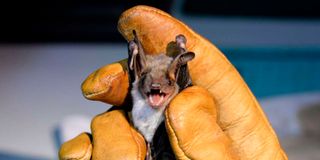
In this photograph taken on July 9, 2021 a chiropterologist holds a greater mouse-eared bat in his hand in Noyal-Muzillac.

It could be an accidental dog bite, a deliberate consumption of infected beef or a cosy petting with your favourite animal. Next, you may find yourself in a critical condition linked to the animals you have interacted with, as well as your environment.
The line between human and animal health is often blurred, but scientists say that its impact continues to ravage populations. When human beings get infections from animals, such illnesses are scientifically referred to as zoonotic diseases.
According to the World Health Organisation (WHO), about 60 per cent of all human infectious diseases originate from animals, and over 75 per cent of new or emerging diseases are also linked to animals.
Every July 6, scientists around the world use this day to educate people about the risks of zoonotic diseases and how to prevent getting them. In 1885, on this day, the world got its first human rabies vaccine invented by the French Chemist Louis Pasteur.
Dr Pauline Gitonga, a Senior Research Fellow working with the Centre for Epidemiological and Modelling Analysis explained to Nation that most zoonotic diseases are transmitted through direct contact (bites, bodily fluids — rabies), Indirect contact (contaminated soil, bedding).
She said that there is a need for collaboration with governments to improve data collection, analysis and policy interventions for real-world impact.
“The health of animals, humans, and the environment is interconnected, and control of zoonotic diseases requires concerted efforts across multiple sectors —an approach known as One Health. By protecting animal health, we safeguard human health and ensure a more sustainable future for everyone,” she explained.
Doris Nyamwaya, a microbiologist and Assistant Professor at the London School of Hygiene and Tropical Medicine said that there is a need for the country to have local and updated data in order to reduce rates of these diseases.
“If the health system lacks data on a disease, it is unlikely to prioritize it,” she said.
In Kenya, the top five priority zoonotic diseases include; Anthrax, Trypanosomiasis (also known as sleeping sickness), Rabies, Brucellosis, and Rift Valley Fever (RVF).
While scientists agree that surveillance for routine check-ups for zoonotic diseases is important for vaccine development, the government needs to scale up data collection.
Dr Kahariri Samuel, a PhD fellow at CEMA said that only 10 per cent of counties in the country have initiatives for community disease reporting. This work in human health is synonymous with using community health promoters to achieve primary health care.
“There needs to be a collaboration between Community Disease Reporters and Community Health Promoters to improve coverage,” he recommended.
Wildlife veterinarian Dr George Omondi told Nation that even though about 7 in every 10 Kenyans interact with animals every day, they are not aware of the risks.
He attributed climate change to increasing cases of some zoonotic diseases that are underreported.
“Climate change and local conditions increasingly modify transmission patterns and host-pathogen interactions, necessitating the integration of climatic variables into epidemiological models to enhance our understanding of disease transmission dynamics and inform the development of control measures,” he explained.