Fears of a generation born with HIV as Kenya navigates a future without donor support

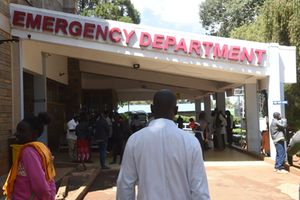
Shallom Njung’e, a youth living with HIV, during the interview on October 29 in Nakuru. photos i sam doe

What you need to know:
- Nationally, the latest data from the National Syndemic Diseases Control Council show over 1.3 million people were living with HIV in 2024.
- The country recorded 20,000 new infections and 21,000 Aids-related deaths.
We first met Shallom Njung’e * at a car wash along the Nakuru-Sigor Highway where he works. Before a formal interview, we arranged an ice-breaking meeting. Given the sensitivity of our discussion, we felt it was necessary to earn his trust and help him open up about a secret he guards closely: in his twenties, he is living with HIV.
Unlike the common perception that HIV is primarily contracted through sexual intercourse, Shallom represents a generation of children born with the virus nearly two decades after the epidemic's peak. Their parents often could not access life-lengthening antiretroviral medication due to high costs and intense stigma.
Shallom, 25, lost his mother to Aids in 2003 when he was three. At the time of her death, she had not disclosed his HIV status.
“I started taking antiretroviral medication in 2003 after my aunties took me to the hospital and learned about my status,” he explained.
It wasn't until his teenage years that he fully grasped how different he was from his classmates. He has flashbacks of his aunt forcing him to take his medication without understanding why it had to be at specific times.
“When I was in Grade Eight, I started understanding what HIV was and that I contracted the virus from my mum during pregnancy.”
Accepting his status was difficult, but with counselling and mentorship from the Comprehensive Care Clinic at the Nakuru County Teaching and Referral Hospital, he learned to adhere to his treatment. He was enrolled in a boarding school where suspicions about his health were rife among his peers.
“We were a few HIV-positive students. Sometimes my status was weaponised during conflicts, but I decided to own it. I even kept my medication with me instead of leaving it with the matron.”
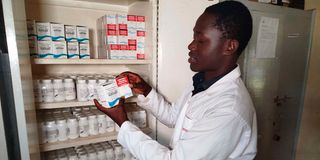
A pharmacist arranging antiretroviral medication at Homa Bay Teaching and Referral Hospital.
For two decades, Shallom never paid for his treatment—until this year. By the close of 2024, the US President's Emergency Plan for AIDS Relief (PEPFAR) had committed Sh43 billion for HIV response from October 2024 to September 2025. However, in January 2025, the US government closed all youth-friendly centres in public hospitals after the
Trump administration instituted funding cuts affecting one of its largest international aid programmes, pivotal to HIV management in Kenya.
“This is the first time I’ve had to pay Sh200 for a check-up and medication refill,” said Shallom.
Without a stable job and with an erratic income, he fears this change may lock him and his peers out of the daily treatment they need to survive and prevent opportunistic
infections.
Following the ‘Stop Work’ order, over 40,000 support staff in US-funded HIV programmes in Kenya lost their jobs immediately. While some were recalled for a three-month transition, that reprieve was short-lived.
One of them was Caroline* (not her real name), who worked as a mentor-mother. Her role involved helping HIV-positive expectant mothers adhere to antenatal and postnatal care to ensure they delivered HIV-free children. Caroline, a HIV-positive mother with a HIV-negative child, used her lived experience to comfort distressed mothers.
Mother-to-child transmission of HIV in Kenya remains high at 9.3 per cent against a global target of five per cent.
By the end of September, Caroline’s 90-day contract had expired, leaving her jobless once more.
“I had worked as a USAID-funded employee for over 10 years. My fulfilment came from comforting distressed HIV-positive mothers and witnessing their turnaround when they delivered HIV-free children.”
Consistent support
She confessed that the consistent support for people living with HIV felt like a second chance at life. That bubble burst with the funding cuts. One immediate impact,
Caroline said, was the conversion of the status of one of the children she was supervising who was born to a HIV-positive mother.
“When the clinics shut down, most clients were not comfortable with the new healthcare workers. One mother disappeared and didn’t follow up on her child’s clinic appointments. Unfortunately, that child, born HIV-negative, turned positive after the mother failed to maintain the medication regime,” Caroline said, her voice filled with frustration.
According to Dr Rachael Kyuna, Nakuru County Aids and STI Coordinator, while both levels of government had begun a journey toward self-reliance in HIV management in 2020, January’s announcement sent the health sector into pandemonium.
“It was abrupt and caused a lot of disruption. There was no time to prepare the clients. Initially, when they came to the Comprehensive Care Clinics, they found the doors locked, and it was a shock to everyone.”
The county lost contact with nearly a quarter of the 48,000 people living with HIV on treatment. Through contact tracing, some have been recovered and integrated into the new system.
“There was a drop of about 10,000 clients we could not account for, but over time, we have recovered them through phone calls. Now that clients have absorbed the shock, they are coming back, and we are almost at 100 per cent,” said Dr Kyuna.
HIV services in Nakuru are now part of general outpatient services. While the Health Department says this integration helps combat stigma, beneficiaries, especially youth, disagree.
“We feel exposed. The privacy we enjoyed at the youth-friendly centres is gone. I am afraid of picking up my medication at the general pharmacy because the drugs themselves signal my status,” said a young client who requested anonymity.
The introduction of a Sh200 service fee by Nakuru County government is also seen as prohibitive.
“Not everyone can afford that, and in some families, there is more than one HIV patient. We had formed strong bonds in support groups, but all that is lost,” the anonymous patient added.
However, Dr Kyuna maintained the fee is necessary for overhead costs but assured that it can be waived for those who cannot afford it.
“The hospital needs to pay for electricity. However, we can't allow people to miss medication because they couldn't raise Sh200.”
For young clients, the loss of dedicated support groups has been profound.
“It’s in the youth-friendly centres that we connected. Some of us found spouses within our community. Now we are scattered, and dating while HIV-positive is difficult, especially when disclosing. People out here are never prepared to face the truth, so you risk being ghosted or outed without consent,” the patient said.
In Homa Bay County, we met Jane*, another young adult born with HIV. Like Shallom, she fully grasped the magnitude of her status in high school. When a friend disclosed
Jane's status to the entire school, the stigma led her to default on her treatment, nearly costing her life.
“I experienced a lot of stigma. The gossiping and stares were too much. Sometimes my male friends were cautioned not to sit next to me. This made me default on my medication, and I almost died,” said Jane, 28.
When a person living with HIV stops treatment, the virus multiplies, compromising the immune system and leading to opportunistic infections. Jane suffered from cryptococcal meningitis and was bedridden.
“At that point, I couldn't do anything for myself. I was wearing diapers, being fed by a tube, and my drugs were administered through my nose. I didn't talk or walk for a while. I almost became crippled.”
With counselling and support from her family, Jane is now back on her feet. While she is optimistic that the changes in funding will be resolved, she is concerned about her fate and those like her whenever there are drug shortages. “There was a time Atazanavir was in low supply, and I had to come weekly. I always ask my mum, if the ARVs are not there, how will we survive? If the drugs become expensive, a lot of people will die.” For Bernice*, an orphaned young woman living with HIV in Homa Bay County, the path to understanding her status began with a childhood of frequent illness. It took time for her caregiver to accept that she might have contracted the virus from her late mother.
“I used to be sick often,” Bernice, 28, recalls. “When my aunt brought me to the hospital, the doctors recommended getting tested. That’s how we learned about my HIV status.”
Her aunt then joined a support group for people living with HIV at the Homa Bay Teaching and Referral Hospital. There, Bernice met other children like herself. These interactions helped answer questions she had growing up as a ‘special’ child.
Unlike others, Bernice developed a resilient personality, using humour to navigate taking her antiretroviral (ARV) medication while in school. “I never experienced stigma firsthand, and I was consistent with my medication all through high school,” she says. “If anyone asked why I was taking pills daily, I told them I had a chest condition,” she added with a smile.
However, Bernice believes that her peers' indifference towards HIV, combined with pseudoscience easily found online, is affecting medication adherence among youth and contributing to a peak in new infections.
“Young people are finding alternatives to ARVs on the internet,” she explains. “Since they’re online most of the time, they tend to believe this misinformation, which can persuade them to discontinue their medication.”
Until 2024, Homa Bay had one of the highest HIV infection rates in the country, peaking at 26.5 per cent in 2017 before falling to 10.6 per cent in 2024 due to coordinated efforts with donors and government. Programmes like DREAMS, which targeted 40,000 vulnerable girls aged 15-24, were pivotal. They received full donor support with education, food aid and skills to ensure they remain HIV- negative. However, Dr Stephen Omondi, Homa Bay County Aids and STI coordinator, said it disintegrated after the funding cuts.
“Since January 26, we have seen the DREAMS programme dropped. These girls were handed over to the mainstream Department of Health. We’ve activated safe spaces within facilities to retain them, but we can no longer offer the direct financial and food relief the partners provided.”
Like Nakuru, Homa Bay has also had to integrate its HIV services, but with a twist; the county did not shut down the Comprehensive Care Clinics, instead, it cascaded outpatient services into these clinics and opened them up to the rest of the population. The county also uses community health promoters to deliver ARVs to stable patients at home.
“This has pushed most of our clients away from the facility; they only come when sick. We can now give them pills for six months and refill them at the community level,” said Dr Omondi. An estimated 128,000 people are living with the virus in Homa Bay, with a viral suppression rate of 96 per cent.
According to Grace Osewe, Health executive, the Council of Governors is lobbying the national government to include comprehensive HIV care in the Social Health Insurance Fund.
“Right now, we don't have comprehensive care for HIV under SHA. If we increase the resources invested in HIV nationally, it will boost prevention, treatment, and specific interventions.” Nationally, the latest data from the National Syndemic Diseases Control Council (NSDCC) show over 1.3 million people were living with HIV in 2024. The country recorded 20,000 new infections and 21,000 Aids-related deaths. Since launching the ‘End the Triple Threat’ campaign in 2020 targeting teenage pregnancies, gender-based and sexual violence, especiallybamong the youth, Kenya remains far from the global target to end Aids by 2030.
According to Douglas Bosire, the acting CEO at NSDCC, youth exhibit a care-free attitude towards HIV.
“The success of treatment has made it difficult to physically differentiate a person who is HIV-positive; testing is the only way. There are unacceptably high levels of unprotected early sexual debut among young people, inevitably contributing to high infection rates.”
Targeted youth response
An estimated 240,000 girls aged 10-19 years became pregnant in 2024. HIV infections in this age group rose by 34 per cent, from 2,083 cases in 2023 to 2,799 in 2024. The NSDCC believes a targeted youth response is crucial.
“Knowledge levels for HIV prevention are very low. Averagely, only about 55 per cent of young people between 15 and 24 know about HIV,” added Mr Bosire. Since the funding cuts, preventive services for key populations like female sex workers, men who have sex with men, people who inject drugs, and transgender people have been halted. NSDCC data show 285,000 female sex workers, 164,000 men who have sex with men, 30,000 people who inject drugs, and 7,500 transgender people are at risk.
“HIV prevalence among female sex workers is 28 per cent, almost 10 times the national prevalence of three per cent. For MSMs, it is 19 per cent; among people who inject drugs, it's 12 per cent; and for transgender people, it's 21per cent. We are engaging these key populations to strategise on stopping new infections,” said Mr Bosire.
As one of the countries with the 8th highest HIV burden globally, Kenya is set to receive the first batch of Lenacapavir, an injectable HIV prevention drug taken twice a year. It will target nearly 40,000 key population members and at-risk pregnant and breastfeeding women. This drug will be distributed to about two million people in several
African countries with support from the US government and the Global Fund.
“The government has negotiated that by 2027, this twice-annual dose will be available in Kenya for less than Sh 6,000 and can be bought over the counter,” added Mr Bosire.
The NSDCC warns that Lenacapavir, like all HIV prevention drugs, does not protect against other sexually transmitted infections like gonorrhoea and syphilis, which also increase HIV risk.
In the next six months, Kenya is expected to wean its healthcare system from heavy donor reliance as 95 per cent of HIV care was previously funded externally. While the government maintains that treatment will remain free, these are unprecedented times, demanding swift responses if Kenya is to win the war against HIV.
HIV burden in Kenya as of 2024
· Number of people living with HIV – 1,326,336
· Number of new infections – 19,991
· Number of Aids-related deaths – 21,007
Counties with the highest number of people living with HIV
· Nairobi – 151,916
· Kisumu – 111, 367
· Homa Bay – 104,317
· Migori – 99,510
· Siaya – 82,414
· Kiambu – 63,420
· Mombasa – 56,120
Counties that accounted for 65 per cent of new HIV infections among adolescents aged 10-19
· Migori
· Nairobi
· Kisumu
· Homa Bay
· Siaya
· Busia
· Kakamega
· Bungoma
· Kiambu
· Nakuru
ASAL counties with mother-to-child transmission rates above 20 per cent
· Wajir
· Mandera
· Isiolo
· Samburu
· Garissa
· Baringo
· Marsabit
· Kilifi
Source : NSDCC, HIV Estimates 2025
This work was produced as a result of a grant provided by the Wits Centre for Journalism’s African Investigative Journalism Conference.
[email protected]