Five hours, no ambulance: How emergency system failure killed Wafula
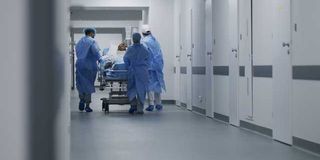
A patient is pushed into an emergency room. One Michael Wafula died waiting for medical help. He was buried last week.

What you need to know:
- From roads to hospitals, systemic failures in emergency response are costing Kenyans lives every single day.
- An audit reveals broken ambulances, missing staff, and deadly delays across Kenya’s fragile emergency care system.
Michael Wafula did not die from the impact of the vehicle that struck him. He died from what came after: 30 calls, and not one of them reached anyone who could help.
Last week, Wafula was buried. He was a hit-and-run victim found on a road in Machakos County, bleeding and conscious, but unable to move. A passing motorist stopped, checked his pulse, and reached for his phone to call for help. Over the next five hours, strangers made more than 30 calls on his behalf. Not one of them reached an operational emergency service.
The following sequence has been reconstructed from the account of a relative who is still mourning, and is supported by the findings of the Auditor General's report on the state of emergency care services across the country.
9:47am - The impact
Wafula was walking along a road in Machakos County when the vehicle struck him. The car did not stop. He was left on the tarmac, his body broken, his breathing shallow and his consciousness slipping in and out. A passing motorist noticed him and pulled over, checked his pulse and his breathing, confirmed he was still alive, and took out his phone to start looking for help.
9:51am - The first call
A crowd had gathered, and together with other motorists, they called the nearest public hospital. The line connected and rang. Nobody answered. They tried again. Same result.
9:58am - The second call
They tried a different facility. A line connected, and a voice told them the hospital had no ambulance available, and that they should try another number. They asked for it, wrote it down, and called. It rang out. No response. They kept working through numbers supplied by the crowd, but none of the calls went through.
10:20am - The emergency line
They found the county emergency line listed on a government website and called it. It did not connect. They tried again. Same result. People stood in a loose circle around the man on the ground, watching him and waiting for someone to say that help was coming. Nobody could say that. They called the national emergency toll-free numbers—999, 112, and 911—used to reach police, fire, or ambulance services countrywide. No one answered. They tried flagging down passing vehicles, but motorists were scared and did not stop.
12:00pm - More numbers
Everyone at the scene was searching online for numbers to call. One call finally connected to a private ambulance service. When the caller explained his location and the nature of the accident, he was asked to pay a down payment of Sh300,000 before an ambulance would be dispatched and a bed secured. He did not have the money, and the man on the ground did not have time. They tried calling back several more times, hoping to change something, but the line went unanswered.
2:30pm - His breathing changed
Five hours had passed. Wafula's breathing became laboured, and the people standing around him could hear it. They were still trying to reach family members who were in another county and now on their way. Just as hope was nearly gone, a school bus driver agreed to take him to the nearest hospital.
3:07pm - The breathing stopped
Wafula died on the way to the hospital, surrounded by strangers who had volunteered to rush him there. He died in a country with an emergency medical care policy signed in 2020, with county ambulance services theoretically operational, and with a government that had promised Universal Health Coverage to every citizen.
His case was not unusual. In Nairobi last year, a pregnant woman arrived at Kenyatta National Hospital needing emergency care. She was in distress, and her baby's life depended on speed. She was placed in a queue. The family was relying on the Social Health Authority (SHA) fund as their only insurance to settle the bill, but the system was down and slow to respond.
Lucy Matendechero tells Healthy Nation what followed. "We arrived at the hospital around 8pm and I was not feeling well, so we decided to see a doctor. When we got there, the queue was long and other patients were also eager to be attended to, so we waited, but I could feel the pain," she says.
Two hours passed. By the time a health worker reached her and assessed her properly, she could no longer feel her baby move. "When it was now my time to be seen, I could barely feel the kicks of the baby. After the monitoring, there was no heartbeat or baby kicks. She had died."
What followed made an already devastating situation worse. After the death of the baby was confirmed, it took close to 24 hours to extract the child from the womb.
"By the time the procedure was completed, the infant's skin had begun to peel. The decomposition that typically follows death had already started," Matendechero says. "Nobody has been held accountable for what happened to my baby."
In Busia County, the victim was two years old. Last year, a family waited four hours with no ambulance and no doctor after the boy was knocked unconscious by a boda boda. He was taken to Port Florence Hospital, where he was laid on a surface and left for four hours. He had a broken leg, a fractured skull, and internal bleeding. The ambulance at the facility was broken down. There was no fuel and no emergency staff available to attend to him in any meaningful way.
It took the intervention of his uncle, who drove the boy to a hospital in Siaya County for emergency care. "The man was God-sent. Had it not been for him, we would be talking about something else. He saved my son's life. No one wanted to touch him at the facility," the boy's mother says.
These stories are not anomalies. They are a pattern, and the records show it. The Kenya Emergency Medical Care Policy 2020 to 2030 was signed and gazetted. It exists. It identifies the right priorities, calls for the right investments, and maps the right interventions. But a policy document is not a working ambulance. Whether it is being implemented with the consistency, funding, and accountability it requires is another matter entirely.
Dr Benjamin Wachira, an Assistant Professor of Emergency Medicine who has worked with more than 37 counties on emergency policy development, says emergency services are improving, but the progress is county-dependent.
"We have worked with over 37 counties to develop emergency policies, out of which 24 have written physical documents signed and approved on emergency medical care. Of the 24, 14 counties—Migori, Taita Taveta, Tana River, Trans Nzoia, Nyeri, Elgeyo Marakwet, Nakuru, Marsabit, Mombasa, Kilifi, Lamu, Uasin Gishu, Turkana, and Siaya—have ambulance policies in place and they are implementing them.
“So far, we have 12 dispatch centres where all the emergency calls are received, and this has improved the emergency responses in the counties," Dr Wachira tells Healthy Nation.
Every day in Kenya, people face life-threatening emergencies: road traffic injuries, strokes, severe infections, and pregnancy complications. In these moments, survival depends on time, and without a toll-free emergency access number or reliable public ambulance services, patients find their own way to emergency medical care. Most of the time, deaths are recorded.
The Auditor General's report, released last month, cited failures across the country’s ministries, departments, and agencies. Among its findings were serious gaps in emergency medical care, covering ambulance services, hospital emergency care, and public awareness of pre-hospital emergency services at the community level.
The audit covered four financial years, 2021/22 to 2024/25, and was carried out between March 2023 and February 2025, examining 114 health facilities in 16 counties: Tharaka Nithi, Nairobi, Kisumu, Mombasa, Kiambu, Kisii, Busia, Narok, Nakuru, Kirinyaga, Tana River, Garissa, Isiolo, Machakos, Nyandarua, and Uasin Gishu.
Auditor General Nancy Gathungu's findings raised concerns about ambulances that were empty, carrying no equipment at all. Under the Kenya Bureau of Standards Minimum Ground Ambulance Requirements 2013, ambulances are classified as either basic life support or advanced life support, and the appropriate category should be dispatched based on the severity of a medical emergency. The reality found in the audit was starkly different.
“Across multiple counties, vehicles recorded in government asset registers as operational ambulances are non-functional, grounded by mechanical failure, lacking fuel, or missing critical equipment. In some cases, ambulances have been found to have been out of service for months or years without repair or replacement," the report states.
The audit also flagged instances where counties received funding for ambulance procurement or maintenance that could not be accounted for in the physical condition of the vehicles, as well as procurement irregularities, including cases where vehicles were purchased at inflated prices, delivered without the full equipment specified in contracts, or acquired from suppliers who did not meet the technical requirements of the tender.
Of all the findings, response times stood out. The internationally accepted standard is 15 to 20 minutes for an ambulance to reach a patient after a call is made. Across the counties where dispatch records were available, the audit found delays ranging from 20 minutes to a full hour, with some counties recording response times stretching even beyond that. The delays are attributed mainly to an inadequate number of ambulances, poor equipment, inadequate fuelling and maintenance, and insufficient ambulance staff.
Bureaucratic inconvenience
In emergency medicine, those extra minutes are not a bureaucratic inconvenience. They are the windows in which a stroke causes irreversible brain damage, a road accident victim bleeds to a point of no return, and a woman in obstetric distress loses her baby or her own life.
Nairobi County, the capital and the country's most resource-rich county, did not meet the standards. The audit found that it has only 20 of the 50 ambulances its population and emergency demand require, leaving it short by 30, and that response times ranged between 20 and 60 minutes depending on traffic conditions and the time of day.
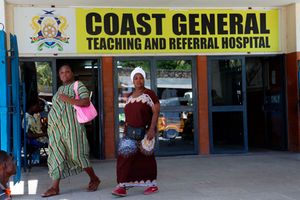
The World Health Organisation recommends a ratio of one ambulance per 70,000 to 100,000 people. In Mombasa, response times reached up to 60 minutes, making it one of the worst-performing counties among those assessed. Emergency contact lines were found to be unreliable, with calls in several instances not connecting to any operational dispatch function.
Equipment gaps at emergency-facing facilities were documented, including cases where essential drugs and basic life support tools were either absent or had expired.
"The coastal county has a significant tourism industry and a major port, both of which create predictable demand for emergency medical services. The audit found that the emergency infrastructure in place was inadequate to meet that demand, leaving both residents and visitors exposed during a genuine crisis," the report states.
Kisii County recorded the worst response times alongside Mombasa, with ambulances taking up to 60 minutes to reach patients from the time a call was made. The county's emergency lines were found to be inconsistently operational, and dispatch functions were not centralised or digitally supported.
Facility-level findings were no different: Level 4 hospitals had no dedicated accident and emergency units. Critical drug stockouts lasted anywhere from 90 to 1,095 days. And nurse-to-patient ratios were so stretched that meaningful emergency triage was effectively impossible during peak periods.
Kisii County Referral Hospital, which serves as the primary emergency receiving facility for a large and densely populated region, was found to be operating without the infrastructure required to function as a true emergency centre.
Of the 16 counties reviewed, 12 reported having dispatch centres. But even those were not fully functional. There was no real-time electronic system for tracking ambulances or recording call logs, no toll-free numbers for the public to use, and in some centres, internet connectivity was unreliable and backup generators were absent.
"Even when a patient survives the wait for an ambulance and reaches a public hospital, the facility may lack the capacity to treat them in a genuine emergency. Many facilities are not ready to handle emergency cases in the country," the report states.
No proper accident and emergency department
Only nine per cent of level 4 hospitals audited had dedicated accident and emergency units, and none had separate paediatric emergency sections. Thirty out of 33 level 4 hospitals, including facilities in Nairobi, Kisumu, Nakuru, Mombasa, Machakos, and Kisii, lack proper accident and emergency departments, meaning nine out of every ten of those examined cannot function as emergency centres in any meaningful sense.
Equipment shortages compound the problem at every level. Ninety per cent of Level 4 hospitals lack piped oxygen, 84 per cent have no ventilators, and essential drugs are frequently unavailable. Most hospitals also lack intensive care units.
"A hospital that cannot reliably supply oxygen is not equipped to manage the most common presentations in emergency care. A hospital with no ventilators cannot support a patient in respiratory failure. A hospital without essential emergency drugs cannot stabilise a patient in shock, seizure, or cardiac arrest. These are not specialist limitations. They are the most basic requirements of emergency medicine, and the majority of Kenya's sub-county hospitals do not meet them," the report states.
Behind the equipment gaps and infrastructure failures is a workforce stretched beyond what consistent emergency care can survive. Staffing levels are critically low, with nurse-to-patient ratios at 1:100 in level 4 hospitals and 1:122 in level 5 hospitals, far below the World Health Organisation's recommended ratio of 1:4.
"One nurse for every 100 patients at a sub-county hospital. One nurse for every 122 patients at a county referral hospital. Those ratios mean that in any given shift, a nurse managing a genuine emergency is simultaneously responsible for 99 or 121 other patients. This is extremely difficult for nurses to offer adequate help when needed," the report states.
No formal emergency vehicle training
The audit also found that ambulances across multiple counties were being staffed by drivers without formal emergency vehicle training, and that counties were not employing Emergency Medical Technicians or paramedics as a standard part of their emergency workforce. Nurses were being reassigned from hospital wards to cover ambulance runs, depleting facility staffing to fill a gap that should have been addressed through dedicated emergency medical services personnel.
Even the equipment recorded as available was found wanting. Oxygen cylinders listed as assets in county inventories were found to be empty, expired, or absent from vehicles entirely. Stretchers, defibrillators, suction devices, and basic emergency medication were listed as missing or unaccounted for across multiple counties.
"An ambulance without functioning equipment is not an ambulance. It is a transport vehicle. A patient who is loaded into a vehicle that has no oxygen, no way to manage an airway, no capacity to administer emergency medication, and no means of communicating with the receiving hospital in real time is not receiving emergency care. They are being moved from one location to another while their condition deteriorates," the report states.
Against this backdrop, promises have been made. In November last year, SHA chief executive officer Dr Mercy Mwangangi announced that Kenya would launch a national ambulance service before the end of 2026, allowing citizens to call a central toll-free number, have their location tracked digitally, and receive a dispatched ambulance. Under the plan, SHA would cover Sh4,500 per evacuation, with 24 hours of free emergency care at the receiving facility.
"Kenya will soon be launching an ambulance service. Very soon, you will be able to pick up your phone, call a number, possibly 999, your location will be identified, mapped, and an ambulance dispatched to transport you to an emergency centre. Under the new plan, SHA will cover Sh4,500 for each emergency evacuation. Patients will also receive 24 hours of free emergency care at the receiving facility," Dr Mwangangi said.
Dispatch centre
Health Cabinet Secretary Aden Duale told Healthy Nation that SHA is in the process of completing the dispatch centre and is now onboarding ambulances, both public and private. "We are just completing the dispatch. Once the ambulances are onboarded by SHA to serve the dispatch centre, when a Kenyan sends a message digitally that there is an emergency where they are, the dispatch will send an ambulance, and the ambulance will take that patient to the nearest health facility, and it will be paid for by SHA," Mr Duale said, adding that SHA would pay for the first 24 hours under the Emergency Chronic Illness Fund. "It has been delayed a bit, but Dr Mwangangi has a deadline of June."
According to a geospatial analysis by the Emergency Medicine Kenya Foundation (EMKF), 93.7 per cent of Kenya's population lives within one hour of a public emergency department, and 98.2 per cent within two hours. But as EMKF notes: "Hospitals do not save lives. Prepared emergency departments do." Reaching a facility is only the beginning. The facility must be ready, the staff must be trained, the equipment must be there, and the dispatch system must have connected the call that brought the patient in the first place.
At the Ambulensi Emergency Medical Services Conference held in Nairobi last month, Dr Andrew Toro of the Ministry of Health acknowledged the scale of what remains to be done. "Every day, thousands of Kenyans face life-threatening emergencies, from road traffic injuries to obstetric complications and acute medical conditions. Strengthening emergency medical services is not just about increasing the number of ambulances. It is about building systems that connect communities, ambulances, and hospitals to deliver timely, lifesaving care," he said.
Michael Wafula died waiting for that system to exist.