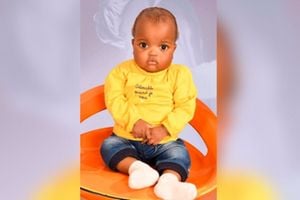
Five-year-old Kajiado boy who relies on lifesaving enzyme drug costing Sh1 million per month
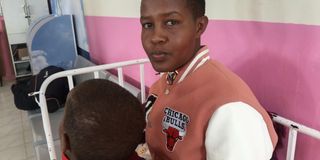
Jennifer Seenoi, 25, with her five-year-old son who is suffering from Gaucher disease type 1 at Kajiado Referral Hospital on May 26, 2026.

What you need to know:
- Global incidence ranges from one in 40,000 to one in 100,000 live births.
- In Kenya, studies at Kenyatta National Hospital show Type 1 is most common, marked by severe organ enlargement without neurological complications.
On May 26, a five-year-old boy sat quietly on the edge of a bed in the general ward at Kajiado Referral Hospital as a lifesaving drug dripped into his tiny body. Beside him, his mother, Jennifer Seenoi, 25, watched every drop, each one a thread of hope for her only child, identified in medical records as “DPS.” Diagnosed in December 2023 with Gaucher disease type 1, a rare genetic disorder, he depends on bi-weekly Enzyme Replacement Therapy that costs at least Sh1 million per month, a treatment he will depend on for the rest of his life.
The World Health Organization classifies Gaucher disease as a rare inherited lysosomal storage disorder caused by a deficiency in the enzyme glucocerebrosidase, which leads to fatty substance accumulation in the liver, spleen, bone marrow, and, in severe cases, the brain.
Global incidence ranges from one in 40,000 to one in 100,000 live births. In Kenya, studies at Kenyatta National Hospital show Type 1 is most common, marked by severe organ enlargement without neurological complications.
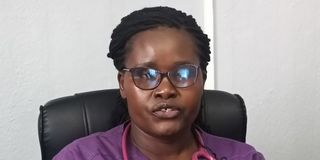
Dr Phoebe Wamalwa, a pediatric endocrinologist who has been attending to the minor patient referred to as "Patient DPS" at Kajiado Referral Hospital on May 26, 2026.
The disease has three types: Type 1 (non-neuronopathic, 90–95 per cent of cases in North America and Europe) affects the liver, spleen, bones, and blood but not the central nervous system. Type 2 (acute neuronopathic) is the rarest and most severe, beginning in infancy with rapid neurological decline and early childhood fatality.
Type 3 (chronic neuronopathic) progresses more slowly, with organ enlargement and eventual central nervous system involvement. Diagnosis is confirmed via a serum enzyme assay and genetic testing of the GBA1 gene.
Back in the ward, Jennifer looked distracted. Her red, dusty sandals spoke of long treks to the hospital. Her eyes stayed fixed on the drip line covered with dark polythene to protect the drug, as if facing down an invisible enemy. She told Healthy Nation she wakes at 5am twice monthly to journey from Oldarpoi village, 80 kilometres away in Kajiado Central Sub-county. A form four leaver, she said her son began ailing at 18 months, but repeated misdiagnoses at local hospitals delayed proper treatment.
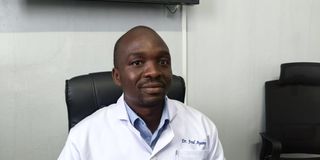
Kajiado Referral Hospital Superintendent Dr Fred Ayani during the interview.
According to hospital records, ‘patient DPS’ was admitted to Kajiado Referral Hospital in October 2023 after a referral from a local health centre. He had low blood pressure, severe underweight (just four kilogrammes), and swollen spleen and liver.
“It has been like swimming against a strong tide,” Jennifer said, fighting tears. “When my son was diagnosed and the doctors explained the cost, my husband abandoned us at the hospital. He later remarried. The pressure became overwhelming, and I lost my second pregnancy. I wake at 5am twice every month to ensure my son doesn’t miss his treatment. To reach the hospital, I travel by motorcycle through terrain with wild animals. It’s even harder in the rainy season when rivers overflow and cut off the roads.”
Jennifer said the three to four-hour infusion feels like the longest part of each visit. Two enzyme vials are administered each time. She remains hopeful that her son will one day join school like any other child his age.
A local women’s support group has been her backbone since his diagnosis. The women, some living with rare conditions, and others caring for affected children, meet regularly to offer moral support. “I am the youngest member. The group has been a source of strength, hope, and encouragement. My father has been my pillar. Being a jobless single mother in a remote village has taken a heavy toll, but giving up is not an option because my son’s life depends on me.”
Dr Phoebe Wamalwa, a pediatric endocrinologist treating DPS, said misdiagnosis is common because several diseases mimic Gaucher disease, including kala-azar, tuberculosis, sickle cell disease with splenomegaly, and severe malaria, often leading to early death. She noted that Kenya lacks diagnostic lab facilities for Gaucher disease; DPS’s samples had to be sent to South Africa.
“The blood sample was collected at Gertrude’s Hospital and sent to South Africa. Initial results strongly pointed to Gaucher disease, but a genetic test was required for confirmation. Because such testing is unavailable on the continent, the sample was shipped overseas, where the diagnosis was finally confirmed,” said Dr Wamalwa, also President of the Pediatric Endocrine Society of Kenya.
“While awaiting results, the patient had severe bleeding tendencies: red blood cells, hemoglobin, and platelets were dangerously low due to bone marrow suppression from the disease.”
Doctors gave repeated blood and platelet transfusions until the first enzyme vials arrived in the country three months after diagnosis. “The enzyme is not available locally or elsewhere on the continent. We reached out to international support programmes. A single vial costs about Sh260,000; and our patient needs two vials per session.
The bi-weekly schedule requires four vials monthly, exceeding Sh1 million. With support from Direct Relief, the Takeda programme, Sanofi South Africa, and the International Gaucher Alliance, we secured the enzyme.
Although diagnosed in December 2023, the first shipment arrived in February 2024.”
Currently, the patient is fairly stable, according to Dr Wamalwa. Though his blood counts remain low, he has received the enzyme for three years. Medics say he should be able to attend regular school as his brain has not been affected.
Kajiado Referral Hospital Superintendent, Dr Fred Ayani, called the case a major success story. “We have strict systems to store the medication under cold-chain management at 2–8°C. Despite its high cost, it is kept under tight security and handled to the highest standards. This is a significant medical milestone for our hospital.”
Dr Wamalwa urged strengthening the health system through greater awareness of rare diseases like Gaucher disease.
“We must equip healthcare workers to recognise conditions that don’t fit common patterns. Early consultation and referral save lives. There is also an urgent need for the Ministry of Health to improve healthcare financing and strengthen data collection and record-keeping for rare diseases.”